How to Propagate Mistletoe cactus?
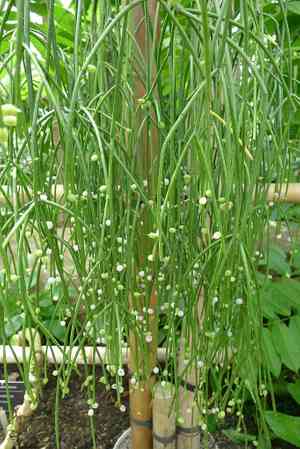
Rhipsalis propagates most effectively via cuttings in the Spring or Summer seasons. This is a simple procedure; simply observe for fresh development as confirmation of success. A crucial piece of advice: guarantee proper drainage to prevent root decay.
Optimal Period for Mistletoe Cactus Propagation
Propagation Method
Cuttings
Propagation Season
Spring, Summer
Tools Required for Mistletoe Cactus Propagation
Sharp, sterilized scissors or pruning shears
These instruments are used to obtain clean stem sections from mistletoe cactus, minimizing harm and preventing infection. A precise cut from a sharp tool promotes quicker and healthier root development when cuttings are placed in the propagation medium.
Rooting hormone powder or gel
This product stimulates root development on mistletoe cactus cuttings. Applying a rooting hormone to the cut end can increase the likelihood of successful rooting by encouraging root initiation at the cut site.
Potting mix or soil-less medium
A well-draining and sterile substrate offers the perfect environment for mistletoe cactus cuttings to establish roots. It reduces the risk of rot and fungal infections, common issues when propagating succulents.
Small pots or propagation trays
These containers hold the medium and provide a stable environment for mistletoe cactus cuttings. Utilizing a container that allows for good air circulation at the base is crucial for the healthy root development of this epiphytic species.
Plastic bag or propagation dome
These create a humid atmosphere around the mistletoe cactus cuttings, which helps prevent them from drying out before they can develop roots. Ensuring appropriate humidity levels is vital for successful propagation of this tropical species.
Tweezers or small tongs
These are useful for positioning or handling small or delicate mistletoe cactus cuttings without damaging the plant material. Using these tools can prevent the transfer of oils or contaminants from hands, which could potentially hinder rooting.
Watering can with a fine rose or misting bottle
These provide gentle water application to the cuttings and propagation medium, preventing disturbances or erosion of the soil that could disrupt the delicate mistletoe cactus cuttings. Keeping the medium lightly moist encourages root growth without causing rot.
Steps to Propagate Mistletoe Cactus
Propagation Method
Cuttings
Difficulty Level
Easy
Post-Propagation Care for Your Mistletoe Cactus
Post-Propagation Care for Your Mistletoe Cactus
Once rooted, continue to care for mistletoe cactus by providing bright, indirect light and a consistent watering schedule, allowing the soil to dry out partially between waterings. Maintain moderate humidity and temperature. Avoid fertilizing until the plant is well established, and then only sparingly during the growing season. Regularly inspect mistletoe cactus for pests and diseases, and prune as needed to encourage growth and maintain desired shape.
Common Errors to Avoid When Propagating Mistletoe Cactus
Overwatering
Attempting to propagate mistletoe cactus cuttings in excessively moist soil can lead to rot. Mistletoe cactus is a succulent, and when the cutting's base is constantly wet, it may decay before it has a chance to root.
Using old or diseased cuttings
If a gardener selects cuttings that are not healthy or vibrant, this can impede the success of propagation. Weak or diseased cuttings may not root at all or could transmit disease to new growth.
Ignoring cleanliness
Failing to sterilize tools or pots can introduce harmful bacteria or fungi to mistletoe cactus cuttings. This can prevent rooting or cause disease in the plant.
Cutting at the wrong point
Mistletoe cactus requires precise cutting to ensure successful propagation. Cuttings taken without a node or aerial root will not root properly.
Neglecting humidity
Mistletoe cactus cuttings require a certain level of humidity to encourage root formation. Without a humid environment, the cutting may dry out before it can take root.
Advice for Propagating Mistletoe Cactus
Correct soil mix
Using a well-draining cactus or succulent soil mix helps prevent root rot and ensures the health of mistletoe cactus cuttings as they root.
Proper cutting technique
Make sure to cut just below a node or an aerial root, as these are the points where new roots are most likely to form.
Watering schedule
Wait until the soil is almost dry before watering to maintain the ideal moisture balance needed for mistletoe cactus cuttings to root.
Indirect sunlight
Provide bright, indirect sunlight for mistletoe cactus cuttings to encourage growth without burning them.
Use of rooting hormone
Applying a rooting hormone to the cut end of mistletoe cactus can stimulate root growth and enhance the chance of successful propagation.



