How to Propagate Radish?
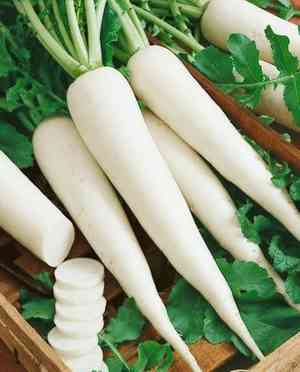
Radish cultivation is predominantly accomplished by planting seeds in the springtime. This method is quite straightforward, and successful growth is evident from the robust development of young plants. For the best outcomes, consistently use newly harvested seeds.
What Is the Best Time To Propagate Radish?
Propagation Type
Seeding
Propagation Season
Spring
What Tools Are Used in Radish Propagation?
Seed trays or flats
Shallow, flat containers, often with individual compartments, are perfect for planting radish seeds as they offer ample room for each seedling to develop without being too close. This helps prevent disease and simplifies later transplanting.
Sterile potting mix
A soil-free, pathogen-free potting mix guarantees a healthy initial environment by reducing the risk of soil-borne diseases. Radish seeds thrive in a mix that balances moisture retention with good drainage.
Fine mist spray bottle
Gentle watering is essential to avoid disturbing radish seeds or eroding the soil. A fine mist spray bottle allows for soft, even moisture distribution, helping maintain optimal soil moisture for germination.
Seed dibber or pencil
A seed dibber or a simple pencil can create small indentations in the soil for radish seeds. Correct planting depth is crucial for successful germination, and these tools help achieve consistent depth for all seeds.
Transparent plastic dome or wrap
Creating a mini-greenhouse effect with a clear plastic cover maintains consistent moisture and warmth around radish seeds, which is beneficial for germination. The transparent material also allows light to reach the seeds, aiding photosynthesis once they sprout.
Grow lights (if indoor)
If propagating radish indoors, grow lights may be needed to provide sufficient light for strong seedling growth and to prevent them from becoming leggy. These lights mimic sunlight and can be adjusted for intensity and duration.
Heat mat (optional)
For colder climates, a heat mat can maintain a steady soil temperature, which is particularly helpful for radish seeds to ensure quick and uniform germination.
Hand trowel
Once radish seedlings are large enough, a hand trowel can be used to carefully transplant them into the garden or larger pots, minimizing root disturbance.
How to Propagate Radish?
Propagation Type
Seeding
Difficulty Level
Easy
How to Care for Your Newly Propagated Radish?
How to Care for Your Newly Propagated Radish?
After propagation, continue to water radish consistently to keep the soil moist. Apply a balanced fertilizer if the soil lacks nutrients. Mulch around radish plants to retain moisture and control weeds. Harvest radish when they reach an appropriate size, making sure to pull them gently to avoid root damage. Avoid leaving radish in the ground too long as they can become woody. With proper care, radish plants will mature quickly, leading to a plentiful harvest.
Common Mistakes to Avoid When Propagating Radish
Overwatering
Supplying too much water can lead to root rot in radish, hindering both germination and overall growth.
Planting too deeply
Sowing radish seeds too far down in the soil can prevent them from having enough energy to break through the surface, resulting in germination failure.
Overcrowding
Planting radish seeds too close together can cause competition for nutrients, space, and light, leading to stunted development.
Ignoring soil conditions
Failing to provide a well-draining soil environment rich in organic matter can impede radish growth, as it thrives in fertile, well-drained soil.
Over-fertilizing
Applying too much fertilizer can result in excessive leaf growth at the expense of root development, limiting the size and quality of radish's edible parts.
Neglecting to thin seedlings
Not thinning radish seedlings can lead to overcrowding as they mature, resulting in smaller, less robust plants.
Tips For Propagating Radish
Proper seed depth
Plant radish seeds at a shallow depth, about half an inch, to ensure they have enough energy for successful germination.
Appropriate spacing
Space radish seeds or seedlings at suitable intervals to give each plant ample room to grow, reducing competition.
Soil preparation
Prepare the soil with plenty of organic matter and ensure it is loose and well-draining to promote healthy root development for radish.
Moderate watering
Keep the soil moist but not waterlogged to provide the ideal moisture balance for radish's germination and growth.
Gentle fertilization
Use a balanced fertilizer sparingly to encourage steady, healthy growth of radish without overstimulation.
Timely thinning
Thin radish seedlings as needed to prevent excessive crowding and encourage the development of robust, adequately spaced specimens.



