How to Propagate Wild radish?
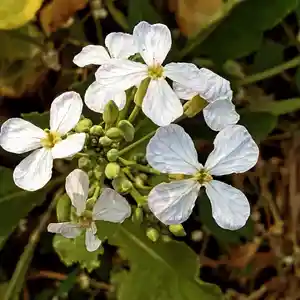
Wild radish readily reproduces by planting seeds in the springtime. Evidence of success includes the appearance of vigorous seedlings and strong development. Ensure proper spacing between seeds to prevent excessive density and foster thriving growth.
Optimal Time for Wild Radish Propagation
Propagation Method
Seeding
Propagation Period
Spring
Tools for Wild Radish Propagation
Seed trays or flats
Seed trays offer a controlled setting, perfect for germinating wild radish seeds. They enable uniform spacing, minimizing competition and ensuring proper air flow among young plants.
Potting mix or seed starting mix
This substrate supplies wild radish seeds with essential nutrients and drainage, while retaining sufficient moisture to enhance germination rates.
Watering can with a fine rose
Gentle irrigation, crucial for delicate wild radish seedlings, is made easy with a fine rose attachment. This prevents soil erosion or seed displacement.
Labels and markers
Labels are vital for identifying wild radish at various growth stages. Markers help track variety, sowing date, and other pertinent data for successful propagation.
Transparent plastic dome or cover
A clear cover maintains high humidity levels around wild radish seeds, which aids germination. It also shields young seedlings from external elements.
Heat mat (optional)
For wild radish seeds requiring warmth to sprout, a heat mat provides consistent bottom heat, essential for improving germination rates in cooler environments.
Misting bottle
Delivers a very fine spray of water, ideal for keeping wild radish seeds and seedlings moist without overwatering or disturbing the growing medium.
Trowel
Used to transplant wild radish seedlings to their permanent location. It assists in moving plants with minimal root disturbance, a key factor for successful establishment.
How to Propagate Wild Radish
Propagation Type
Sowing
Difficulty Level
Easy
Caring for Newly Propagated Wild Radish
Caring for Newly Propagated Wild Radish
After propagation by sowing, wild radish needs minimal upkeep. Ensure the soil stays moist but not waterlogged, provide full sun for optimal growth, and thin seedlings as needed to prevent overcrowding. Since wild radish can grow in poor soil, fertilization is usually not required but can benefit the plant if the soil is extremely nutrient-deficient. Additionally, keep the area free of weeds, which compete for resources, and monitor for pests and diseases that might affect growth and yield. Harvest wild radish before it matures too much, as older pods can become fibrous and less palatable.
Common Errors to Avoid When Propagating Wild Radish
Overcrowding seeds
Planting wild radish seeds too closely can lead to overcrowding, which reduces air circulation and light penetration, resulting in poor plant development and increased disease susceptibility.
Deep planting
Sowing wild radish seeds too deeply can hinder germination due to insufficient light or delayed emergence, impacting the plant's growth vigor and reducing overall propagation success.
Ignoring soil conditions
Not assessing or improving the soil's nutrient content and texture before planting wild radish can lead to suboptimal growth, as the plant thrives in fertile, well-drained soils.
Excessive watering
Overwatering wild radish during propagation can result in waterlogged soil, which can suffocate roots, leading to root rot and diminished plant health.
Neglecting weeding
Failing to regularly control weeds around wild radish can lead to competition for nutrients, light, and space, which can stunt the plant's growth and reduce propagation yields.
Tips for Propagating Wild Radish
Seed spacing
Ensure wild radish seeds are sown at an appropriate distance from each other to avoid resource competition, promoting healthy growth and better air circulation.
Seed depth
Plant wild radish seeds at a shallow depth, as recommended by propagation guidelines, to aid in rapid germination and strong seedling establishment.
Soil readiness
Prepare the soil for wild radish by enriching it with organic matter and ensuring good drainage; this facilitates robust root development and overall plant health.
Water management
Provide wild radish with consistent moisture during its germination and seedling phases, while avoiding overwatering, to support steady plant growth without waterlogging the roots.
Weed maintenance
Regularly remove weeds around wild radish to prevent resource competition, allowing the plant to receive adequate nutrients and space for proper development.



