How to Propagate Balloon flower?
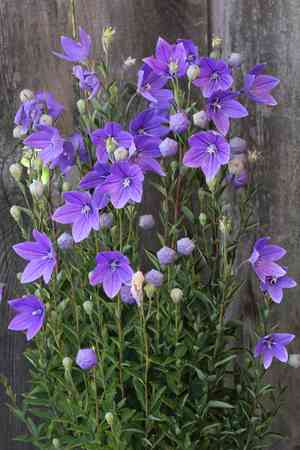
The most effective way to propagate Balloon flower is by planting seeds in the springtime. Novices might find this technique somewhat challenging. Indicators of success include robust development of young plants. Tools like seedling warming pads facilitate the sprouting process.
Optimal Time for Balloon Flower Propagation
Propagation Method
Seeding
Propagation Period
Spring
Essential Tools for Balloon Flower Propagation
Seedling trays
Seedling trays are crucial for planting balloon flower seeds. Their individual compartments facilitate organized sowing and easy transplanting, minimizing disturbance to adjacent seedlings. Trays equipped with a humidity dome are especially beneficial for maintaining the moisture levels vital for balloon flower seed germination.
Fine-grained seed starting mix
This sterile blend offers an ideal texture and nutrient balance for the tiny balloon flower seeds, ensuring good soil contact for germination. It also promotes proper drainage, which is key to preventing root rot during early growth stages.
Misting bottle
A misting bottle helps maintain appropriate moisture levels without overwatering, which is crucial for balloon flower seed germination. Fine mist application ensures seeds are not dislodged or washed away.
Heat mat
Given that balloon flower seeds benefit from consistent warmth for optimal germination, a heat mat can be placed under seedling trays to maintain a steady soil temperature, especially in cooler climates or during colder months.
Grow lights
If natural sunlight is insufficient, grow lights provide the necessary light spectrum to encourage healthy growth and prevent seedlings from becoming leggy. They simulate sun-like conditions, which is important for balloon flower post-germination.
Dibber or toothpick
A dibber or toothpick can be used to create small, shallow depressions in the seed starting mix for placing balloon flower seeds. This allows for precise sowing at the recommended depth, which is crucial for successful balloon flower germination.
Transparent plastic wrap
In the absence of a humidity dome, transparent plastic wrap can be used to cover seedling trays, helping to retain humidity and warmth around balloon flower seeds, thereby enhancing the germination environment.
How to Propagate Balloon Flower?
Propagation Type
Sowing
Difficulty Level
Easy
How to Care for Your Newly Propagated Balloon Flower?
How to Care for Your Newly Propagated Balloon Flower?
Watering: Keep the soil consistently moist, particularly during the initial growing season. Avoid excessive watering as balloon flower dislikes waterlogged conditions. Fertilization: Apply a balanced liquid fertilizer monthly during the active growth period. Sunlight: Ensure balloon flower receives full sun to light shade for optimal development. Mulching: Apply a layer of organic mulch around the base of the balloon flower to retain soil moisture and suppress weeds. Support: Provide support if necessary as balloon flower grows taller to prevent stem breakage. Pests and Diseases: Monitor for common pests and diseases, treating as needed with appropriate cultural, organic, or chemical controls tailored to balloon flower. Pruning: Deadhead spent flowers to encourage more blooms. Prune back balloon flower in late fall or early spring to maintain a neat appearance.
Common Mistakes to Avoid When Propagating Balloon Flower
Overwatering
Propagating balloon flower can lead to the temptation of providing too much water, which may cause root rot and fungal diseases due to their sensitivity to overly wet conditions.
Deep planting
Planting balloon flower seeds too deeply can hinder germination as the seeds require light to germinate effectively. Deep planting can also make it difficult for young roots to penetrate the soil.
Neglecting to stratify
Balloon flower seeds often require a period of cold stratification to break dormancy. Skipping this step might result in low germination rates.
Overcrowding seeds
Sowing too many balloon flower seeds closely together can lead to competition for resources and can make it difficult to separate the seedlings without causing damage.
Planting in poor soil
Balloon flower thrives in well-drained soil. Using a soil that retains too much water or is too dense can hinder proper root development.
Tips For Propagating Balloon Flower
Surface sowing
Since balloon flower seeds need light to germinate, surface sowing the seeds onto a well-draining soil mix and lightly pressing them in ensures they receive adequate light without being buried too deeply.
Cold stratification
Mimic balloon flower's natural germination triggers by stratifying the seeds. Store them in a moistened medium inside a refrigerator for several weeks before planting.
Thinning seedlings
After germination of balloon flower, thin out the seedlings to prevent overcrowding. This ensures that each plant has enough space to develop a strong root system.
Gentle handling
Handle balloon flower seedlings with care, as they have delicate roots. When transplanting, be gentle to prevent root damage which can stress or kill the young plants.
Appropriate watering
Provide balloon flower with consistent moisture but avoid waterlogging. Let the soil slightly dry out between watering to encourage a strong root system without risking rot.



