How to Propagate North's false flag?
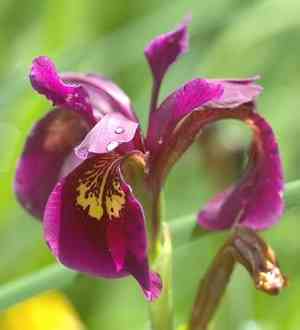
To effectively propagate north's false flag, one must employ its tubers, either by dividing them or by re-establishing those that detach naturally. For peak development, verify the tubers are sound prior to division and embed them in soil that drains efficiently and is abundant in organic material. Supply north's false flag with steady hydration without saturating the soil, and position it in a location receiving ample, filtered illumination. Eventually, as the tubers develop a strong root network, north's false flag will start to thrive, indicating a successful propagation endeavor.
Optimal Timing for North's False Flag Propagation?
Propagation Method
Utilize The Tubers
Propagation Period
Spring
Tools Required for North's False Flag Propagation?
Sharp Knife or Scalpel
A keen knife or scalpel is crucial for making clean cuts through the tubers of north's false flag. This instrument helps ensure precise incisions without harming the tuber tissues, which is vital for robust root formation. A sterilized blade minimizes infection risk, promoting successful propagation.
Rooting Hormone
Rooting hormone can significantly boost root development during the propagation of north's false flag's tubers. By applying a small amount of rooting hormone to the cut surfaces, it stimulates quicker and stronger root growth. This enhanced root establishment supports healthy plant growth post-propagation.
Potting Mix:
A well-draining potting medium, ideally formulated for tropical plants, is essential for the successful propagation of north's false flag. Such a mix ensures adequate moisture retention while providing sufficient air pockets for new roots to grow unhindered. The mix's composition supports root health, crucial for new plants developing from tubers.
Pots or Propagation Trays
Appropriate containers, such as pots or propagation trays, are necessary to house the tubers once they have been separated. These containers should have ample depth and drainage holes to allow excess water to escape, preventing root rot and fostering a healthy root environment.
Labels and Marker
Labels and a permanent marker are advisable for tracking propagation details like the date and specific characteristics of each piece of north's false flag's tubers. Proper labeling aids in monitoring growth and organizing multiple propagations effectively, ensuring good record-keeping and maintenance.
Watering Tool (with Fine Spray Setting)
A watering device equipped with a fine spray setting is crucial for gently irrigating the newly planted tubers of north's false flag without disturbing them. This tool ensures even water distribution, encouraging consistent moisture levels around the roots, which is vital for their development and overall plant health.
How to Nurture Your Newly Propagated North's False Flag?
How to Nurture Your Newly Propagated North's False Flag?
North's false flag thrives in bright, indirect light and high humidity. After propagation, ensure the soil dries slightly between watering sessions to encourage healthy root development. Regular feeding with a balanced, water-soluble fertilizer every 4 weeks during the growing season will help young plants establish more robustly. Avoid temperature extremes and drafts, as north's false flag prefers stable conditions.
Common Errors to Avoid When Propagating North's False Flag
Overwatering
Providing excessive water can lead to root rot in north's false flag, which prefers well-drained soil conditions.
Using old soil
Reusing potting mix from other plants might contain pathogens, which can hinder the healthy root development of north's false flag.
Insufficient light
Placing north's false flag in too much shade can prevent it from generating the energy needed for growth and propagation.
Overcrowding
Planting north's false flag rhizomes too closely together can result in competition for nutrients and space, impeding their propagation.
Ignoring plantlet development
Missing the period when north's false flag's plantlets are ready to detach can result in less successful propagation as plantlets that remain attached too long may not establish as well independently.
Advice for Propagating North's False Flag
Potting mix
Utilize fresh, well-draining potting mix when propagating north's false flag to promote healthy root growth.
Rhizome division
Carefully divide the rhizomes when they are sufficiently large, ensuring each section has at least one growth point for successful north's false flag propagation.
Light exposure
Provide indirect, bright light to north's false flag to facilitate vigorous growth without the risk of leaf scorching.
Humidity
Maintain a humid environment around north's false flag, especially during the establishment phase, to support the plant's natural habitat conditions.
Monitoring plantlets
Regularly inspect and detach the plantlets from north's false flag when they develop their own roots, and pot them individually to enhance survival rates.



