How to Propagate Scarlet banana?
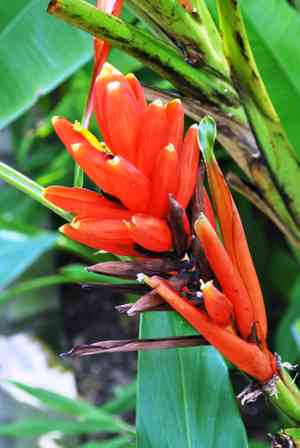
A species within the banana family, recognized for its vivid crimson bloom, scarlet banana is chiefly multiplied via cuttings. Cultivators ought to choose robust, pathogen-free shoots for optimal outcomes. Following severance, it is crucial to permit the severed end to desiccate somewhat prior to embedding it in a porous potting blend. Sustaining elevated moisture levels and consistent warmth will encourage root formation, guaranteeing prosperous growth.
Optimal Time for Scarlet Banana Propagation
Propagation Type
Cutting
Propagation Season
Spring,Summer
Tools for Scarlet Banana Propagation
Sharp pruning shears
These are vital for making clean, precise cuts on scarlet banana. Sharp blades ensure smooth cuts, minimizing damage and disease risk. Well-maintained and disinfected shears prevent pathogen introduction to cut surfaces.
Rooting hormone
This chemical promotes root growth from cuttings. Applying it to scarlet banana cuttings accelerates root development, boosting propagation success. It's crucial for ensuring robust, viable new scarlet banana plants.
Sterile potting mix
A sterile potting mix prevents soil-borne diseases, essential for the delicate early stages of scarlet banana cuttings. A well-draining, nutrient-rich mix supports healthy root development without excessive moisture leading to rot.
Propagation trays
These trays hold scarlet banana cuttings in an organized, stable manner, providing ample space for growth without crowding. Trays often include covers to maintain necessary humidity and temperature for rooting.
Misting bottle
A misting bottle gently waters cuttings, maintaining optimal humidity for scarlet banana. This tool allows precise moisture control, preventing new cuttings from drying out or becoming oversaturated.
Scarlet Banana Propagation Difficulty
Propagation Type
Easy
Post-Propagation Care for Scarlet Banana
How to Care for Your Newly Propagated Scarlet Banana?
Scarlet banana needs consistent care to thrive after propagation. Keep it in a warm, humid environment with bright, indirect sunlight. Regular watering is key, but avoid over-watering to prevent root rot. Fertilize monthly with a balanced, water-soluble fertilizer during growing seasons to support vigorous scarlet banana growth. Promptly address any pests or diseases.
Common Errors in Scarlet Banana Propagation
Overwatering cuttings
Excessive watering of scarlet banana cuttings can cause root rot, where too much water deprives roots of nutrients and air. This hinders growth and can kill young plants.
Using non-sterile tools
Propagating scarlet banana with unsterilized tools can introduce pathogens to the cutting, increasing disease risk. These pathogens can severely impair the plant's ability to establish and grow, potentially leading to cutting death.
Incorrect cutting size
Taking scarlet banana cuttings that are either too large or too small can affect propagation success. Oversized cuttings may struggle to support themselves, while undersized ones might lack sufficient reserves for robust root development.
Ignoring humidity requirements
Failure to maintain high humidity levels can lead to water loss and stress in scarlet banana cuttings, impeding rooting and initial growth. This is critical as scarlet banana thrives in humid conditions.
Scarlet Banana Propagation Tips
Use rooting hormone
Applying rooting hormone to scarlet banana cuttings can significantly boost root development. This substance helps stimulate faster and more effective root growth, increasing overall propagation success.
Maintain optimal lighting
Providing indirect, bright light supports healthy scarlet banana growth during propagation. Too much direct sun can scorch young plants, while insufficient light leads to weak, elongated growth.
Ensure proper aeration
Using a well-aerated propagation medium for scarlet banana is crucial. A mix like peat and perlite supports adequate drainage and ensures good airflow around roots, promoting healthier, faster growth.
Utilize bottom heat
Maintaining consistent bottom heat (e.g., with heat mats) can aid effective scarlet banana rooting. Warmer soil temperatures encourage faster root development, especially beneficial in cooler months.



