How to Propagate Large yellow loosestrife?
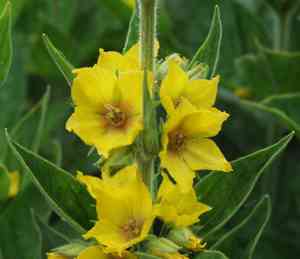
Large yellow loosestrife is most effectively multiplied by planting seeds in the springtime. This method is quite straightforward and demands little attention. Indicators of successful multiplication involve the emergence of new stems and robust root formation. Sufficient hydration is essential for enhanced development.
When Is the Optimal Time to Propagate Large Yellow Loosestrife?
Propagation Method
Seeding
Propagation Period
Spring
What Equipment Is Utilized in Large Yellow Loosestrife Propagation?
Seed Trays
These offer a regulated setting for planting seeds, vital for uniform sprouting. Seed trays guarantee each large yellow loosestrife seed has ample room to develop without vying for nutrients or light, boosting the likelihood of successful propagation.
Peat Pots
Peat pots are biodegradable containers perfect for large yellow loosestrife seedlings. They reduce root disturbance during relocation, as the entire pot can be placed into the soil. This fosters a healthier root system and improved establishment in the garden.
Seed Starting Mix
Employing a sterile, nutrient-rich seed starting mix aids in preventing soil-borne pathogens that could harm large yellow loosestrife seedlings. The mix also delivers an optimal balance of aeration, moisture retention, and nutrients.
Misting Bottle
A fine misting bottle enables gentle watering that will not disrupt or wash away large yellow loosestrife seeds or seedlings. Regular misting helps maintain ideal humidity levels, crucial for seed germination and initial plant growth.
Heat Mat
A heat mat provides consistent warmth from below, which can accelerate germination and enhance sprouting rates for large yellow loosestrife seeds that benefit from warmer soil temperatures.
Grow Lights
Grow lights offer consistent, adjustable illumination that is important for preventing leggy seedlings and ensuring robust development. This is particularly advantageous during periods of limited natural sunlight.
How to Propagate Large Yellow Loosestrife?
Propagation Method
Seeding
Difficulty Level
Easy
How to Care for Your Newly Propagated Large Yellow Loosestrife?
How to Care for Your Newly Propagated Large Yellow Loosestrife?
Following propagation, keep large yellow loosestrife in a spot that mimics its natural environmentâpartially shaded with access to morning sun. Water the new plants regularly to keep the soil moist, especially during their initial growing season. Apply mulch around the base to retain moisture and suppress weeds. Fertilize in early spring with a balanced, slow-release fertilizer, and divide large yellow loosestrife every few years in spring or fall to maintain its health and vigor.
Common Errors to Avoid When Propagating Large Yellow Loosestrife
Excessive watering of cuttings
Supplying too much water to large yellow loosestrife cuttings can lead to fungal infections or rot, which hinders root development and can kill the cutting.
Disregarding soil quality
Using substandard soil for large yellow loosestrife propagation can impede root growth and nutrient absorption, affecting the overall health and vitality of the new plants.
Incorrect planting depth
Burying large yellow loosestrife cuttings too deeply can prevent adequate air circulation, leading to root rot, while planting them too shallow may expose roots and reduce moisture retention.
Overcrowding
Placing large yellow loosestrife cuttings too close together can reduce airflow and light penetration, increasing the risk of disease and competition for resources.
Failing to remove flowers
Allowing large yellow loosestrife to bloom during propagation can divert energy away from root and foliage development, which is crucial for establishing new plants.
Tips For Propagating Large Yellow Loosestrife
Utilize healthy parent plants
Select strong and disease-free specimens of large yellow loosestrife as sources for propagation material to enhance the chances of successful rooting and growth.
Cuttings selection
Choose stem cuttings from large yellow loosestrife that are semi-hardwood and possess several nodes, as these are more likely to root successfully.
Root hormone application
Dip the base of large yellow loosestrife cuttings in rooting hormone to stimulate root growth and improve the chances of successful propagation.
Appropriate substrate
Use well-draining soil or a soilless mix specifically formulated for cuttings to provide large yellow loosestrife with the ideal environment for root development.
Maintain optimal humidity
Cover large yellow loosestrife cuttings with a plastic dome or bag to retain moisture and create a humid environment that supports root formation.



