How to Propagate Honeyberry?
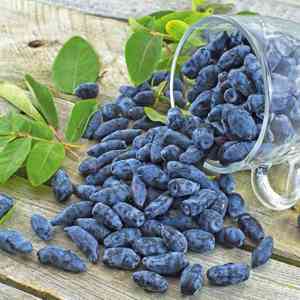
Lonicera caerulea is a robust fruit-producing bush prized for its palatable fruit. For effective reproduction, semi-lignified cuttings prove most successful. Sever robust, non-blooming stems from the present growth cycle. Ideally, select cuttings possessing a minimum of two to three nodes, as these points are where root formation is most probable. It is crucial to sustain a moist atmosphere for the cuttings, potentially by encasing them in a plastic enclosure to preserve dampness. Applying rooting stimulant to the severed tip can boost root generation. After roots have formed, relocating them into separate containers facilitates detailed observation and nurturing as the specimens develop.
What Is the Best Time To Propagate Honeyberry?
Propagation Type
Cutting
Propagation Season
Autumn,Winter
What Tools Are Used in Honeyberry Propagation?
Sharp pruning shears
These are vital for obtaining healthy cuttings from honeyberry. Keen blades ensure clean cuts, minimizing damage and disease risk. A smooth cut aids faster healing and more efficient rooting.
Rooting hormone
This promotes root growth in honeyberry cuttings. Applying rooting hormone to the cut end helps stimulate root development and boosts propagation success rates.
Sterile potting mix
A well-draining, sterile potting medium offers an ideal environment for honeyberry cuttings to root. It lowers the risk of soil-borne diseases and supports healthy root growth by maintaining proper moisture and aeration.
Propagation trays and domes
These establish a controlled humid environment, crucial for honeyberry cuttings. The dome helps retain moisture and warmth, fostering root development while preventing cuttings from drying out.
Heat mats
Especially useful when propagating honeyberry in cooler climates or during colder periods. Heat mats help maintain an optimal soil temperature, which can enhance the rooting process and accelerate growth.
How to Propagate Honeyberry?
Propagation Type
Moderately Difficult
How to Care for Your Newly Propagated Honeyberry?
How to Care for Your Newly Propagated Honeyberry?
Post-propagation, gradually introduce honeyberry to less humid conditions over several weeks by progressively increasing the time the cover is open. Water new plantings gently to keep the soil consistently damp but not waterlogged. Initially, avoid direct sunlight, then gradually expose plants to more light. Fertilize lightly with a balanced, slow-release fertilizer once roots are established. Monitor for pests and diseases, especially on new growth.
Common Mistakes to Avoid When Propagating Honeyberry
Not selecting healthy cuttings
Using unhealthy or weak cuttings for propagation can result in poor establishment and growth. Cuttings should be disease-free, robust, and from a productive part of honeyberry.
Cuttings too short or too long
Incorrect cutting length can impact rooting ability. Too short may lack sufficient reserves for growth, while too long can lead to excessive moisture loss.
Ignoring the node placement
Nodes are essential for root formation. Cuttings without a node, or those not planted with the node properly contacting the rooting medium, may fail to root.
Over-watering or under-watering
Both can be harmful; over-watering can cause rot and fungal diseases, whereas under-watering may hinder proper root development.
Neglecting humidity levels
Cuttings require a specific humidity level to root successfully. Insufficient humidity can cause the cutting to dry out before rooting.
Tips For Propagating Honeyberry
Select vigorous stems
Choose healthy, strong stems from a well-established honeyberry for the best chance of successful rooting.
Optimal cutting length
Cuttings should generally be around 6-8 inches to balance moisture retention with energy reserves.
Proper node placement
Ensure at least one node is beneath the soil surface, as roots develop from these points.
Balanced watering
Keep the soil consistently moist but not waterlogged to encourage rooting without decay.
Maintain suitable humidity
Using a clear plastic cover or misting the cuttings can help maintain the necessary humidity levels without over-saturating the soil.



