How to Propagate Sweet alyssum?
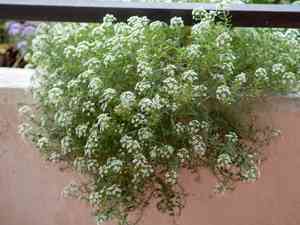
The main way to multiply sweet alyssum is by planting seeds in the spring, and this process is quite straightforward. You'll know propagation was successful when you see robust seedling development. For the best outcome, make sure the soil drains well and there's sufficient sunlight.
When Is the Optimal Time to Propagate Sweet Alyssum?
Propagation Method
Sowing
Propagation Period
Spring
What Implements Are Utilized in Sweet Alyssum Propagation?
Seedling trays
Seedling trays are crucial for initiating sweet alyssum from seeds. They enable organized sowing of multiple seeds and facilitate easy relocation of young plants. These trays help maintain consistent moisture and provide a stable environment for germination and initial growth.
Potting mix
A light, well-draining potting mix suitable for sweet alyssum ensures seeds have the proper medium for germination. The mix should offer balanced nutrients, moisture retention, and air circulation to foster robust root development.
Fine vermiculite or perlite
These substances can be used to lightly cover sweet alyssum seeds after planting. They help retain moisture around the seeds while allowing necessary light for germination to penetrate. Vermiculite and perlite also improve aeration for developing roots.
Watering can with a fine rose
The gentle spray from a watering can with a rose attachment is perfect for moistening soil without disturbing or dislodging small sweet alyssum seeds. This tool is vital for providing a soft water flow that encourages even germination without soil erosion or seed displacement.
Plastic dome or wrap
A clear plastic dome or wrap can create a miniature greenhouse effect over seedling trays. This tool aids in maintaining high humidity and a stable temperature, both critical for successful sweet alyssum germination.
Labels and markers
These are employed to identify trays where sweet alyssum seeds have been sown, especially when managing various types or species. Accurate labeling ensures precise monitoring and care during the propagation process.
Tweezers or dibber
Tweezers or a dibber can be used for precise sowing of sweet alyssum seeds, which are tiny and delicate. These tools allow for accurate placement of seeds within the growing medium, minimizing damage and ensuring uniform spacing.
How to Propagate Sweet Alyssum?
Propagation Method
Sowing
Difficulty Level
Easy
How to Nurture Your Newly Propagated Sweet Alyssum?
How to Nurture Your Newly Propagated Sweet Alyssum?
After propagation, sweet alyssum needs full to partial sun and consistent watering to keep the soil uniformly moist. Fertilize with a balanced, slow-release product every 4-6 weeks for healthy growth. Lightly prune or deadhead spent blooms to encourage continuous flowering. In colder regions, sweet alyssum may be grown as an annual, while in milder climates, it can be a perennial requiring occasional trimming to maintain its compact shape.
Common Errors to Avoid When Propagating Sweet Alyssum
Overwatering
Excessive moisture can lead to root rot or fungal diseases in sweet alyssum, which thrive in well-drained conditions. Overwatering can suffocate the plant's roots, hindering proper growth and reducing propagation success.
Planting too deeply
When sweet alyssum seeds or cuttings are planted too deep, they may fail to sprout or root correctly. The shallow-rooting nature of sweet alyssum means they require minimal soil coverage for successful germination and rooting.
Neglecting to deadhead
Failing to remove faded flowers can prevent sweet alyssum from producing new growth, as the plant's energy is redirected to seed production instead of vegetative propagation.
Advice For Propagating Sweet Alyssum
Well-draining soil
Ensure sweet alyssum is planted in well-draining soil to prevent waterlogging and root rot. Good drainage supports healthy root development, crucial for successful propagation.
Light seeding
For seed propagation, lightly scatter sweet alyssum seeds on the soil surface and gently press them in, without covering them with too much soil. Their need for light to germinate means they should not be buried deeply.
Cutting selection
Choose healthy, non-flowering stems for cuttings to promote faster rooting and growth. Focusing energy on root development rather than flower production will enhance the success rate of sweet alyssum cuttings.



