How to Propagate Wavyleaf sea lavender?
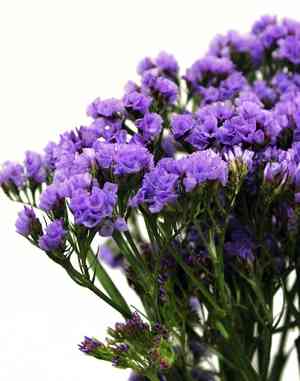
A member of the Plumbaginaceae family, wavyleaf sea lavender is a lively perennial prized for its vivid flower clusters. Reproduction is best accomplished by dividing the plant, with cultivators needing to gently separate the root balls to prevent harm. During division, confirm that every new segment possesses adequate roots and stems for effective transplantation. Following division, the newly separated wavyleaf sea lavender ought to be promptly placed in soil that drains efficiently and kept in ideal light and moisture conditions to encourage its growth.
Optimal Time for Wavyleaf Sea Lavender Propagation
Propagation Method
Splitting
Propagation Period
Spring,Autumn
Tools Required for Wavyleaf Sea Lavender Propagation
Sharp, clean pruning shears or knives
These are vital for dividing wavyleaf sea lavender, ensuring precise and healthy cuts to prevent harm and illness. Keen blades reduce stress on plant tissues, which is key for the successful establishment of separated sections.
Garden fork or spade
Utilized to carefully lift wavyleaf sea lavender plants from the earth with minimal root damage. A fork with broad, flat tines is particularly useful as it can ease the plant out of the ground without severing many roots, preserving the root structure needed for successful re-establishment.
Rooting hormone
This assists in the rapid development of roots on the newly separated parts of wavyleaf sea lavender. Rooting hormone can promote faster adaptation and lessen transplant shock, boosting the survival rate and health of the propagated plants.
Potting mix
A premium, well-draining potting mix is essential for the initial planting of wavyleaf sea lavender divisions. The mixture should be light enough to permit new root growth, yet sufficiently nourishing to support the plant's health during the critical post-division phase.
Labels and marker
Used to mark and identify the divisions of wavyleaf sea lavender, especially when managing multiple specimens or varieties. Proper labeling is crucial for tracking the growth and health of each division, ensuring optimal care and monitoring of propagation outcomes.
How to Propagate Wavyleaf Sea Lavender?
Propagation Type
Simple
Post-Propagation Care for Wavyleaf Sea Lavender
How to Care for Your Newly Propagated Wavyleaf Sea Lavender?
Following propagation, position wavyleaf sea lavender in an area receiving full sun to partial shade and maintain consistently moist soil. Avoid excessive watering to prevent root rot. Remove spent blooms to encourage new growth and lightly fertilize during the active growing season for healthier plants.
Common Errors to Avoid When Propagating Wavyleaf Sea Lavender
Overwatering
Excessive moisture during wavyleaf sea lavender propagation can lead to root decay and fungal infections, creating an unsuitable environment for root development.
Deep Sowing
Planting wavyleaf sea lavender seeds too deeply can hinder germination; their small size requires a thin layer of soil to ensure proper growth.
Ignoring Humidity
Lack of attention to humidity levels can impede wavyleaf sea lavender cuttings from rooting effectively, as they need a consistently moist atmosphere to form new roots.
Overcrowding
Sowing wavyleaf sea lavender seeds too close together or placing cuttings too near can restrict air circulation and light, resulting in poor growth and increased disease risk.
Neglecting Soil Quality
Using poorly draining or non-sterile soil for wavyleaf sea lavender propagation can obstruct root growth and attract pathogens.
Tips For Propagating Wavyleaf Sea Lavender
Water Management
Maintaining uniformly moist but not saturated soil is vital for the successful propagation of wavyleaf sea lavender, particularly when rooting cuttings.
Seed Surface Sowing
Gently press wavyleaf sea lavender seeds onto the soil surface and lightly cover with soil or vermiculite, as they require light for effective germination.
Cutting Selection
Choose robust, non-flowering stems for cuttings to promote faster and more vigorous root development in wavyleaf sea lavender.
Adequate Spacing
Provide sufficient space between wavyleaf sea lavender seeds and cuttings to allow for proper light penetration and airflow, reducing the chance of disease.
Soil Preparation
Utilize a well-draining, sterile potting mix to offer an ideal rooting medium for wavyleaf sea lavender propagation.



