How to Propagate Sheep laurel?
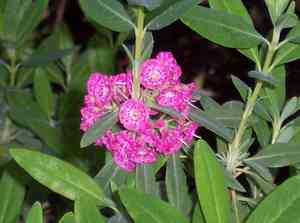
Originating from North America, sheep laurel thrives in acidic ground and belongs to the Ericaceae botanical group. For reproduction, semi-hardwood cuttings are the preferred method; choose robust, non-blooming stems in the latter part of summer. Cuttings ought to measure approximately 6 inches, be treated with a rooting stimulant, and inserted into a free-draining, peat-rich substrate. Steady hydration and elevated temperatures will facilitate root development. Perseverance is crucial, as sheep laurel can be slow to establish roots. After it has taken hold, it needs ample air circulation and dappled light to prosper.
Optimal Time for Sheep Laurel Propagation
Propagation Method
Cutting
Propagation Period
Spring,Summer
Tools for Sheep Laurel Propagation
Sharp pruning shears
These are crucial for making precise cuts on sheep laurel stems when preparing cuttings for propagation. A clean cut helps prevent disease and improves rooting success. Sharp shears minimize tissue damage, promoting healthier growth and faster healing.
Rooting hormone
This product encourages root development from sheep laurel cuttings. Applying rooting hormone to the cut end before planting can significantly boost the chances of successful rooting, especially for sheep laurel, which might otherwise be challenging to propagate.
Sterile potting mix
Using a sterile potting mix is vital for sheep laurel cuttings to prevent disease and offer an ideal environment for root growth. A well-draining, nutrient-balanced medium supports early development by providing adequate moisture and aeration.
Propagation trays or small pots
These containers are used to plant the prepared cuttings. They should offer sufficient drainage and depth to accommodate the developing root system of sheep laurel. The container's size and material can influence the rooting medium's moisture level and temperature stability.
Plastic covers or humidity domes
These tools help maintain high humidity around sheep laurel cuttings, which is essential for encouraging root growth and preventing desiccation. Humidity domes also create a controlled environment that can be easily monitored and adjusted.
Propagating Sheep Laurel
Propagation Difficulty
Moderately Difficult
Caring for Newly Propagated Sheep Laurel
Caring for Newly Propagated Sheep Laurel
After successful propagation, position sheep laurel in an area that mimics its natural environment, such as partial shade with cool, moist, well-draining acidic soil. Water consistently to establish a strong root system, and lightly prune to encourage dense growth. Shield sheep laurel from harsh winter winds and intense sunlight. Apply an acidifying fertilizer in spring and use mulch to retain soil moisture and control weeds.
Common Errors to Avoid When Propagating Sheep Laurel
Inadequate soil conditions
Using soil that either drains too quickly or retains too much moisture is a frequent error, potentially leading to root rot or drying of rootlets in sheep laurel.
Incorrect humidity levels
Attempting to propagate sheep laurel in an environment with improper humidity can result in poor root development or desiccation of plant tissues.
Overwatering
This can lead to fungal infections or root rot in sheep laurel, as it prefers well-drained soil and is sensitive to excessive moisture around its roots.
Ignoring plant toxicity
Handling sheep laurel without proper precautions can be a mistake due to its toxic components, potentially causing skin irritation or other health issues.
Neglecting light requirements
Sheep laurel needs specific light conditions to thrive, and insufficient light or exposure to direct, intense sunlight can be harmful.
Advice for Propagating Sheep Laurel
Soil composition
Using a blend of peat, sand, and loamy soil can create the well-drained yet moisture-retentive environment that sheep laurel needs for optimal growth.
Humidity management
Maintaining moderate humidity around sheep laurel during propagation is crucial for healthy root and shoot development.
Watering practices
Appropriate watering frequency is vital; allowing the soil to dry slightly between waterings can benefit sheep laurel by encouraging strong root growth while preventing rot.
Safe handling
Wearing gloves and ensuring skin protection when handling sheep laurel can prevent irritation or allergic reactions due to the plant's toxicity.
Light conditions
Providing dappled shade or bright, indirect light will promote successful propagation of sheep laurel, mimicking its natural understory habitat.



