How to Propagate Blackberry lily?
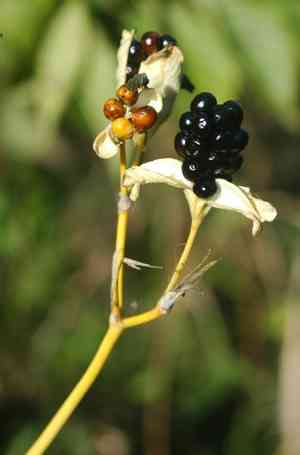
Blackberry lily propagation is most effectively accomplished in Spring by separating its rhizomes. This technique presents moderate ease, with fresh foliage emergence signaling successful multiplication. Provide a growing medium with good drainage and exposure to partial sun.
Optimal Time for Blackberry Lily Propagation
Propagation Method
Utilize The Tubers
Propagation Period
Spring
Tools Required for Blackberry Lily Propagation
Gloves
Shield hands from dirt and injury during tuber handling.
Trowel
Aids in excavating and planting tubers at the correct depth.
Pruning Shears
Trims foliage cleanly to encourage healthier tuber separation.
Watering Can with Fine Rose
Delivers gentle irrigation to newly planted tubers, minimizing soil disturbance.
Sharp Knife
Used for dividing tubers if needed, ensuring clean cuts for better healing and growth.
Garden Fork
Loosens soil around blackberry lily to assist in lifting tubers without harm.
Label and Permanent Marker
Identifies newly planted tubers to track growth and monitor varieties.
Perlite or Vermiculite
Amends soil to enhance drainage and aeration around tubers, promoting root development.
Rooting Hormone
May be applied to stimulate root growth on cut tuber surfaces.
Misting Bottle
Maintains humidity around cuttings or new growth, vital for preventing dehydration.
How to Propagate Blackberry Lily?
Propagation Method
Utilize The Tubers
Difficulty Level
Simple
Post-Propagation Care for Your Blackberry Lily
How to Care for Your Newly Propagated Blackberry Lily?
Caring for blackberry lily after propagation involves maintaining consistent soil moisture without overwatering. Regularly check for proper drainage to prevent root rot. Apply a balanced fertilizer in spring as new growth emerges. Support taller plants with stakes if necessary. Remove spent flowers to encourage further blooming and trim foliage in autumn when it begins to die back. Protect the plant from harsh winter conditions with additional mulch if needed. Divide the clumps every few years to maintain vigor and prevent overcrowding.
Common Errors to Avoid When Propagating Blackberry Lily
Overwatering seedlings
Excessive moisture can lead to fungal diseases like damping-off, which is lethal to young blackberry lily seedlings.
Planting seeds too deep
Blackberry lily seeds need light to germinate. If sown too deep, they may not sprout due to insufficient light exposure.
Ignoring soil drainage
Poorly drained soil can cause root rot in blackberry lily, impacting overall plant health and hindering successful propagation.
Overlooking stratification needs
Blackberry lily seeds benefit from a period of cold stratification to break dormancy. Skipping this process may result in poor germination rates.
Neglecting dividing
Blackberry lily can be propagated by dividing rhizomes, but failure to do so every few years may lead to overcrowding and diminished flowering.
Advice for Propagating Blackberry Lily
Surface sowing
Sow blackberry lily seeds on the soil surface with minimal covering, ensuring they receive necessary light for germination.
Moisture management
Provide consistent moisture to blackberry lily seedlings but avoid waterlogging to protect from fungal diseases.
Soil preparation
Ensure the soil has good drainage by incorporating organic matter or sand to support healthy root development of blackberry lily.
Cold stratification
Mimic winter conditions by subjecting blackberry lily seeds to cold stratification for a few weeks to improve germination success.
Regular division
Divide blackberry lily rhizomes every 2-3 years to prevent overcrowding and promote vigor and maximum blooming in the garden.



