How to Propagate Garden balsam?
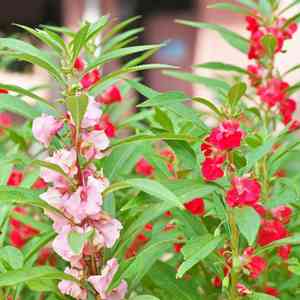
Impatiens balsamina is readily multiplied by planting seeds at the start of spring. Planting in damp earth guarantees successful sprouting, evidenced by the appearance of young plants. No further propagation advice is needed for this straightforward procedure.
What Is the Best Time To Propagate Garden Balsam?
Propagation Type
Sowing
Propagation Season
Spring
What Tools Are Used in Garden Balsam Propagation?
Seed trays or flats
These shallow containers offer a controlled setting for planting garden balsam seeds. They ensure uniform heat and moisture distribution, vital for garden balsam germination. Using seed trays simplifies seedling management and aids in acclimatization during transplanting.
Sterile potting mix
A sterile potting mix is pathogen-free, ensuring a healthy start for garden balsam seeds. The mix should be light and drain well to prevent waterlogging, which can cause fungal diseases and negatively affect seed germination and seedling growth.
Spray bottle or misting system
To maintain the necessary humidity for garden balsam seed germination, a spray bottle or misting system can gently water the soil without disturbing the seeds. Regular misting keeps the soil moist but not saturated, promoting successful germination.
Transparent plastic domes or covers
These covers fit over seed trays to maintain consistent humidity and temperature, both crucial for garden balsam seed germination. They also protect seeds from pests and harsh environmental conditions. Once seeds sprout, covers can be gradually removed to harden off seedlings.
Heat mat
Providing bottom heat with a heat mat can enhance the germination rate of garden balsam seeds by keeping the soil at an optimal temperature. The consistent warmth from a heat mat promotes faster and more uniform seed germination.
Labels and markers
Labels with permanent ink identify the species, variety, and sowing date for garden balsam seeds. This helps track growth progress and organize multiple seedling varieties when managing a diverse garden.
Fine-toothed sieve or sifter
To cover sown garden balsam seeds with a thin layer of soil, a sieve or sifter ensures even and light application. This prevents delicate seeds from being buried too deeply, which could hinder germination.
How to Propagate Garden Balsam?
Propagation Type
Sowing
Difficulty Level
Easy
How to Care for Your Newly Propagated Garden Balsam?
How to Care for Your Newly Propagated Garden Balsam?
After successfully propagating garden balsam, provide consistent watering, especially during dry periods, allowing the soil to dry slightly between waterings. Place plants in partial shade to shield them from intense midday sun, which garden balsam typically prefer. Fertilize monthly with a balanced, water-soluble fertilizer during the growing season. Remove spent blooms to encourage more flowering and monitor for pests and diseases, such as aphids or powdery mildew, treating as needed. Amend the soil annually with compost or well-rotted manure to maintain soil fertility and health.
Common Mistakes to Avoid When Propagating Garden Balsam
Overwatering
Watering garden balsam seedlings or cuttings too often can lead to root rot and fungal diseases, frequently resulting in plant death before full establishment.
Poor cutting choice
Using diseased or weak stem cuttings can impede root development and growth, leading to unsuccessful garden balsam propagation.
Excessive fertilization
Applying too much fertilizer to garden balsam cuttings or seedlings can burn roots and shoots, leading to poor propagation outcomes.
Ignoring humidity
Neglecting the need for high humidity can cause garden balsam cuttings to dry out before they can properly root.
Tips For Propagating Garden Balsam
Cutting selection
Choosing healthy, disease-free stem sections with at least two to three leaf nodes will increase the chances of successful rooting and growth for garden balsam.
Soil composition
Using a well-draining soil mixture prevents waterlogging, which is essential for healthy root formation in garden balsam cuttings.
Moisture balance
Maintaining consistent soil moisture without overwatering supports steady growth without the risk of rot, which is critical for garden balsam propagation.
Humidity control
Creating a humid microenvironment, such as by using a plastic cover, can help garden balsam cuttings retain moisture and encourage rooting.



