How to Propagate Sweet woodruff?
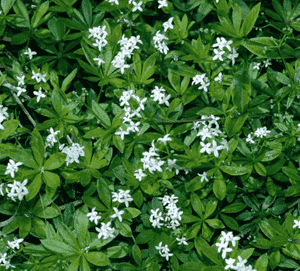
Galium odoratum is most effectively multiplied in the springtime by seeding. This particular species can present a moderate challenge for propagation, yet it exhibits robust development with lush green leaves. Sustained dampness and dappled light are crucial for successful propagation.
Optimal Time for Sweet Woodruff Propagation
Propagation Method
Seeding
Propagation Period
Spring
Tools for Sweet Woodruff Propagation
Seed trays
Seed trays provide an organized surface for planting sweet woodruff's seeds, allowing for uniform spacing and depth. They are especially useful for maintaining the necessary soil moisture and temperature, vital for sweet woodruff's seed germination.
Potting mix
A well-draining potting mix offers the ideal soil conditions for sweet woodruff's seed germination and root growth. It should be rich in organic material to support development, yet light enough to prevent waterlogging and encourage robust root systems.
Watering can with a fine rose
A watering can equipped with a fine rose attachment enables gentle irrigation that won't dislodge sweet woodruff's tiny seeds or young plants. This ensures seeds stay in place for consistent germination and reduces soil erosion within the seed trays.
Plastic dome or clear cover
A plastic dome or transparent cover creates a mini-greenhouse effect over the seed tray, helping to maintain humidity and warmth crucial for sweet woodruff's seed germination. The clear material also permits sufficient light while protecting delicate seeds from direct contact, which could harm or move them.
Labels and markers
Labels and markers are essential for identifying sweet woodruff when propagating multiple plant types simultaneously. Proper labeling ensures careful monitoring and suitable care for each species throughout the propagation process, thereby supporting successful and organized propagation efforts.
Heating mat (optional)
A heating mat can be placed beneath the seed tray to gently warm the soil, enhancing the germination rate of sweet woodruff. Particularly beneficial in colder climates or seasons, consistent bottom heat promotes faster seedling emergence and more uniform growth.
How to Propagate Sweet Woodruff?
Propagation Type
Sowing
Difficulty Level
Easy
Caring for Newly Propagated Sweet Woodruff
Caring for Newly Propagated Sweet Woodruff
Sweet woodruff requires minimal upkeep once established. It thrives in shaded areas and needs regular watering, especially during dry spells. Mulch can be applied to retain soil moisture and keep roots cool. Prune if the plant becomes too vigorous or spreads beyond its desired area. Divide plants every 2-3 years in spring or autumn to prevent overcrowding and maintain vitality.
Common Mistakes to Avoid When Propagating Sweet Woodruff
Overcrowding
Planting sweet woodruff cuttings or divisions too close together can hinder air circulation and light penetration, leading to poor development and potentially encouraging fungal diseases due to damp, confined conditions.
Deep planting
Inserting sweet woodruff cuttings or divisions too deeply into the soil may cause the stem or roots to rot due to excessive moisture and lack of oxygen, impeding establishment and growth.
Ignoring soil quality
Using poor, unamended soil for propagating sweet woodruff overlooks the plant's need for well-draining and fertile soil, which is vital for the development of a robust root system.
Inadequate moisture
Failing to maintain consistent soil moisture can lead to the drying out of sweet woodruff cuttings or divisions, which is detrimental to root formation and can cause the plant to wilt and die.
Neglecting aftercare
Overlooking the needs of sweet woodruff after propagation, such as proper light conditions and timely watering, can impede growth and reduce the likelihood of successful establishment.
Tips For Propagating Sweet Woodruff
Proper spacing
When planting sweet woodruff cuttings or divisions, space them adequately to ensure sufficient light and airflow, which promotes healthy growth and minimizes the risk of disease.
Surface planting
Place sweet woodruff divisions or cuttings just below the soil's surface, allowing the base of the stems to contact the soil, but not buried too deep to prevent rot.
Soil preparation
Enrich the planting medium with organic matter to ensure it is fertile and well-draining, which is essential for sweet woodruff to establish a strong root system.
Moisture control
Maintain consistent soil moisture, but avoid overwatering by allowing the soil to dry slightly between watering, supporting optimal root health for sweet woodruff.
Attentive care
Monitor sweet woodruff closely after propagation, providing appropriate light conditions and managing watering needs to encourage vigorous growth and successful establishment.



