How to Propagate Chocolate Lily?
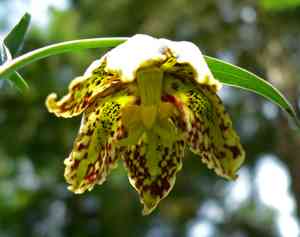
Chocolate Lily flourishes when reproduced via its corms. For successful cultivation, embed the corms in adequately draining earth, fortified with organic material to guarantee nutrient access. Place the corms at a shallow depth, just beneath the surface, offering a secure setting for root formation. Consistent irrigation ensures the soil remains damp yet not oversaturated, promoting vigorous growth. This technique not only preserves the genetic integrity of Chocolate Lily but also stimulates abundant flowering during its active phase.
Optimal Time for Chocolate Lily Propagation
Propagation Method
Utilize The Tubers
Propagation Period
Spring
Tools for Chocolate Lily Propagation
Trowel
Crucial for digging and carefully removing tubers from the ground without harm. A trowel with a slender blade is especially useful for chocolate Lily, allowing for precise handling around delicate root systems.
Gardening Gloves
Shields hands from soil pathogens and prevents accidental damage to tubers during handling. For chocolate Lily, this ensures tubers remain unbruised or unscraped, preserving their viability for replanting.
Potting Mix
Offers a well-draining, nutrient-rich medium for tuber propagation. For chocolate Lily, a mix formulated for bulbous plants, typically containing perlite or vermiculite, will foster robust root development and support growth.
Plant Pots
Required for planting tubers post-extraction. Using appropriately sized pots for chocolate Lily aids in managing moisture levels and provides ample space for root expansion, vital for successful germination and growth.
Labeling Sticks
Used to mark pots with details like planting date and species. This is particularly important for chocolate Lily as it assists in monitoring growth progress and maintaining proper care routines during the propagation phase.
Watering Can with a Fine Rose
Ensures gentle watering, preventing forceful water flow that might dislodge chocolate Lily tubers. The fine rose attachment helps distribute water evenly, providing necessary moisture without causing soil erosion around the tubers.
Caring for Newly Propagated Chocolate Lily
Caring for Newly Propagated Chocolate Lily
After successful chocolate Lily propagation, continue providing care that supports healthy development. Maintain moist, well-draining soil and offer partial shade, as chocolate Lily prefers cooler, less intense light. Fertilize lightly with a balanced, slow-release fertilizer at the start of the growing season to encourage strong growth. Monitor for pests or diseases and treat appropriately to keep plants healthy. Mulching can be beneficial for retaining soil moisture and regulating soil temperature.
Common Errors to Avoid When Propagating Chocolate Lily
Overwatering
Excessive watering can lead to root rot in chocolate Lily, which thrives in well-drained soil. Too much moisture around the roots can hinder proper air circulation, leading to fungal diseases and potentially killing the plant.
Deep Planting
Planting chocolate Lily bulbs too deeply can impede their ability to break through the soil surface. This impacts the energy the plant expends to emerge, thereby stressing and weakening it over time.
Neglecting Bulb Health
Using diseased or damaged bulbs for propagation may not be successful as they are less likely to sprout or could spread diseases to other plants, affecting overall health and propagation success.
Tips for Propagating Chocolate Lily
Proper Soil Preparation
Prepare light, well-draining soil mixed with organic matter to provide chocolate Lily with optimal growing conditions. This promotes healthy root growth essential for the plant's vitality and spread.
Correct Planting Depth
Plant chocolate Lily bulbs at a depth approximately three times their height. This is the ideal depth to support stable growth and sufficient insulation without being too deep to emerge.
Healthy Bulbs Selection
Always choose healthy, firm bulbs for propagation. Healthy bulbs have a higher chance of successful sprouting and growth, contributing to a thriving propagation effort.



