How to Propagate Cliff spurge?
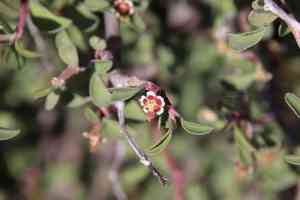
Cliff spurge flourishes when reproduced through cuttings. Best outcomes are frequently attained by utilizing robust, non-blooming stems for this process. It is essential to allow the severed end of the cutting to air-dry briefly prior to potting to avert decay. Rooting stimulant can boost success, fostering more vigorous root formation. Verify that the substrate employed for rooting drains effectively and remains uniformly damp, yet not saturated.
Optimal Period for Propagating Cliff Spurge
Propagation Method
Cutting
Propagation Period
Autumn,Winter
Essential Tools for Cliff Spurge Propagation
Sharp pruning shears
These are vital for taking cuttings from cliff spurge. Their sharp blades ensure a clean cut, minimizing stem damage, which can impede rooting. Clean cuts are key for rapid plant healing, fostering better root development.
Rooting hormone
This chemical compound stimulates root growth at the stem's cut end. Applying rooting hormone to the base of the cliff spurge cutting can significantly boost the chances of successful root development, leading to a higher propagation success rate.
Sterile potting mix
Utilizing a sterile potting mix is crucial for planting cliff spurge cuttings. It lowers the risk of soil-borne diseases affecting new cuttings. A well-draining and nutrient-balanced medium offers an ideal environment for cliff spurge to establish roots.
Small pots or trays
These containers are used for planting the cuttings. Their size should be appropriate to accommodate cliff spurge's root growth without being so large as to retain excessive moisture, which can cause root rot.
Plastic covers or propagators
Helps maintain a high humidity environment around the cliff spurge cuttings, which is essential for encouraging root growth. The cover also aids in keeping moisture consistent, vital for cuttings before root development.
Heat mat (optional)
For cooler climates, a heat mat can provide a consistent and suitable temperature to encourage root development in cliff spurge. Maintaining an optimal temperature is critical for the root formation process.
How to Propagate Cliff Spurge?
Propagation Type
Moderately Difficult
Caring for Your Newly Propagated Cliff Spurge
Caring for Your Newly Propagated Cliff Spurge?
Post-propagation, maintain consistent soil moisture, allowing the top inch to dry between waterings. Avoid overwatering, as cliff spurge is prone to root rot. Position the pot in bright, indirect sunlight, gradually increasing light exposure to prevent scorching. Fertilize with a diluted, balanced fertilizer every 4-6 weeks during active growth. Monitor for pests and diseases, especially with new growth.
Common Errors to Avoid When Propagating Cliff Spurge
Overwatering
When propagating cliff spurge, a frequent mistake is excessive watering. This can lead to root rot or fungal infections, compromising the plant's health and hindering successful propagation.
Using overly rich soil
Gardeners might use soil that is too nutrient-dense for cliff spurge, which prefers a more well-drained, less fertile medium. Excess nutrients can result in poor root development.
Neglecting sufficient light
Failure to provide cliff spurge with enough sunlight during propagation can result in leggy growth and weakened plants. This is especially detrimental as the species needs strong light to thrive.
Advice for Propagating Cliff Spurge
Use well-draining soil
For successful propagation of cliff spurge, use a sandy, well-draining soil mix. This mimics the native growing conditions of cliff spurge and promotes healthier root development.
Moderate watering
Ensuring that the soil remains lightly moist but not waterlogged is crucial. Water cliff spurge sparingly, allowing the soil to dry out slightly between watering sessions to prevent root rot.
Provide ample sunlight
Position cliff spurge in a location where it can receive plenty of direct sunlight. This will ensure vigorous growth and a higher likelihood of successful propagation.



