How to Propagate Pine-cone plant?
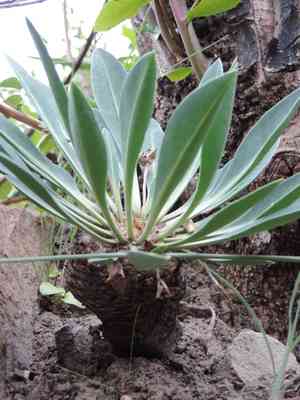
The pine-cone plant, a distinctive succulent, features a robust, succulent stem resembling a pine cone, making it a favorite among enthusiasts of unusual flora. For successful propagation of the pine-cone plant, employing cuttings is the most effective method. Choose a vigorous, non-blooming stem and sever a segment approximately 2 to 3 inches in length. Permit the severed end to form a callus over several days prior to carefully inserting it into a porous cactus substrate. Ensure steady hydration without saturating the soil, and supply ample, diffused illumination to foster root formation. Developing roots for the pine-cone plant requires patience, as it is a gradual process.
When Is the Best Time to Propagate Pine-cone Plant?
Propagation Type
Cutting
Propagation Season
Spring,Summer
What Tools Are Used in Pine-cone Plant Propagation?
Sharp, sterilized knife or pruning shears
These implements are crucial for obtaining cuttings from pine-cone plant. Their sharpness ensures a clean incision, minimizing harm to both the parent plant and the cutting, thereby improving the chances of successful rooting. Sterilization is vital to prevent disease transmission, especially since pine-cone plant can be vulnerable to infections through open wounds.
Rooting hormone powder or gel
This substance encourages root development at the cut site on the pine-cone plant cutting. Applying a rooting hormone increases the likelihood of successful root growth, which is essential as the establishment of a new root system is critical for the cutting's survival.
Well-draining potting mix
A potting medium that provides excellent drainage is necessary for pine-cone plant to prevent waterlogged conditions, which can cause root rot. A mix specifically formulated for succulents or cacti is ideal, as it typically contains a higher proportion of sand or perlite, aiding in proper drainage and air circulation around the developing roots.
Small pots or trays
These containers are utilized for planting the freshly cut and treated pine-cone plant cuttings. Small pots or trays are preferred because they ensure that the cutting's limited root system isn't submerged in excessive soil, which could retain unnecessary moisture and foster fungal or bacterial diseases.
Plastic wrap or humidity dome
These cover the pots or trays where the pine-cone plant cuttings are planted, creating a moist environment around the cutting. This is beneficial as it helps prevent the cutting from losing too much moisture through its leaves while new roots are forming, a crucial factor in the initial stages of propagation.
How to Propagate Pine-cone Plant?
Propagation Type
Easy
How to Care for Your Newly Propagated Pine-cone Plant?
How to Care for Your Newly Propagated Pine-cone Plant?
Once pine-cone plant is successfully propagated and has established new growth, gradually introduce the young plant to its typical growing conditions. Pine-cone plant thrives in bright, indirect light and requires minimal watering, only when the soil is completely dry. Excessive watering can lead to root rot. Fertilize sparingly during the active growth period. Handle with care as pine-cone plant contains a sap that can irritate skin and eyes.
Common Mistakes to Avoid When Propagating Pine-cone Plant
Overwatering
Excessive watering can lead to root rot, which is detrimental to pine-cone plant's health because it is adapted to arid conditions and does not tolerate constant moisture well. Overwatering can suffocate the roots, impede plant growth, and increase susceptibility to diseases.
Using an incorrect soil mix
Employing a soil mix that lacks proper drainage can trap moisture around pine-cone plant's roots, potentially causing fungal infections and root decay. It is crucial to use a well-draining mix to mimic its natural growing environment and ensure healthy root development.
Improper cutting selection
Pine-cone plant cuttings must be mature and robust to enhance the chances of successful propagation. Taking cuttings that are too young or diseased can hinder rooting and result in a failed propagation attempt.
Neglecting to let cuttings callous
Failing to allow the pine-cone plant cutting to form a protective layer over the cut surface before planting can lead to moisture loss and infection, as the open wound is vulnerable to pathogens.
Tips For Propagating Pine-cone Plant
Properly preparing cuttings
Ensure that cuttings are taken with a clean, sharp tool, and are at least several inches long for optimal rooting potential. Allowing the cut end to form a callous for a few days before planting is essential for pine-cone plant's propagation.
Correct soil mix
Use a cactus or succulent potting mix with good drainage for pine-cone plant to promote aeration and prevent waterlogging. Amend with sand or perlite if necessary to improve drainage.
Moderate watering
When propagating pine-cone plant, water sparingly, allowing the soil to dry out between waterings. This mimics the natural dry conditions pine-cone plant is accustomed to and encourages root growth.
Indirect lighting conditions
Provide bright but indirect light for your pine-cone plant cuttings. Too much direct sunlight can scorch the young plants, while insufficient light can lead to weak growth.
Proper pot size
Choose a pot that is proportionate to the size of the pine-cone plant cutting. A pot that is too large can retain excess moisture around the roots, increasing the risk of rot.



