How to Propagate Garden pink?
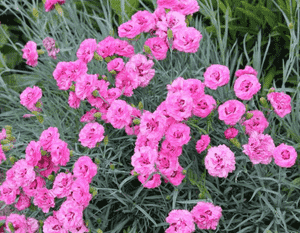
Dianthus caryophyllus is most effectively multiplied via cuttings taken in the spring or summer seasons. Its propagation presents a moderate level of challenge. Indicators of successful rooting encompass fresh foliage emergence and robust root system formation. Maintain ideal humidity and warmth to boost the likelihood of success.
Optimal Time for Garden Pink Propagation
Propagation Method
Cutting
Propagation Period
Spring, Summer
Tools for Garden Pink Propagation
Sharp Pruning Shears
These are crucial for taking clean, precise cuttings from garden pink, minimizing damage and enhancing the likelihood of successful rooting. Sharp blades ensure minimal harm to the parent plant and a smooth cut that heals quickly and is less prone to infection.
Rooting Hormone Powder
This compound stimulates root development from garden pink cuttings. Dipping the cut end into the hormone powder promotes faster and more dependable root formation, increasing propagation success rates.
Sterile Potting Mix
A sterile potting mix offers a clean, pathogen-free environment for garden pink cuttings to root. Proper drainage and aeration provided by such mixes are vital for preventing rot and fostering healthy root growth.
Propagation Trays
Excellent for organizing and managing multiple garden pink cuttings. Trays keep cuttings upright and secure, facilitating even watering, and transparent dome lids create a mini-greenhouse effect, helping retain moisture and warmth to aid rooting.
Heating Mat
Given garden pink's preference for warmth to stimulate root growth, a heating mat can be placed under propagation trays to maintain a consistent, optimal temperature, boosting rooting efficiency and speed.
Moisture Meter
Maintaining the correct moisture level in the propagation medium is essential for garden pink cuttings. A moisture meter helps monitor soil moisture, ensuring cuttings are neither too wet (which could cause rot) nor too dry (which could hinder rooting).
Fine Mist Spray Bottle
Garden pink cuttings require a humid environment to prevent desiccation before root establishment. A fine mist spray bottle gently waters the cuttings without disturbing the soil or cuttings, maintaining appropriate humidity levels.
How to Propagate Garden Pink?
Propagation Method
Cutting
Difficulty Level
Easy
Caring for Newly Propagated Garden Pink
Caring for Newly Propagated Garden Pink
Garden pink thrives in well-drained soil and a sunny spot. Water plants regularly, but allow the soil to dry out between waterings to prevent root rot. Fertilize in spring with a balanced, slow-release fertilizer. Deadhead spent flowers to encourage continuous blooming. Protect garden pink from harsh winter weather if needed with a layer of mulch.
Common Propagation Mistakes for Garden Pink
Overwatering
Excessive watering can lead to root rot and fungal diseases for garden pink, diminishing the chances of successful propagation.
Planting too deep
When seeds or cuttings are planted excessively deep, it can hinder garden pink's ability to sprout or root correctly, potentially suffocating the plant.
Ignoring soil quality
Using poor quality or unsuitable soil can prevent garden pink from acquiring necessary nutrients, resulting in weak growth or propagation failure.
Neglecting to harden off seedlings
Failing to gradually acclimate garden pink seedlings to outdoor conditions can cause shock upon transplanting, potentially killing the young plants.
Overcrowding
Overcrowding can impede airflow and promote disease spread among propagating garden pink, negatively impacting plant health and growth.
Tips For Propagating Garden Pink
Proper soil preparation
Utilize well-draining soil with some organic matter to provide garden pink with an ideal environment for root development and nutrient absorption.
Appropriate watering
Keep the soil moist, but not waterlogged, to support healthy root growth without overwatering garden pink, which is sensitive to excessive moisture.
Correct planting depth
Plant garden pink seeds or cuttings at the appropriate depth according to their size; typically, seeds should be sown no deeper than their diameter.
Adequate spacing
Space garden pink sufficiently to allow for good air circulation and to prevent competition for resources, which encourages healthy development.
Gentle handling
Handle garden pink cuttings and seedlings with care to avoid damaging delicate roots and stems, which can impede successful propagation.



