How to Propagate Cardoon?
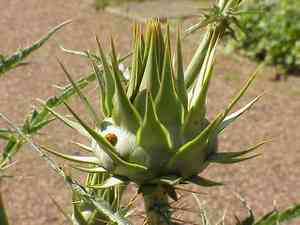
Cardoon successfully reproduces via stem sections, ideally undertaken in the spring or summer seasons. This method is relatively straightforward, with new foliage emergence indicating successful establishment. For improved root development, employ a porous potting blend and ensure consistent hydration.
Optimal Time for Cardoon Propagation
Propagation Method
Cutting
Propagation Period
Spring, Summer
Tools for Cardoon Propagation
Sharp Pruning Shears
Essential for taking clean, healthy cuttings from cardoon. A sharp blade ensures a precise cut, preventing damage to both the parent plant and the cutting, which is vital for healing and rooting.
Rooting Hormone
Applying rooting hormone to the base of cardoon cuttings can greatly enhance rooting success. This hormone promotes root development and helps prevent rot, especially beneficial for cardoon cuttings that may take longer to root.
Sterilizing Agent
Tools and surfaces must be sterilized before taking cuttings to prevent disease spread to cardoon. Alcohol or a 10% bleach solution can be used, encouraging healthy growth and reducing contamination risk.
Potting Mix
A well-draining, sterile potting mix offers the necessary support and environment for cardoon cuttings to develop roots. The mix should retain moisture but allow excess water to drain, preventing root rot.
Propagation Tray
Used to hold the potting mix and cardoon cuttings in a stable environment. Trays with clear lids can create a mini-greenhouse effect, maintaining humidity and temperature ideal for root development.
Heating Mat
A consistent heat source, such as a heating mat under the propagation tray, can boost rooting success rates for cardoon. Steady warmth encourages faster root development without overheating the cuttings.
Moisture Meter
Managing the moisture level of the potting mix is crucial for cardoon cutting success. A moisture meter helps ensure the medium is consistently moist but not waterlogged, which is vital for optimal root formation.
Propagation Light
If propagating indoors or in low-light conditions, propagation lights provide the necessary light spectrum for cardoon cuttings to photosynthesize and grow healthily while establishing roots.
Propagating Cardoon Guide
Propagation Method
Cutting
Difficulty Level
Easy
Post-Propagation Care for Cardoon
Post-Propagation Care for Cardoon
After successful propagation, gradually introduce the young cardoon plant to its permanent location in full sunlight. Ensure the soil is fertile and well-draining. Water deeply but infrequently, allowing the soil to dry out between waterings, and apply a balanced fertilizer during the growing season. Cardoon requires regular watering in the first year to establish a root system, but once established, it can tolerate periods of drought. Protect young plants from heavy frost, and when mature, cut back dead growth in late winter to early spring to encourage robust new growth.
Common Propagation Mistakes for Cardoon
Ignoring soil requirements
Using an unsuitable soil type can negatively impact cardoon's root development and overall health. This plant thrives in well-drained soil rich in organic matter. Heavy clay or very sandy soils can hinder plant establishment and growth.
Overwatering
While cardoon needs moist conditions for root initiation, excessive water can lead to root rot and fungal diseases. Overwatering can also reduce oxygen availability to the roots, stressing the plant.
Planting depth
Planting seeds or seedlings too deep can impede their growth. Cardoon requires a specific depth for proper root and foliage development; planting too deep can prevent sprouting or weaken the plant.
Ignoring pest control
Cardoon can be vulnerable to pests like aphids and slugs. Neglecting pest management during the early propagation stages can result in infestations that damage or kill young plants.
Cardoon Propagation Tips
Soil preparation
Prepare a well-draining soil mix with ample organic matter. This ensures the correct balance of moisture and air, promoting healthy root growth for cardoon.
Appropriate watering
Maintain a consistent watering schedule that keeps the cardoon's soil moist but not waterlogged. Regularly check soil moisture and adjust watering as needed to prevent overwatering.
Seedling care
When planting seeds or handling seedlings, ensure they are placed at the correct depth. Follow guidelines for seedling depth to give cardoon the best chance for vigorous growth.
Pest management
Monitor cardoon regularly for signs of pests and take immediate action if any are detected. Using protective barriers, such as slug traps or insecticidal soap for aphids, can be effective.



