How to Propagate Spotted wintergreen?
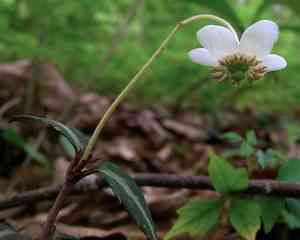
Spotted wintergreen is most effectively multiplied via cuttings taken in the spring and summer seasons. This procedure presents a moderate challenge, with the emergence of new leaves signifying successful propagation. For the best outcomes, confirm that cuttings are sourced from robust specimens.
Optimal Time for Spotted Wintergreen Propagation
Propagation Method
Cutting
Propagation Period
Spring, Summer
Tools Required for Spotted Wintergreen Propagation
Sharp Pruning Shears
Essential for obtaining clean cuttings from spotted wintergreen, sharp pruning shears minimize harm to the parent plant and create a smooth cut surface on the cutting. Clean cuts aid in preventing infection and encourage quicker healing and rooting.
Rooting Hormone Powder or Gel
Promotes root formation on spotted wintergreen cuttings. Applying rooting hormone to the cut end of the cutting can significantly boost the success rate of rooting, as spotted wintergreen can be challenging to propagate.
Sterilizing Agent (e.g., Isopropyl Alcohol or Bleach Solution)
Prior to taking cuttings, tools must be disinfected to prevent disease transmission to spotted wintergreen. Sterilization is crucial as cuttings are particularly vulnerable to infection.
Propagation Tray or Pots
These offer a controlled setting for spotted wintergreen cuttings to root. The trays or pots should have adequate drainage and be filled with a suitable soilless medium that provides good aeration and moisture retention.
Soilless Propagation Medium (e.g., Perlite, Vermiculite, Peat Moss)
To reduce disease risk and ensure optimal moisture balance, spotted wintergreen cuttings should be placed in a sterile, well-draining medium that is light enough for root growth yet stable enough to support the cutting.
Clear Plastic Dome or Bags
To maintain high humidity around spotted wintergreen cuttings, a plastic dome or bag can be utilized. This helps prevent moisture loss from the cutting's leaves while it develops roots, which is vital for delicate species like spotted wintergreen.
Heat Mat (optional)
For spotted wintergreen, a heat mat can provide a consistent and appropriate propagation temperature, fostering faster root development. The temperature should be monitored, as excessive heat can be harmful.
Misting Bottle
To maintain moisture levels without overwatering, a gentle misting bottle can be used to lightly water the spotted wintergreen cuttings. This helps sustain the necessary humidity and moisture for the cutting to root.
How to Propagate Spotted Wintergreen?
Propagation Method
Cutting
Difficulty Level
Easy
Caring for Your Newly Propagated Spotted Wintergreen
Caring for Your Newly Propagated Spotted Wintergreen
Following successful propagation, maintain consistent moisture in the potting soil without waterlogging, as spotted wintergreen does not tolerate excessively wet conditions. Provide the plant with partial to full shade, as it naturally thrives under forest canopies. Protect it from strong winds, and mulch around the base to conserve moisture and regulate soil temperature. Slow-release fertilizers or organic compost can be applied to support the growth of spotted wintergreen. Avoid disturbing the root system as the plant establishes itself in its new location. Adhering to these conditions will help ensure a healthy transition from propagation to a mature plant.
Common Errors to Avoid When Propagating Spotted Wintergreen
Overwatering
Excessive water can lead to root rot in spotted wintergreen, as it prefers well-drained soil. Saturated conditions are detrimental to root health, causing fungal diseases and poor growth.
Using dense soil
Planting spotted wintergreen in heavy, compacted soil can hinder root growth and reduce air circulation. This can result in poor establishment and an increased risk of disease.
Excessive handling
Over-handling the delicate roots of spotted wintergreen during transplantation can damage them, impede root establishment, and decrease survival rates.
Ignoring soil acidity
Failing to consider the requirement for acidic soil conditions can lead to suboptimal growth. Spotted wintergreen thrives in acidic soil, and neglecting pH requirements will impact its development.
Neglecting humidity
Spotted wintergreen requires a humid environment for effective propagation. Overlooking the need for humidity can result in desiccation and poor rooting.
Tips For Propagating Spotted Wintergreen
Indirect light
Provide spotted wintergreen with bright, indirect light to support healthy growth. Direct sunlight can scorch the leaves, while insufficient light can stunt growth.
Use of rooting hormone
Applying a rooting hormone to spotted wintergreen cuttings can stimulate root development and enhance the chances of successful propagation.
Sphagnum moss
Propagating spotted wintergreen in sphagnum moss can provide the necessary moisture and aeration for rooting. This medium also supports the acidic conditions that spotted wintergreen prefers.
Softwood cuttings
Taking softwood cuttings during the active growth phase can increase the likelihood of successful propagation of spotted wintergreen. These cuttings tend to root more easily.
Bottom heat
Utilizing bottom heat can encourage rooting in spotted wintergreen cuttings by maintaining a consistent, optimal soil temperature.



