How to Propagate Cathay quince?
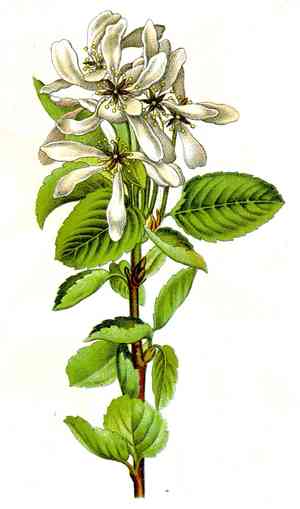
Cathay quince flourishes when reproduced via cuttings. Begin with robust, semi-woody sections harvested from an established specimen to guarantee strong development. Verify that every cutting possesses a minimum of two to three nodes. Employing rooting hormone can substantially elevate the chances of success. Insert the cuttings into adequately draining substrate and uphold steady dampness without oversaturation. Shielding them from harsh environmental factors initially will aid in cultivating sturdy plants.
Optimal Time for Propagating Cathay Quince
Propagation Method
Cutting
Propagation Period
Autumn,Winter
Tools Required for Cathay Quince Propagation
Sharp Pruning Shears
Sharp pruning shears are crucial for obtaining healthy cuttings from cathay quince. They ensure a clean, precise cut, minimizing harm to the parent plant and boosting the cutting's chances of successful rooting. Specifically, sharp blades prevent crushing or tearing plant tissues, which can lead to infections and poor healing.
Rooting Hormone
Rooting hormone, available as a powder or liquid, significantly enhances the probability of successful root formation in cathay quince cuttings. Applying rooting hormone to the freshly cut end stimulates faster development of new roots, increasing the overall effectiveness of the propagation process.
Sterile Potting Mix
A sterile potting mix offers a clean, regulated environment for cathay quince cuttings to establish roots. Utilizing a sterile medium lowers the risk of soil-borne diseases affecting the new plants. It should drain well yet retain enough moisture to support root growth without becoming waterlogged.
Propagation Tray with Dome
A propagation tray fitted with a clear dome creates a microenvironment with controlled humidity and temperature, perfect for rooting cathay quince cuttings. This setup maintains consistent moisture levels around the cuttings, vital for their survival and root development, and prevents them from drying out.
Heat Mat
A heat mat can be positioned beneath the propagation tray to maintain an ideal soil temperature for root growth. This is especially beneficial for cathay quince, as steady, gentle bottom heat can encourage quicker root development, helping to establish the cuttings more rapidly and efficiently.
How to Propagate Cathay Quince?
Propagation Difficulty
Moderately Difficult
Caring for Your Newly Propagated Cathay Quince
Caring for Your Newly Propagated Cathay Quince?
Cathay quince needs consistent soil moisture, but be careful to avoid waterlogging as it can cause root diseases. After rooting, gradually introduce the plant to less humid conditions. Once established, cathay quince thrives in full to partial sun exposure and should be fed with a balanced, slow-release fertilizer during its active growth period. Regular pruning will help maintain its form and promote healthier, more vigorous growth.
Common Errors to Avoid When Propagating Cathay Quince
Using unsuitable cuttings
Attempting to propagate cathay quince with cuttings that are either too young or too woody can be problematic. Such cuttings may not root effectively or could succumb to rot or disease, lowering the overall success rate of propagation.
Ignoring soil conditions
Using an incorrect soil composition can hinder proper root development for cathay quince. Soil that is too dense or holds excessive moisture can lead to root rot, while overly sandy soil may not provide sufficient nutrients or water retention.
Excessive water
Overwatering cuttings or young cathay quince plants can result in fungal diseases and root rot. This is particularly damaging in the initial stages of propagation when the plant's root system is still forming.
Advice for Propagating Cathay Quince
Proper cutting selection
Choose semi-hardwood cuttings for propagating cathay quince. These are typically taken in late summer when the current season's growth has begun to mature. This type of cutting tends to root more reliably than very young (softwood) or fully hardened (hardwood) cuttings.
Ideal soil mix
Utilize a well-draining soil mix composed of two parts peat to one part perlite or sand. This ensures adequate drainage and aeration, providing an optimal environment for root growth without retaining excess moisture that can cause disease issues.
Balanced watering
Maintain consistent moisture levels when propagating cathay quince, but avoid overwatering. The goal is to keep the soil moist but not waterlogged. Using a spray bottle to gently mist the soil can be a useful method to manage hydration without overdoing it.



