How to Propagate Plumed cockscomb?
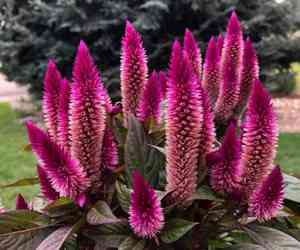
Celosia plumosa is most effectively propagated by planting seeds in the springtime. This plant is straightforward to cultivate and generally flourishes when its seeds are uniformly distributed. The appearance of young sprouts indicates successful propagation. Provide soil with good drainage for the best development.
Optimal Propagation Period for Plumed Cockscomb
Propagation Method
Seeding
Propagation Period
Spring
Tools for Plumed Cockscomb Propagation
Seedling trays
These trays facilitate efficient sowing and germination, allowing gardeners to manage soil quality and moisture. Their small compartments enable individual care for each plumed cockscomb seedling, boosting success rates.
Peat pots or biodegradable pots
These pots promote robust root growth without disturbing the roots during transplanting. Given plumed cockscomb's sensitivity to root disturbance, these pots prevent transplant shock and aid better garden establishment.
Sterile potting mix
A premium sterile potting mix offers a disease-free medium, crucial for plumed cockscomb's germination and initial growth. It also ensures proper drainage and aeration, vital for root development.
Watering can with a fine rose
This ensures gentle, even water distribution, essential for keeping plumed cockscomb seeds moist without dislodging them. The fine rose attachment prevents soil erosion or seed displacement.
Humidity dome or plastic wrap
Maintains a stable, high-humidity environment, ideal for plumed cockscomb seed germination. It helps sustain consistent soil moisture and temperature, significantly impacting propagation success.
Heat mat
Provides bottom heat, thermostatically controlled to maintain optimal germination temperature for plumed cockscomb, ensuring faster and more uniform sprouting.
Grow lights
Supply consistent, adequate light for plumed cockscomb seedlings, especially important indoors or in areas with limited natural light. These lights support healthy foliage and stem development.
Labeling material
Crucial for tracking sowing dates and specific plumed cockscomb varieties. Labels assist in managing care routines and evaluating propagation outcomes.
How to Propagate Plumed Cockscomb
Propagation Method
Seeding
Difficulty Level
Simple
Caring for Newly Propagated Plumed Cockscomb
Caring for Newly Propagated Plumed Cockscomb
After propagating plumed cockscomb, young plants require continuous care to flourish. This involves gradually adapting them to outdoor conditions if started indoors (hardening off), providing ample sunlight, watering thoroughly but allowing soil to dry slightly between waterings, regular feeding with balanced fertilizer, and monitoring for pests and diseases. Ensure plumed cockscomb are planted in well-draining soil with full sun to partial shade, and avoid overwatering to prevent root rot. As plumed cockscomb prefers warm temperatures, protect them from frost and cooler weather. Removing spent blooms can encourage more flowers and extend the blooming period.
Common Errors to Avoid When Propagating Plumed Cockscomb
Overwatering
Excessive water can cause root and stem rot in plumed cockscomb, particularly damaging during the rooting phase of cuttings or after seeds have been sown.
Deep sowing
Planting plumed cockscomb seeds too deeply can hinder successful germination, as seeds need light to germinate effectively and may not penetrate the soil surface if sown too deep.
Overcrowding
Sowing plumed cockscomb seeds too densely or placing cuttings too close together can impede airflow and light, leading to fungal diseases and poor growth due to resource competition.
Ignoring humidity
Failing to maintain a humid environment for plumed cockscomb cuttings can cause them to dry out rapidly, reducing the likelihood of successful rooting.
Neglecting soil texture
Using a poorly draining soil mix can lead to water accumulation and eventual root rot, which is fatal for young plumed cockscomb plants.
Tips for Propagating Plumed Cockscomb
Light exposure
Ensuring plumed cockscomb seeds are sown on the soil surface or lightly covered with a very thin soil layer can promote effective germination by allowing sufficient light exposure.
Moist environment
Maintaining a consistently moist (not waterlogged) environment for plumed cockscomb seeds and cuttings encourages healthy root development without the risk of waterlogging.
Adequate spacing
Sufficiently spacing plumed cockscomb seeds and cuttings ensures proper airflow and resource availability, essential for robust growth and reducing disease incidence.
Humidity control
Using a humidity dome or plastic cover helps maintain high humidity levels for plumed cockscomb cuttings, crucial for encouraging rooting without overwatering.
Well-draining mix
Propagating plumed cockscomb in a well-draining soil mix prevents water retention around the roots, reducing the risk of root rot and ensuring the plant receives the correct balance of moisture and air.



