How to Propagate Burmese fishtail palm?
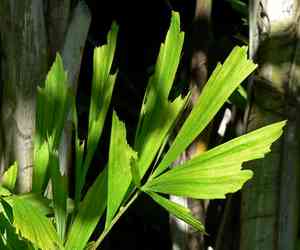
Originating in tropical zones, the burmese fishtail palm is recognized for its distinctive, flowing fishtail-shaped fronds. Reproduction is typically accomplished via division, which entails detaching the clusters of the established specimen. During the division process, it is crucial to employ a disinfected cutting tool to avert disease. Gently separate the root mass to isolate portions possessing sound roots and a minimum of one growing tip. Following division, prompt re-potting into fertile substrate enhances the chances of survival, with sufficient hydration and diffused illumination encouraging vigorous development.
What Is the Best Time To Propagate Burmese Fishtail Palm?
Propagation Type
Division
Propagation Season
Spring,Autumn
What Tools Are Used in Burmese Fishtail Palm Propagation?
Sharp, sterile knife or pruning shears
These implements are crucial for the division process where parts of burmese fishtail palm's root ball are separated. A sharp, sanitized knife or shears ensure clean cuts that minimize root damage and lower the chance of disease spread. This hygiene is vital, as burmese fishtail palm can be sensitive to root disturbance and infections, which might hinder successful propagation.
Spade or garden fork
Utilized for digging around the base of burmese fishtail palm to carefully lift and separate the root ball from the soil. A spade or fork with sharp, sturdy tines is beneficial for penetrating the soil with minimal disruption to the root system of burmese fishtail palm, which is essential for maintaining the plantâs health during division.
Potting mix
Following division, the separated sections of burmese fishtail palm require replanting. A high-quality potting mix, suitable for palms, should be employed to provide ample drainage and the necessary nutrients. This aids the new divisions in establishing more effectively, supporting root growth and overall health during the critical early stages of redevelopment.
Rooting hormone (optional)
This can be applied to the cut surfaces of burmese fishtail palmâs roots to encourage quicker root development and enhance overall propagation success rates. Rooting hormone can be especially beneficial in mitigating the stress imposed on burmese fishtail palm during the division process by stimulating root growth and helping the plant to establish in its new setting more efficiently.
Watering can with a gentle spray
After repotting, it's important to water burmese fishtail palm gently but thoroughly. A watering can with a gentle spray attachment ensures that the water is evenly distributed without disturbing the new planting medium or exposing the newly cut roots to excessive direct water pressure, which can be detrimental.
How to Propagate Burmese Fishtail Palm?
Propagation Type
Easy
How to Care for Your Newly Propagated Burmese Fishtail Palm?
How to Care for Your Newly Propagated Burmese Fishtail Palm?
To care for burmese fishtail palm after propagation, maintain a warm environment, avoid direct sunlight as it can scorch the leaves, and position it in a spot with indirect light. Ensure the plant receives consistent watering to keep the soil uniformly moist and apply a balanced, slow-release fertilizer during the growing season to encourage robust growth. Monitor the humidity level, as burmese fishtail palm prefers higher humidity, and mist the leaves if the air is too dry. Repot the plant when it outgrows its current container or when the soil becomes depleted of nutrients.
Common Mistakes to Avoid When Propagating Burmese Fishtail Palm
Overwatering
Excessive watering of burmese fishtail palm can lead to root rot, a common problem where roots decay due to too much moisture. This can be fatal for the plant as it hinders nutrient absorption and causes the plant to wilt and die.
Using soil with poor drainage
Planting burmese fishtail palm in soil that doesn't drain well will cause water to accumulate around its roots, which can lead to fungal infections and root rot, similar to the effects of overwatering.
Incorrect cutting
When propagating burmese fishtail palm through cuttings, an improper cut can harm the parent plant and the cutting itself, resulting in poor or no root development.
Ignoring cleanliness
Not using sterilized equipment or clean pots can introduce harmful pathogens to burmese fishtail palm, which may lead to disease and poor growth.
Planting cuttings too deep
Inserting the cuttings of burmese fishtail palm too deeply into the substrate can cause the stems to rot before they have a chance to root.
Neglecting aftercare
Failing to provide adequate care for burmese fishtail palm after propagation, such as appropriate watering, light, and humidity, can lead to the propagation attempt failing.
Tips For Propagating Burmese Fishtail Palm
Moderate watering
Water burmese fishtail palm moderately and ensure the potting mix is damp but not soggy to prevent root rot while still maintaining the humidity necessary for rooting.
Well-draining soil
Use a well-draining potting mix for burmese fishtail palm to promote proper moisture levels and reduce the risk of waterlogging and root diseases.
Proper cutting technique
Take cuttings from burmese fishtail palm with a clean, sharp tool to ensure a clean cut that will heal quickly and root effectively.
Sanitation
Always use sanitized tools and pots when propagating burmese fishtail palm to minimize the risk of disease transmission.
Correct cutting depth
Plant the cuttings of burmese fishtail palm at the correct depth, which usually means burying the cut end slightly into the rooting medium, to encourage rooting without causing stem rot.
Consistent aftercare
Provide consistent care to burmese fishtail palm post-propagation, including the right balance of light, water, and warmth to encourage healthy root development.



