How to Propagate Glaucous sedge?
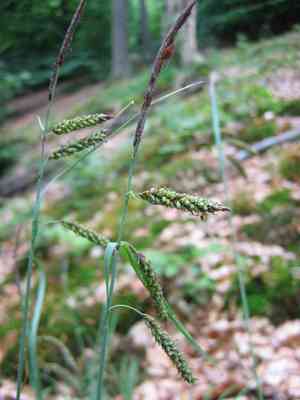
Glaucous sedge is successfully multiplied via separation, a technique highlighting its robustness and versatility. Cultivators ought to split the root ball of glaucous sedge during its period of vigorous development to guarantee peak recuperation and expansion. Carefully detach the root portions, making certain each fresh piece possesses sufficient roots. Immediately reintroduce these separated parts into adequately draining earth, preserving dampness without saturation to foster integration.
When Is the Optimal Time to Propagate Glaucous Sedge?
Propagation Method
Separation
Propagation Period
Spring,Autumn
What Implements Are Utilized for Glaucous Sedge Propagation?
Garden spade or sharp knife
Employed for effectively dividing the root masses of glaucous sedge. A keen blade or garden spade is vital for cleanly severing the root system, crucial for minimizing harm to the roots, thereby encouraging faster recovery and post-division growth.
Hand trowel
Perfect for excavating around the base of glaucous sedge to loosen the earth without significantly disturbing adjacent plants or the plant itself. A hand trowel aids in carefully lifting the plant from the soil, ensuring minimal root damage.
Gardening gloves
Safeguards hands when handling glaucous sedge, particularly when dealing with sharp or coarse root structures. Gloves also assist in maintaining cleanliness, preventing the transmission of potential diseases to and from glaucous sedge.
Watering can or hose with a gentle nozzle
Crucial for irrigating glaucous sedge immediately after propagation to foster root establishment. A soft flow is essential to prevent washing away newly planted divisions or disrupting the soil structure.
Rooting hormone
While not always necessary, applying a rooting hormone to the severed sections of glaucous sedge's roots can boost root development and increase the likelihood of successful propagation, especially in less than ideal soil conditions.
How to Propagate Glaucous Sedge?
Propagation Type
Simple
How to Nurture Your Newly Propagated Glaucous Sedge?
How to Nurture Your Newly Propagated Glaucous Sedge?
Following propagation, glaucous sedge should be maintained in conditions that emulate its natural damp or boggy environment. Ensure the soil remains consistently moist but not waterlogged. Glaucous sedge tolerates partial shade to full sun, so select a location suitable for your climate. Periodically inspect for pest issues, though glaucous sedge is generally quite resilient against pests. During the initial growing season, be attentive to moisture levels, particularly in drier conditions. Minimal fertilization is needed; an annual application of a balanced, slow-release fertilizer in early spring suffices.
Common Errors to Avoid When Propagating Glaucous Sedge
Overwatering
Excessive watering can cause root rot in glaucous sedge, which thrives in well-drained soil. Too much moisture can impede root development, reducing propagation success.
Deep planting
Planting glaucous sedge rhizomes or seeds too deeply can hinder their sprouting due to insufficient light exposure and oxygen, both vital for germination and initial growth.
Neglecting division size
Incorrectly sizing divisions when propagating glaucous sedge from rhizomes can impact plant health. Divisions that are too small may lack sufficient resources to establish, while overly large ones could suffer from transplant shock.
Using poor soil
Employing infertile or unsuitable soil mix for potting can obstruct the growth of glaucous sedge, as it requires soil rich in organic matter to supply adequate nutrients during its establishment phase.
Tips For Propagating Glaucous Sedge
Appropriate moisture
Maintain moderate moisture levels when propagating glaucous sedge to support healthy root development without causing waterlogging. Consistent, light watering ensures the soil is ideally moist.
Rhizome segmentation
Ensure that each rhizome division includes at least one bud or shoot when propagating glaucous sedge to promote successful growth. Divisions should be planted at shallow depths to enable easy sprouting.
Soil preparation
Prepare a soil mixture rich in organic matter for propagating glaucous sedge to enhance nutrient availability and support robust growth. Ensuring good drainage in the soil mix can prevent water retention issues.
Light exposure
Provide ample light exposure, especially when sowing seeds of glaucous sedge, to stimulate optimal germination. However, protect from harsh direct sunlight, which can be detrimental during the early stages of propagation.



