How to Propagate Canterbury bells?
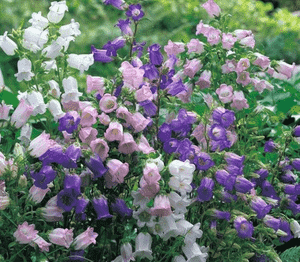
Canterbury bells are most effectively multiplied by planting seeds in the springtime, presenting a moderate challenge. Successful cultivation is indicated by the appearance of seedlings and robust root formation. Guarantee ideal sprouting conditions by supplying aerated soil and steady hydration.
Optimal Time for Canterbury Bells Propagation
Propagation Method
Seeding
Propagation Period
Spring
Tools for Canterbury Bells Propagation
Seed tray with domed lid
A seed tray featuring a clear domed lid is perfect for sowing canterbury bells seeds, as it aids in maintaining high humidity and consistent temperature, vital conditions for seed germination. The domed lid also protects seeds from external disturbances like wind or heavy rain.
Peat pots or biodegradable seed starters
Canterbury bells seeds thrive when sown into peat pots or biodegradable seed starters. These facilitate easy transplanting into the garden with minimal root disruption, which is crucial given canterbury bells's delicate roots are sensitive to handling.
Sterilized potting mix
To give canterbury bells seeds a strong start, it's important to use a sterilized potting mix. This reduces the chance of seedling diseases such as damping-off, which can be caused by pathogens in unsterilized soil.
Fine mist spray bottle
Moisture is essential for seed germination. A fine mist spray bottle gently waters the seeds without dislodging them. This ensures that the canterbury bells seeds remain in contact with the moist soil, which is necessary for successful germination and early growth.
Heat mat
Canterbury bells seeds need consistent warmth to germinate. A heat mat placed beneath the seed tray can provide a steady heat source, especially useful in cooler climates or for off-season indoor propagation.
Dibber or small stick
A dibber or small stick can be used to create holes of the appropriate depth in the potting mix for sowing canterbury bells seeds. This ensures that the seeds are planted at the correct depth for optimal germination rates.
Propagating Canterbury Bells
Propagation Method
Seeding
Difficulty Level
Simple
Post-Propagation Care for Canterbury Bells
Post-Propagation Care for Canterbury Bells
After propagation, canterbury bells will thrive with consistent watering to keep the soil uniformly moist. A balanced fertilizer can be applied monthly during the growing season. Removing spent blooms can encourage more flowers. Protect canterbury bells from slugs and snails, as they are attracted to the foliage. Mulching the soil helps retain moisture and suppress weeds. As a biennial, canterbury bells may need replacement every two years or be encouraged to self-seed in the garden.
Common Errors to Avoid When Propagating Canterbury Bells
Overwatering
Excessive moisture can lead to root rot in canterbury bells seedlings, impeding growth and potentially being fatal.
Deep sowing
Planting seeds too deeply can prevent canterbury bells's light-dependent seeds from germinating.
Ignoring soil drainage
Using a medium without proper drainage can cause waterlogging, stressing canterbury bells and potentially leading to root diseases.
Overcrowding
Sowing canterbury bells seeds too closely can result in poor air circulation and weak growth due to competition for resources.
Neglecting acclimatization
Failing to gradually acclimate canterbury bells seedlings to outdoor conditions can cause shock or death when plants are moved outside.
Advice for Propagating Canterbury Bells
Surface sowing
Scatter canterbury bells's seeds on the soil surface as they require light for effective germination.
Moderate watering
Keep the soil moist but not waterlogged to support healthy canterbury bells seed germination and growth.
Well-draining medium
Utilize a well-draining propagation medium to foster healthy root development for canterbury bells.
Adequate spacing
Space canterbury bells seeds appropriately to ensure good air circulation and reduce fungal diseases.
Gentle acclimatization
Gradually expose canterbury bells seedlings to outdoor conditions over approximately a week to prevent transplantation shock.



