How to Propagate Common borage?
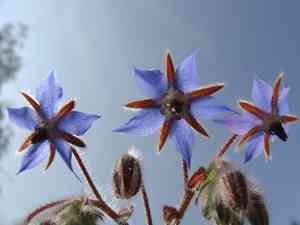
Borage, a common herb, primarily reproduces by planting seeds in the spring, a process of moderate simplicity. Indicators of successful reproduction involve the appearance of young plants and vigorous development. Distribute seeds superficially with sufficient distance between them for the best outcome.
What Is the Best Time To Propagate Common Borage?
Propagation Type
Seeding
Propagation Season
Spring
What Tools Are Used in Common Borage Propagation?
Seed trays or flats
Seed trays offer a controlled setting for common borage seeds, ensuring ample room for root development without crowding. This prevents resource competition and aids growth monitoring.
Potting mix
A well-draining potting medium suitable for seedling growth is crucial. It must retain moisture but allow excess water to drain, preventing root rot in common borage.
Misting bottle
A misting bottle allows for gentle irrigation of common borage seeds and seedlings without dislodging them, vital for maintaining optimal soil moisture for germination.
Grow lights or clear lid
If natural light is insufficient, grow lights can supply the necessary spectrum for common borage seedling development. A clear lid maintains moisture and warmth, boosting germination rates.
Labels and marker
Labels ensure common borage is correctly identified, which is important for tracking growth stages and providing necessary care during early propagation.
Heating mat (optional)
A heating mat can enhance common borage germination rates by maintaining consistent soil temperature, especially beneficial in cooler climates.
How to Propagate Common Borage?
Propagation Type
Seeding
Difficulty Level
Easy
How to Care for Your Newly Propagated Common Borage?
How to Care for Your Newly Propagated Common Borage?
Once common borage plants are established, they need full sun to partial shade and well-drained soil. Water common borage regularly, but let the soil dry between waterings to prevent root rot. Common borage is hardy and typically doesn't need fertilizer. Monitor for pests and diseases and manage as needed. Common borage also attracts beneficial insects like bees and butterflies. Deadhead spent flowers to encourage new blooms and consider allowing some to self-seed.
Common Mistakes to Avoid When Propagating Common Borage
Overwatering
Watering common borage too often can cause root rot due to its preference for well-drained soil. Excess water deprives roots of oxygen, leading to decay.
Excessive handling
Frequent touching or moving of common borage seeds or seedlings can disrupt delicate root systems, causing transplant shock or damage that hinders growth.
Planting too deeply
Sowing common borage seeds too deep can prevent them from getting enough light to germinate, significantly reducing successful propagation.
Ignoring spacing needs
Placing common borage seeds or seedlings too close together can lead to competition for nutrients, water, and light, stunting growth and lowering yields.
Tips For Propagating Common Borage
Soil preparation
Preparing well-draining soil enriched with organic matter provides common borage with a healthy start, reducing the risk of root diseases.
Light sowing
Scattering common borage seeds on the soil surface or covering them with a very thin layer of soil ensures they receive enough light for germination.
Gentle watering
Using a fine mist or a watering can with a soft-spray attachment helps keep the soil moist without disturbing common borage seeds or seedlings.
Adequate spacing
Providing sufficient space between planted common borage seeds or seedlings ensures ample access to sunlight, airflow, and nutrients for robust growth.



