How to Propagate Blue wild indigo?
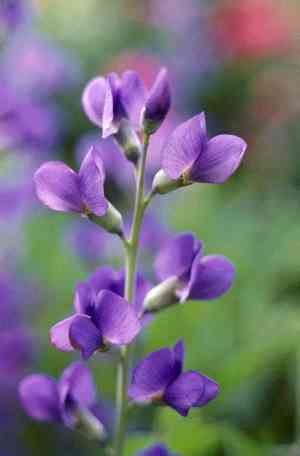
Blue wild indigo reproduces by planting seeds, preferably in the spring for peak development. Although it presents a moderate propagation challenge, successful outcomes are indicated by emerging seedlings. Soaking the seeds overnight beforehand can improve their germination success.
Optimal Period for Blue Wild Indigo Propagation
Propagation Method
Seeding
Propagation Period
Spring
Essential Tools for Blue Wild Indigo Propagation
Seed trays or flats
Seed trays or flats provide a controlled setting for planting blue wild indigo seeds, ensuring uniform spacing and appropriate soil depth. This can boost germination success.
High-quality potting mix
A potting mix with good drainage and aeration supports the initial growth of blue wild indigo by reducing the risk of waterlogged conditions, which can lead to fungal issues and poor root development.
Heating mat
A heating mat can supply consistent warmth from below, which is beneficial for blue wild indigo seeds as they often need warm temperatures to stimulate germination. It maintains an ideal temperature for higher germination rates.
Misting bottle or system
A misting bottle or system allows for gentle watering that won't disturb the seeds or cause soil erosion in the trays. It maintains the necessary moisture level for blue wild indigo seed germination without overwatering.
Clear plastic dome or cover
This tool creates a miniature greenhouse effect over the seed trays to retain humidity and warmth, aiding the germination of blue wild indigo seeds by preventing moisture loss and maintaining a stable environment.
Grow lights
If natural sunlight is insufficient, grow lights offer an alternative light source to support the growth of blue wild indigo seedlings, ensuring they have enough energy for healthy development after germination.
Dibble or seeding tool
A dibble or seeding tool helps create precise holes or indentations in the soil of seed trays for blue wild indigo seeds, leading to uniform planting depth, which is crucial for optimal germination rates.
Steps to Propagate Blue Wild Indigo
Propagation Method
Seeding
Difficulty Level
Easy
Post-Propagation Care for Blue Wild Indigo
Post-Propagation Care for Blue Wild Indigo
After propagation, blue wild indigo needs full sun to partial shade and thrives in well-drained soil. Regular watering is required during the first growing season, but once established, blue wild indigo is drought tolerant. Minimal fertilization is necessary as blue wild indigo fixes its own nitrogen. For optimal health, remove spent flowers to encourage new growth, and cut back the plant in late fall or early winter after the foliage has yellowed. Be patient, as blue wild indigo can take several years to reach full maturity and bloom.
Common Errors to Avoid When Propagating Blue Wild Indigo
Overwatering cuttings
Excessive watering can cause the roots of blue wild indigo to rot before they establish. Saturated soil lacks sufficient oxygen, vital for root development and plant health.
Planting seeds too deep
Blue wild indigo seeds require light for effective germination. Planting them too deeply can prevent them from receiving the necessary light and may hinder or delay germination.
Ignoring pre-treatment for seeds
Blue wild indigo seeds have a hard seed coat that requires pre-treatment, such as scarification or stratification. Failing to do this can result in very low germination rates.
Using soil that lacks drainage
Poor drainage can lead to waterlogging, which is detrimental for blue wild indigo, as it prefers well-drained soils. This can cause root rot and fungal diseases.
Neglecting division technique
Blue wild indigo can be sensitive to root disturbance. Incorrect division technique can damage the plant and reduce its chances of successful transplantation.
Tips for Propagating Blue Wild Indigo
Provide adequate lighting
For successful seed germination, place blue wild indigo seeds on the soil surface or cover them lightly, ensuring they still receive ample light.
Pre-treat seeds appropriately
Use scarification to nick the seeds of blue wild indigo, or cold stratify them to mimic natural processes that weaken the seed coat, promoting higher germination rates.
Use well-draining soil
Ensure the planting medium for blue wild indigo allows for good drainage to prevent waterlogging, while still retaining enough moisture to support growth.
Exercise caution when dividing
When dividing blue wild indigo, be gentle with the root system. Use a sharp tool to minimize damage, and ensure each division has both roots and shoots.
Maintain consistent moisture
While overwatering is harmful, blue wild indigo cuttings and seedlings do need consistent moisture. Balance is key to encouraging proper root and plant development.



