How to Propagate Chinese mugwort?
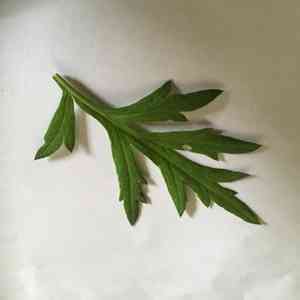
Artemisia princeps, a perennial herbaceous plant, is prized for its fragrant qualities and diverse applications in traditional healing practices and gastronomy. To achieve successful propagation, obtaining semi-hardwood cuttings during periods of vigorous growth significantly enhances the likelihood of root formation. Sever a stem section possessing multiple leaf nodes, immerse it in rooting stimulant, and embed it in a potting blend that drains efficiently. Ensure continuous hydration and supply diffused illumination to foster root growth. Exercise caution to prevent overly saturated soil, which can induce decay.
Optimal Period for Chinese Mugwort Propagation
Propagation Type
Cutting
Propagation Season
Spring,Summer
Tools Required for Chinese Mugwort Propagation
Sharp pruning shears
These are crucial for making clean, precise cuts on chinese mugwort, which is vital to prevent crushing or harming plant tissues. Clean cuts promote a higher success rate in root development.
Rooting hormone
This chemical compound stimulates root development from chinese mugwort cuttings. Dipping the base of the cuttings into rooting hormone boosts the likelihood of rapid and robust root initiation, essential for new plant viability.
Sterile potting mix
Utilizing a sterile potting mix ensures that chinese mugwort cuttings are placed in a disease-free environment, lowering infection risk. A well-draining, nutrient-rich mix supports ideal growth conditions for young roots.
Propagation trays or pots
Ideal for housing individual chinese mugwort cuttings, these containers offer the necessary space and environment for each cutting to grow independently without competition, boosting propagation success.
Misting bottle
Crucial for maintaining high humidity levels around chinese mugwort cuttings, a misting bottle helps provide sufficient moisture needed for cuttings to thrive and develop roots.
Method for Propagating Chinese Mugwort
Propagation Type
Easy
Post-Propagation Care for Chinese Mugwort
How to Care for Your Newly Propagated Chinese Mugwort?
Once roots are well-established, typically after several weeks, gradually introduce chinese mugwort to its permanent spot. It thrives in full sun to partial shade and well-drained soil. Consistent watering is key, especially during dry spells, but be wary of overwatering. Regularly check for pests and diseases. Fertilize moderately to support growth, but avoid excessive feeding which can lead to weaker plants.
Common Errors to Avoid When Propagating Chinese Mugwort
Overwatering
Excessive watering can cause root rot and fungal issues for chinese mugwort. This plant prefers well-draining soil and does not tolerate sitting in moisture.
Cutting too short
Propagating chinese mugwort with very short cuttings may result in a lower success rate as shorter cuttings possess fewer energy reserves and nodes for root and shoot formation.
Ignoring hygiene
Failing to sterilize propagation tools can introduce harmful pathogens to chinese mugwort cuttings, potentially causing infections that hinder propagation success.
Excessive handling
Frequent handling or disturbing chinese mugwort during propagation can damage delicate roots and shoots, impeding the establishment and growth of new plants.
Advice for Propagating Chinese Mugwort
Well-draining substrate
Employ a well-draining propagation medium for chinese mugwort to prevent waterlogging and encourage healthy root development.
Appropriate cutting length
Take chinese mugwort cuttings with multiple nodes, at least 4 to 6 inches long, to increase the probability of successful rooting and growth.
Use of rooting hormones
Applying rooting hormone to the cut end of chinese mugwort cuttings can enhance root development and improve the chances of successful propagation.
Gentle handling
Handle chinese mugwort with care during the propagation process to prevent damage to roots and shoots, thereby promoting better establishment and growth.



