How to Propagate Red buckeye?
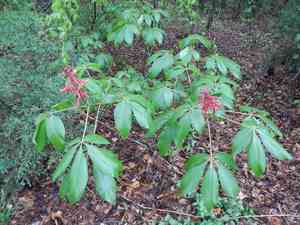
Aesculus pavia can be readily multiplied through dormant wood cuttings, air layering, or by planting seeds in the fall or winter. Its propagation is straightforward, and indicators of successful establishment often involve the emergence of roots or fresh shoots. To achieve optimal outcomes, verify that the propagation stock is robust and diligently shield it from severe temperature fluctuations.
Optimal Time for Red Buckeye Propagation
Propagation Method
Cutting
Propagation Period
Autumn,Winter
Tools for Red Buckeye Propagation
Sharp Pruning Shears
Essential for taking clean cuttings from red buckeye, sharp pruning shears prevent disease and damage to both the parent plant and the cutting. A clean cut promotes faster healing on the parent plant and better root development on the cutting.
Rooting Hormone Powder
Rooting hormone powder significantly boosts the success rate of root development in red buckeye cuttings. Applying it to the cut end stimulates root growth, crucial for the cutting to establish and become a new plant.
Sterile Potting Mix
A sterile potting mix offers a clean, disease-free environment for red buckeye cuttings to root. This medium ensures proper drainage and aeration, vital for delicate new roots to grow without rotting or disease.
Propagation Trays
Propagation trays hold the potting mix and organize red buckeye cuttings in a stable environment. They help maintain necessary moisture levels and, with a humidity dome, create an ideal microclimate for rooting.
Humidity Dome
A humidity dome covers the propagation tray, retaining air moisture around red buckeye cuttings. This high humidity prevents cuttings from drying out before rooting, crucial for successful propagation.
Heat Mat
A heat mat gently warms the soil in the propagation tray, accelerating root development in red buckeye cuttings. Consistent bottom heat is especially beneficial for this species, mimicking its natural preference for warm soil conditions.
Caring for Your Newly Propagated Red Buckeye
Caring for Your Newly Propagated Red Buckeye
Once rooted, transplant red buckeye cuttings into individual pots with a well-draining potting mix. Gradually introduce them to outdoor conditions if rooted indoors. Position potted red buckeye in partial shade to full sun after hardening off. Water regularly to maintain consistent moisture, avoiding overwatering. Fertilize with a balanced slow-release fertilizer after the first growing season. Monitor for pests and diseases, addressing issues promptly. Prune red buckeye annually to maintain shape and remove dead or diseased wood.
Common Propagation Mistakes with Red Buckeye
Overwatering cuttings
Excessively wet conditions can cause red buckeye cuttings to rot before rooting, leading to loss of propagation material.
Deep planting of seeds
Burying red buckeye seeds too deeply can impede germination due to insufficient oxygen and difficulty emerging from the soil.
Ignoring pre-treatment of seeds
Skipping stratification for red buckeye seeds can result in poor germination rates, as this process is essential for breaking dormancy.
Planting in poorly drained soil
Red buckeye needs well-drained soil for optimal growth. Poorly drained soils can cause root rot, affecting plant health and vigor.
Neglecting pest control
Failure to protect red buckeye cuttings and seedlings from pests can lead to damage or destruction before establishment.
Red Buckeye Propagation Tips
Use healthy seed or cutting sources
Choose disease-free, vigorous material from red buckeye to enhance propagation success rates.
Provide bright, indirect light
Red buckeye cuttings and seedlings thrive in bright, indirect sunlight, ensuring adequate light for growth without scorching.
Maintain consistent moisture
Keep the soil or rooting medium for red buckeye consistently moist but not waterlogged to support root development without causing rot.
Stratify seeds prior to sowing
Mimic natural conditions by stratifying red buckeye seeds to break dormancy and improve germination rates.
Use a well-draining rooting medium
Ensure red buckeye cuttings are placed in a mixture that promotes drainage to prevent root rot while retaining enough moisture for root growth.



