How to Propagate Desert rose?
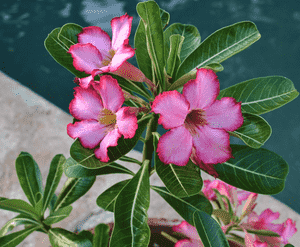
Adenium can be reproduced in the Spring and Summer seasons by employing either soft stem cuttings or planting seeds. The level of challenge for propagation may differ based on the technique utilized, but indicators of successful reproduction encompass fresh development and the establishment of roots. Essential advice for effective propagation involves ensuring sufficient illumination, moisture in the air, and a growing medium that drains efficiently.
Optimal Time for Desert Rose Propagation
Propagation Method
Cutting
Propagation Period
Spring,Summer
Essential Tools for Desert Rose Propagation
Sharp pruning shears or knife
These instruments are crucial for obtaining desert rose cuttings. A precise and clean cut minimizes harm to both the parent plant and the cutting, boosting the likelihood of successful rooting. Clean cuts help prevent infections and encourage faster healing and root formation.
Rooting hormone
This compound stimulates root development from desert rose cuttings. Applying a rooting hormone to the cut end of the cutting can significantly enhance propagation success, as it contains chemicals that mimic natural plant growth regulators.
Sterilizing agent (e.g., isopropyl alcohol, bleach solution)
Before making cuts, tools must be sterilized to prevent disease transmission. Given desert rose's vulnerability to infection, sterilization is particularly vital for maintaining plant health.
Potting medium
A well-draining potting mix, suitable for succulents, is essential for desert rose. It should allow for proper air circulation and drainage to foster root growth and prevent rot, which desert rose is susceptible to in overly moist conditions.
Pots with drainage holes
Utilizing pots that permit excess water to escape is paramount for desert rose. Stagnant water can lead to root rot and other moisture-related ailments, to which new cuttings are especially vulnerable.
Plastic wrap or mini greenhouse
Creating a high-humidity environment is advantageous for desert rose cuttings to establish roots. Covering the potting medium and cutting with plastic wrap or placing them in a mini greenhouse helps maintain consistent moisture and warmth, simulating a favorable microclimate.
Heat mat (optional)
While not strictly necessary, a heat mat can improve propagation success by providing desert rose cuttings with gentle bottom heat. This encourages quicker root development in many plant species, especially in cooler environments.
Post-Propagation Care for Your Desert Rose
Post-Propagation Care for Your Desert Rose
Following propagation, position the pot in a warm spot with bright, indirect light. Avoid direct sun until roots are well-established. Water desert rose sparingly, allowing the soil to almost completely dry out between waterings. High humidity and excessive moisture can lead to root rot. As desert rose grows, fertilize lightly with a balanced, water-soluble fertilizer during the active growth period, and repot as needed when the plant becomes root-bound.
Common Errors to Avoid When Propagating Desert Rose
Overwatering cuttings
Excessive moisture can cause desert rose cuttings to decay before they can root, impeding the propagation process.
Using non-sterile tools
Propagating with contaminated tools can introduce diseases to desert rose cuttings, jeopardizing their health.
Deep planting
Inserting cuttings too deeply into the soil hinders desert rose rooting, as it may lead to stem rot due to insufficient air circulation.
Neglecting proper soil mix
Using an unsuitable soil blend can prevent desert rose from effectively draining excess water, potentially causing root rot.
Ignoring wound healing
Failing to allow the cut end of desert rose to form a callus before planting increases the risks of infection and rot.
Advice for Propagating Desert Rose
Correct moisture balance
Maintain slight moisture in the soil but prevent waterlogging to encourage healthy desert rose root development without decay.
Sterilize tools
Disinfect all instruments before using them for propagation to prevent disease transmission in desert rose.
Shallow planting
Plant desert rose cuttings superficially with the cut end just beneath the soil surface, ensuring air can reach the stem.
Appropriate soil mix
Utilize a fast-draining soil mix, such as a cactus or succulent blend, to support desert rose's root growth without retaining excess water.
Allow callousing
Allow the cut end of desert rose to dry and form a callus, typically over a period of 1-2 days before planting, to protect against rot and infection.



