Enhancing Your Garden Design with the Laurustinus Plant: A Landscaping Guide
1
Laurustinus is an evergreen bush that offers foliage throughout the year.
2
It flourishes in full sun as well as partial shade, making it adaptable for diverse garden locations.
3
Laurustinus is readily formable and trimmable to suit any garden layout.
Introducing Laurustinus for Landscape Design
Key features of Laurustinus for garden applications
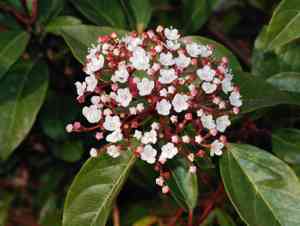
Laurustinus is an evergreen shrub recognized for its rich green leaves and clusters of small, scented blossoms. It flowers from winter through spring, bringing color when most plants are dormant. It typically reaches 6-12 feet in height and width, making it a substantial yet manageable addition to any garden. Its evergreen foliage provides continuous greenery, vital for maintaining garden appeal even in colder months.
Why select Laurustinus for your garden or yard?
There are numerous reasons to integrate Laurustinus into your landscape plan. Firstly, it requires minimal upkeep, needing little pruning and care, which suits busy gardeners. Additionally, its adaptability to various soil types and conditions, including drought tolerance once established, ensures it thrives in many settings. Furthermore, it can serve as a privacy hedge, a standalone specimen, or part of a mixed border, offering both versatility and utility in your garden design.
Designing with Laurustinus: Initial Steps
Choosing the ideal location: Sun exposure and spatial needs
When incorporating Laurustinus into your landscape, it's crucial to select an appropriate spot that meets its growth requirements. Laurustinus prefers well-drained soil and can flourish in full sun to partial shade. Ensure you provide ample room for it to reach its full size without overcrowding other plants. A location receiving morning sun and afternoon shade can be perfect, offering the plant an optimal light balance.
Pairing Laurustinus with other plants: What combinations work best?
To maximize Laurustinus's visual appeal, consider combining it with plants that offer contrasting foliage or bloom colors. For example, perennials like lavender, with its silvery leaves and purple flowers, beautifully complement the deep green and white blossoms of Laurustinus. You can also introduce ornamental grasses or low-growing shrubs to add texture and create dynamic layers in your garden. The goal is to achieve a harmonious balance that is visually pleasing throughout the year.
Practical Advice for Incorporating Laurustinus into Your Landscape
Maintaining design coherence with Laurustinus
When adding Laurustinus to your landscape, it's important to maintain stylistic consistency. Laurustinus can seamlessly fit into various garden styles, whether you're aiming for a formal, structured look or a more relaxed, cottage feel. Regular trimming can help maintain a tidy appearance, while allowing a more natural growth pattern can contribute to a relaxed, informal vibe. Understanding and adhering to your overall garden theme will make Laurustinus a prominent feature rather than an incongruous addition.
Seasonal considerations for continuous visual interest
One of the key advantages of Laurustinus is its capacity to provide year-round appeal. Its evergreen nature ensures your garden maintains a vibrant backdrop even in winter. During its flowering season, the clusters of small blooms add elegance and fragrance to the garden. To further enhance seasonal interest, consider planting bulbs or annuals around Laurustinus that flower at different times of the year. This ensures a continuous display of color and life in your garden.
Examples of Laurustinus in Impressive Landscapes
Case study 1: Home garden applications of Laurustinus
In a home setting, Laurustinus can be utilized as a focal plant or as part of a hedge. For instance, in one suburban garden, Laurustinus was planted along the property boundary, serving as both a privacy screen and a windbreak. The homeowners paired it with flowering perennials and groundcovers, creating a lush, layered effect. This not only enhanced their garden's aesthetic appeal but also offered a practical solution to privacy concerns.
Case study 2: Commercial settings featuring Laurustinus
In commercial landscapes, Laurustinus has been effectively used to introduce greenery and sophistication. For example, in a corporate park, Laurustinus was integrated into the design to soften the hardscapes of the building exteriors. It was planted in groups alongside walkways, creating a lush, green corridor that guided visitors through the space. Its low-maintenance nature also means it requires less frequent care, making it a cost-effective choice for large-scale landscapes.



