Enhancing Your Garden Design with the Bunge's pine Plant: A Landscaping Guide
1
Grasping the appearance of Bunge's pine aids in crafting an impressive outdoor space.
2
Integrating Bunge's pine into various garden styles provides adaptability and appeal.
3
Bunge's pine provides functional advantages such as seclusion, sound dampening, and weather benefits.
Appreciating the Beauty of Bunge's Pine
Visual Traits: Form, Texture, and Hue
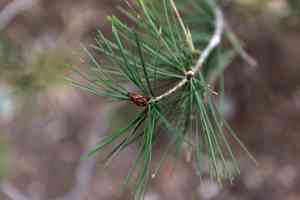
The charm of Bunge's pine stems from its distinct visual attributes. This plant showcases an engaging form, ranging from conical to irregular, lending an intriguing structural element to your landscape. The bark of Bunge's pine, with its exfoliating texture and multi-colored patches, is particularly striking, offering year-round interest to the environment. Moreover, the rich green needles of Bunge's pine provide a lush and vivid touch, standing out beautifully against other foliage or even a snowy backdrop in winter.
Seasonal Transformations and Their Visual Effect
Another aspect of Bunge's pine's allure is how it visually changes with the seasons. During spring and summer, the fresh green foliage and vibrant bark tones are at their peak, creating a lush and lively ambiance. As autumn approaches, the needles may adopt a different shade, adding a dynamic element to your garden's palette. Even in winter, Bunge's pine continues to impress with its sturdy framework and the contrast of its colorful bark against a monochromatic winter scene.
Integrating Bunge's Pine into Garden Designs
Pairing Bunge's Pine with Complementary Flora
When planning your garden, it's important to consider plants that complement Bunge's pine's unique characteristics. Combining Bunge's pine with ground covers or shrubs that have contrasting leaf shapes or colors can create visual depth and variety. For instance, plants with soft, rounded leaves can soften the bold lines of Bunge's pine, while those with similar evergreen qualities can enhance overall cohesion. Select companion plants that thrive in similar soil and light conditions to ensure a harmonious and flourishing garden.
Establishing Focal Points with Bunge's Pine
At the core of every effective landscape design is a focal point, and Bunge's pine can fulfill this role beautifully. Its striking visual features make it an excellent centerpiece in your garden. Position Bunge's pine in strategic locations where its unique bark and evergreen needles can be admired from multiple perspectives. Whether placed alone or as part of a cluster, Bunge's pine draws the eye and adds a touch of sophistication and intrigue.
Design Concepts: From Formal to Wild Settings
One of the adaptable aspects of Bunge's pine is its capacity to fit into various landscape themes. For a formal garden, consider arranging Bunge's pine symmetrically with neatly trimmed hedges and carefully chosen plants to achieve a refined look. Alternatively, Bunge's pine can be incorporated into a more naturalistic setting, where its irregular form and rugged bark blend seamlessly with wildflower meadows or woodland gardens. This adaptability makes Bunge's pine a valuable addition to any garden style.
Practical Advantages of Including Bunge's Pine in Your Yard
Improving Seclusion and Sound Reduction
Beyond its aesthetic value, Bunge's pine offers practical benefits that enhance your outdoor living space. One such advantage is privacy. When strategically positioned, Bunge's pine's dense foliage can act as a natural screen, blocking views from neighboring properties and creating a secluded sanctuary. Additionally, the thick branches can help absorb sound, making your garden a quieter and more peaceful retreat from the hustle and bustle of daily life.
Climatic Benefits: Shade and Wind Protection
Furthermore, Bunge's pine can contribute to your garden's microclimate. Its canopy provides welcome shade during hot summer months, helping to cool outdoor areas and even reduce indoor cooling costs if planted near your home. In areas prone to strong winds, Bunge's pine serves as a windbreak, shielding other plants and creating more sheltered, comfortable outdoor spaces. These benefits make Bunge's pine not only a visual asset but also a functional one.
Optimal Placement for Bunge's Pine Growth and Impact
Understanding Sunlight and Soil Needs
To ensure Bunge's pine flourishes in your garden, it's crucial to understand its fundamental requirements. Bunge's pine generally prefers well-drained soil and locations where it can receive full to partial sunlight. Before planting, test your soil to confirm it's suitable for Bunge's pine's growth, and amend it if necessary. Proper sunlight and soil conditions will enhance Bunge's pine's development, ensuring it remains healthy and vibrant throughout the year.
Spacing and Planting Advice
When planting Bunge's pine, spacing is essential. Provide Bunge's pine ample room to grow to its full mature size without overcrowding. Typically, this means planting it a considerable distance from structures and other large plants. Dig a hole that's twice as wide but just as deep as the root ball, and ensure the top of the root ball is level with the soil surface. Water thoroughly after planting and mulch around the base to retain moisture and suppress weeds. Correct planting ensures Bunge's pine will establish quickly and grow robustly.



