Enhancing Your Garden Design with the Eastern red cedar Plant: A Landscaping Guide
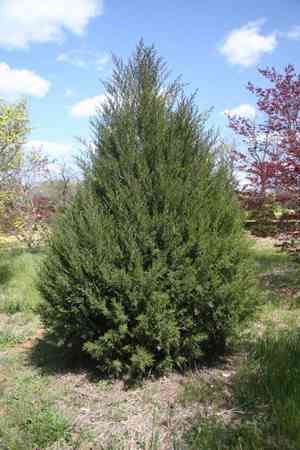
1
Eastern red cedar offers continuous color and texture, establishing it as a fundamental element in landscape architecture.
2
Integrating Eastern red cedar into your outdoor space can deliver practical advantages such as preventing soil erosion and supporting local wildlife.
3
Thoughtfully pairing Eastern red cedar with other flora can result in a balanced and aesthetically pleasing garden.
Appreciating the Visual Charm of Eastern Red Cedar
Unique Foliage: Its distinct texture and coloration
Eastern red cedar is renowned for its characteristic leaves, which bring a special texture and hue to any outdoor setting. The foliage displays various shades, from green to blue-green, and even purplish tones in colder months. This diversity not only adds visual appeal but also complements a wide array of other garden plants. Its needle-like leaves offer a refined texture that beautifully contrasts with broader-leaved flora.
Year-Round Vibrancy: How Eastern red cedar keeps landscapes lively
A key attraction of Eastern red cedar is its capacity to maintain vivid color throughout the entire year. Unlike deciduous plants that shed their leaves in autumn, Eastern red cedar keeps its needles year-round. This evergreen characteristic ensures your landscape stays vibrant and colorful during the bleakest winter periods, providing a consistent backdrop that adds stability and structure to your garden design.
Natural Form: The shape and structure of Eastern red cedar
Eastern red cedar possesses an inherently attractive shape and form that can serve as the foundational element of a landscape. With its dense, conical silhouette, it can be utilized to establish focal points or as an attractive hedge to delineate areas within your garden. Its compact nature makes it adaptable for various environments, whether used individually as a statement piece or grouped for a more dramatic effect.
Integrating Eastern Red Cedar into Diverse Landscape Designs
Traditional Settings: Enhancing formal layouts
In traditional landscapes, Eastern red cedar fits perfectly due to its classic, ordered appearance. It can be incorporated into formal garden designs where balance and structure are paramount. Planting a row of Eastern red cedar along a path or driveway can create an impressive entrance, while individual trees can be sculpted into topiaries for a more refined look.
Contemporary Landscapes: Simple and clean aesthetics
For those who prefer a modern look, Eastern red cedar's simplicity and clean lines make it an excellent choice. Its strong vertical presence can add depth and interest without overwhelming a minimalist design. You can use it as a green screen or as a singular focal point against a contemporary backdrop to enhance the sleek and uncluttered appearance of modern landscapes.
Cottage Gardens: Adding a whimsical touch
In cottage gardens, where the style tends to be more fanciful and unrestrained, Eastern red cedar can provide structure while still maintaining an enchanting feel. Its textured foliage and natural shape blend seamlessly with the informal, abundant planting that defines cottage gardens. It can be intermingled with flowering shrubs and perennials to create a fairytale-like atmosphere.
Practical Advantages of Eastern Red Cedar in Landscaping
Windbreaks and Privacy: Using Eastern red cedar as natural barriers
Eastern red cedar is highly effective when employed as a natural windbreak or privacy screen. Its dense foliage can block strong winds, making your outdoor area more comfortable and protected. Additionally, planting Eastern red cedar along your property line can offer a sense of seclusion. Its thick, evergreen nature means you'll have a year-round barrier that not only shields but also beautifies your space.
Erosion Control: How Eastern red cedar helps stabilize soil
Soil erosion can be a significant problem in many landscapes, but Eastern red cedar can help alleviate this issue. The deep, fibrous root system of Eastern red cedar aids in stabilizing the soil, reducing the risk of erosion on slopes and other vulnerable areas. By planting Eastern red cedar in erosion-prone spots, you not only improve the visual appeal of the area but also contribute to a more stable and sustainable environment.
Wildlife Habitat: Supporting local ecosystems
Eastern red cedar isn't just beneficial for your garden; it also supports local wildlife. Birds, in particular, are attracted to Eastern red cedar for its dense foliage that offers excellent shelter and foraging opportunities. Furthermore, the berries produced by Eastern red cedar are a food source for various bird species and small mammals. By incorporating Eastern red cedar into your landscape, you're creating a habitat that supports biodiversity and the well-being of local ecosystems.
Seasonal Considerations for Planting Eastern Red Cedar
Optimal Planting Times: Best seasons for establishing Eastern red cedar
Timing is crucial when planting Eastern red cedar to ensure successful growth and establishment. The best times to plant Eastern red cedar are in the fall or spring when temperatures are moderate, and the soil is workable. These seasons provide the ideal conditions that help the roots establish before the extreme temperatures of summer or winter arrive.
Site Preparation: How to ready your landscape
Proper site preparation is essential for the healthy growth of Eastern red cedar. Begin by selecting a well-draining location that receives full to partial sunlight. Clear the area of weeds and debris, and consider enriching the soil with organic matter to improve its quality. Dig a hole that is twice the width of the root ball but no deeper, ensuring the top of the root ball is level with the surrounding soil surface.
Post-Planting Care: Ensuring growth and health
Once Eastern red cedar is planted, appropriate aftercare will promote its healthy growth. Water the tree regularly, especially during the first year, to help it establish roots. Mulch around the base to retain moisture and suppress weeds, but avoid piling it against the trunk. Additionally, occasional pruning of dead or damaged branches will help maintain its shape and vigor.
Pairing Eastern Red Cedar with Other Plants: Creating Harmony
Compatible Plants: Which species thrive alongside Eastern red cedar
Choosing compatible plants is vital for creating a harmonious landscape. Plants that flourish in similar soil and light conditions as Eastern red cedar will ensure a cohesive and low-maintenance garden. Consider pairing Eastern red cedar with other evergreens, ornamental grasses, or flowering perennials that can accentuate its texture and form.
Color Schemes: Matching Eastern red cedar's hues with other plants
The varied shades of Eastern red cedar offer ample opportunities to create stunning color palettes. Its blue-green foliage can be contrasted with plants that have warm tones, such as yellows and oranges, for a vibrant display. Alternatively, you can create a more subdued and elegant look by pairing it with plants that have silver or purple foliage.
Spacing and Arrangement: Strategic positioning in the garden
Proper spacing and arrangement of Eastern red cedar are crucial for its long-term health and aesthetic contribution to the garden. Ensure there is enough space for Eastern red cedar to grow to its full potential without overcrowding other plants. When planting in groups or rows, consider their mature size to avoid competition and to maintain the design structure.



