Enhancing Your Garden Design with the Poisonbulb Plant: A Landscaping Guide
1
Poisonbulb provides impressive aesthetic value due to its distinct characteristics and considerable size potential.
2
It integrates well into diverse design schemes such as formal, rustic, and contemporary garden settings.
3
Correct placement, clustering, and distance between plants are crucial for optimizing Poisonbulb's garden advantages.
Exploring the Visual Appeal of Poisonbulb
Characteristics: Emphasize the distinct visual attributes of Poisonbulb
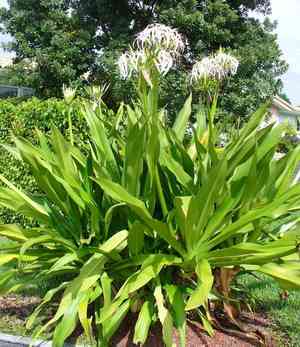
The allure of Poisonbulb stems from its remarkable visual traits. This plant is recognized for its expansive, verdant leaves that impart a tropical ambiance to any garden. It showcases impressive white blossoms that emerge in clusters, offering a striking contrast against its deep green foliage. Furthermore, the plant's stature and form contribute a sense of verticality and density, making it a flexible option for focal points and background plantings. All these elements combined render Poisonbulb a visually captivating addition to any landscape.
Size and Growth Patterns: Discuss how Poisonbulb's development can be utilized in various landscape designs
Poisonbulb can attain considerable dimensions, reaching heights of up to six feet. This establishes it as a dramatic feature plant, whether employed individually or in groups. Its upright growth habit allows it to stand out as a solitary specimen, or to complement other plants in mixed borders. It expands gradually, ensuring it doesn't dominate the garden, but rather enhances it through its majestic presence. By comprehending its growth tendencies, gardeners can strategically position Poisonbulb to provide structure, depth, and interest to their landscape designs.
Seasonal Changes: Examine how Poisonbulb's appearance transforms with seasons and its contribution to the landscape
A compelling aspect of Poisonbulb is its seasonal vitality. In spring and summer, it displays its vibrant blooms, introducing color and fragrance to the landscape. The flowers attract pollinators, contributing to the garden's overall biodiversity. During autumn, while the blossoms may fade, the robust green foliage persists, offering texture and greenery as other plants begin dormancy. This perennial cycle ensures Poisonbulb consistently provides visual interest and prevents gaps in the landscape, keeping your garden looking vibrant year-round.
Integrating Poisonbulb into Diverse Landscape Styles
Formal Garden Settings: Incorporating Poisonbulb into symmetrical designs and structured layouts
For those interested in formal garden designs, Poisonbulb can be an excellent inclusion due to its symmetry and organized growth. Its tall, upright habit makes it suitable for creating balanced, symmetrical gardens. For instance, planting Poisonbulb in pairs on either side of a pathway or entrance can establish a sense of grandeur and formality. Additionally, its consistent, predictable growth allows it to fit neatly into systematic flower bed arrangements, aligning well with the clean lines and geometric patterns typical of formal gardens.
Cottage Gardens: Utilizing Poisonbulb to add rustic charm to informal, flower-filled garden layouts
Conversely, Poisonbulb also flourishes in the more relaxed, informal settings of a cottage garden. Its large, simple flowers and lush foliage complement the mixed, diverse planting palette that characterizes cottage gardens. Poisonbulb introduces a touch of the exotic amidst traditional blooms, providing a focal point that draws the eye without overwhelming surrounding plants. Nestled among flowering perennials and rambling vines, Poisonbulb adds depth and a slightly wild charm that enhances the rustic aesthetic of cottage-style gardens.
Modern Landscapes: Discuss the role of Poisonbulb in minimalist and contemporary garden designs
For modern and minimalist landscape designs, the simplicity and bold structure of Poisonbulb make it an ideal fit. Its clean lines and straightforward form contribute to the sleek, uncluttered look of contemporary gardens. Planting Poisonbulb against a backdrop of smooth, neutral-toned hardscapes, such as concrete or gravel, highlights its striking appearance. Using it in container gardening can also add a stylish, flexible element to patios and terraces, enhancing the modern garden's overall aesthetic with its lush, minimalistic elegance.
Practical Advice for Planting and Arranging Poisonbulb
Sunlight and Shading: Evaluating the optimal locations in your yard for planting Poisonbulb based on light requirements
Poisonbulb thrives in full sun to partial shade, making it adaptable in terms of placement. For optimal growth, positions where it receives morning sun and filtered afternoon shade are ideal. When planting in hotter climates, some shading will help shield it from intense midday sun, preventing leaf burn and ensuring robust growth. By observing the light patterns in your garden, you can find the perfect spot for Poisonbulb, balancing both its light needs and its visual impact.
Grouping with Other Plants: Suggestions for creating visually appealing groupings with Poisonbulb and other flora
Creating groupings with Poisonbulb and other plants can enhance the overall beauty of your garden. Consider pairing Poisonbulb with smaller flowering plants or ground covers to create a layered look. Its height adds vertical interest, while its foliage contrasts beautifully with finer-textured plants. For a lush, tropical vibe, group Poisonbulb with ferns, hostas, or other large-leafed plants, creating a diverse yet cohesive garden section. These combinations can make your garden appear fuller and more visually captivating.
Spacing Considerations: How to space Poisonbulb effectively to achieve aesthetic and practical benefits
Proper spacing is crucial for allowing Poisonbulb to flourish and for ensuring it complements the garden rather than overwhelms it. Due to its large size at maturity, it is advisable to plant Poisonbulb at least three to four feet apart. This spacing allows air circulation, reduces the risk of diseases, and gives each plant ample room to grow without crowding. Thoughtful spacing also ensures that the distinctive features of Poisonbulb are fully appreciated, adding to the overall aesthetics of your landscaping design.



