Optimal Fertilizer for Growing Cigartree: What You Need to Know
1
Nourish your Catalpa in early Spring as its dormant buds start to expand.
2
Select a well-balanced, extended-release plant food for steady nutrient supply.
3
Exercise care to avoid excessive fertilization, as this can cause nutrient toxicity and harm the tree.
Why is Nutrient Supplementation Crucial for Cigartree?
Key Nutrients for Cigartree Development
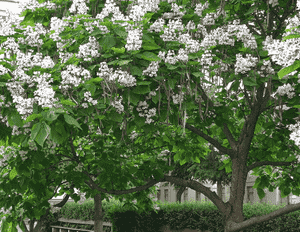
Nutrient supplementation supplies vital elements your Cigartree requires to flourish. These encompass nitrogen (N), phosphorus (P), and potassium (K), which bolster essential processes like foliage expansion, root establishment, and overall plant vitality. Without these elements, your tree struggles to grow robustly and may not yield its beautiful, large leaves and distinctive, tubular blooms.
Impact of Nutrient Scarcity on Cigartree
When a Cigartree lacks adequate nutrients, it will exhibit indicators of distress such as yellowing foliage, stunted development, and diminished blooming. A nutrient-deficient Cigartree is also more vulnerable to ailments and pests, which can further compromise its well-being. Consistent nutrient application helps augment the natural nutrient supply in the soil, ensuring your tree remains strong and healthy.
Selecting the Appropriate Fertilizer for Cigartree
Fertilizer Varieties Suitable for Cigartree
Various fertilizer types can be utilized for Cigartree. Granular fertilizers, which are scattered on the soil surface and incorporated, are favored due to their ease of use and prolonged effect. Liquid fertilizers, diluted with water and applied directly to the soil, can also be employed when immediate nutrient absorption is necessary. Both types can deliver the required nutrients for your Cigartree, but granular fertilizers are typically preferred for their slow-release characteristics.
Organic Versus Synthetic Fertilizers
When deciding between organic and synthetic fertilizers, each offers advantages. Organic fertilizers, such as compost and manure, are environmentally friendly and enhance soil structure, but they release nutrients more gradually. Synthetic fertilizers, conversely, provide a rapid nutrient boost but do not improve soil quality. For Cigartree, a balanced strategy employing slow-release synthetic fertilizers complemented by organic matter can offer both immediate and enduring benefits.
Interpreting Fertilizer Labels
Understanding fertilizer labels is paramount for ensuring you provide the correct nutrients. Fertilizer labels typically display three figures (e.g., 10-10-10) representing the N-P-K ratio. This indicates the percentages of nitrogen, phosphorus, and potassium in the fertilizer. For balanced growth, select a fertilizer with an equivalent N-P-K ratio or one slightly higher in nitrogen to encourage leaf development. Always adhere to the recommended application rate to prevent over-fertilization.
Proper Cigartree Fertilization Techniques
Optimal Time to Fertilize Cigartree
The best period to fertilize your Cigartree is in early Spring, just as the dormant buds begin to swell. This timing ensures the tree has access to vital nutrients as it emerges from dormancy and enters its primary growth phase. Avoid fertilizing in late autumn as this can stimulate new growth that may not harden off before winter.
Step-by-Step Guide for Cigartree Fertilization
To fertilize your Cigartree, follow these steps:Measure the treeâs trunk diameter at breast height (approximately 1.4 meters or 4.5 feet from the ground) to determine the required fertilizer quantity.Select a balanced, slow-release granular fertilizer.Distribute the fertilizer uniformly around the treeâs drip lineâthe area directly beneath the outermost branches.Gently rake the fertilizer into the uppermost soil layer to aid its integration.Water the area thoroughly to help the nutrients penetrate the soil and reach the roots.Always adhere to the specific instructions on your fertilizer packaging for precise application rates.
Common Fertilization Errors to Avoid for Cigartree
Several frequent errors can be easily prevented:Excessive fertilization: This can lead to nutrient burn and harm your tree. Adhere to recommended quantities.Incorrect timing of fertilization: Avoid late-season applications that promote vulnerable new growth.Improper application: Ensure even distribution around the drip line to prevent root burn and uneven nutrient absorption.
Monitoring Cigartree Post-Fertilization
Indicators of Effective Fertilization in Cigartree
After fertilizing, observe your Cigartree for signs of improved health such as vibrant green leaves, robust new growth, and abundant blooming. Healthy trees will also exhibit resistance to pests and diseases. If the treeâs health and appearance improve, itâs a good indication that the fertilization was successful.
Adjusting Fertilization Practices Based on Cigartree's Response
Observe how your Cigartree reacts to fertilization and modify your approach accordingly. If the tree shows signs of over-fertilization, such as scorched leaf edges or excessive growth, reduce the amount or frequency of fertilizer application. Conversely, if there is minimal improvement, consider slightly increasing the fertilizer quantity or switching to a different type. Regular soil analysis can also help you customize your fertilization practices to meet the specific nutrient requirements of your Cigartree.



