Feng Shui for Norway spruce
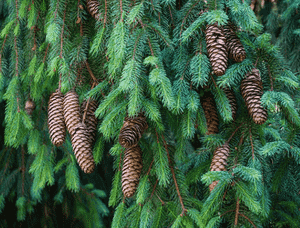
The Norway spruce is considered a beneficial inclusion for improving the Feng Shui of a space. Positioned towards the East, it can foster development, equilibrium, and sustenance, aligning inherently with the Wood element linked to the East. Its perennial characteristic signifies endurance and constancy, attributes greatly valued in Feng Shui principles.
How Does Norway Spruce Influence Energies in Your Life?
Growth and Nurturing
Norway spruce carries the energetic resonance of the Wood element, promoting growth and nurturing in life. This signifies new beginnings, expansion, and the development of relationships and careers.
Protection and Stability
The Zhen Qi embodied by norway spruce signifies protection and stability, creating a stable and supportive environment, attracting positive energies and warding off negative influences.
What Makes Norway Spruce An Auspicious Choice In Feng Shui?
Growth
The norway spruce stimulates personal growth by channeling Zhen Qi, thus enhancing self-development and improving the overall quality of life.
Balance
As a Wood element plant, norway spruce harmonizes the energy flow in your space, promoting stability and balance, essential for a healthy life.
Creativity
The norway spruce boosts creativity and inspiration by activating the Wood element, fueling both motivation and innovation.
What Maintenance Tips Should Be Considered for Norway Spruce?
Placement
Incorrect placement of norway spruce can disrupt the balance of energies, leading to feelings of stagnation or loss of vitality.
Size
Avoid placing an excessively large norway spruce indoors as it may overpower the Qi flow in your environment and create disharmony.
Maintenance
Lack of proper care for norway spruce can negatively impact Qi, so ensure timely pruning and removal of dead branches to preserve its vitality.
Where to Position Norway Spruce for Feng Shui?
Where to Position Norway Spruce for Feng Shui?
Norway spruce is regarded as a favorable addition to enhance the Feng Shui of an area. When placed in the East direction, it can promote growth, harmony and nourishment, naturally resonating with the Wood element associated with the East. Its evergreen nature symbolizes resilience and steadfastness, qualities that are highly regarded in Feng Shui practice.



