Feng Shui for String of pearls
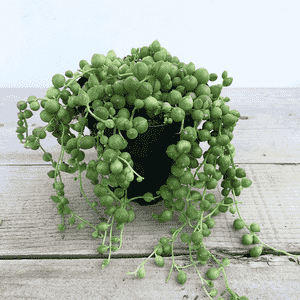
The Senecio rowleyanus, commonly known as string of pearls, is believed to possess abundant energy, rendering it suitable for placement in West-facing areas, frequently linked with inventiveness and happiness. The plant's spherical foliage aptly represents the metal element, which predominates in the West, potentially encouraging balance. Nevertheless, individual responses to Feng Shui principles vary, so experiences might not be uniform.
How Does String Of Pearls Affect Life's Energies?
Wealth, Success
In Feng Shui, the 'string of pearls' with its Metal element represents Wealth and Success. Metal elements are viewed as channels for riches and financial steadiness, suggesting potential affluence.
Vigor, Drive
The 'string of pearls' is linked to the Dui Qi, which in Feng Shui denotes Happiness and liveliness. Therefore, it signifies the boost of Vigor and Drive in a living or working area.
Why Is String Of Pearls A Fortunate Pick In Feng Shui?
Balance
The string of pearls harmonizes Yin and Yang energies, fostering a feeling of calm and serenity in your surroundings.
Affluence
Connected to the 'Metal' element, string of pearls are believed to draw material riches and affluence into your existence.
Innovation
The string of pearls's Qi, 'Dui', represents cheerfulness, celebrating innovation and artistry, thereby promoting inventive thought.
What Care Advice Should Be Followed for String Of Pearls?
Location
Place string of pearls in a well-lit area but steer clear of direct sun, as it hinders the flow of positive Qi.
Irrigation
Excessive watering of string of pearls can result in negative energy buildup; be mindful of the plant's moisture needs.
Growth Pattern
Observe string of pearls's development as untamed, disorderly growth might upset the energy equilibrium in the area.
Optimal Placement for String Of Pearls in Feng Shui?
Optimal Placement for String Of Pearls in Feng Shui?
The succulent string of pearls is thought to possess expansive energy, making it suitable for West-facing areas, often linked with creativity and happiness. The plant's spherical leaves aptly symbolize metal, a prominent element in the West, potentially encouraging stability. Nevertheless, individual responses to Feng Shui vary, so experiences may differ.



