The Spanish moss Plant Advantage: Maximizing Home and Office Appeal and Wellness
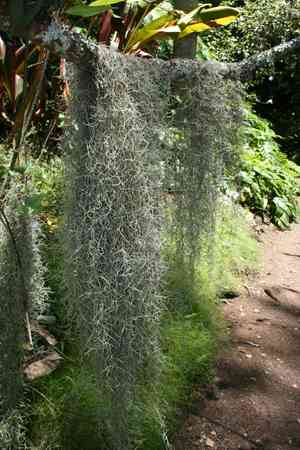
1
This distinct flora flourishes without earth, absorbing sustenance from the atmosphere.
2
Beyond its beauty, this vegetation contributes to diminishing atmospheric contaminants.
3
It offers a home for diverse fauna, yielding environmental advantages.
How Does Spanish moss Improve Air Quality?
Natural Air Purifier
Spanish moss takes in airborne contaminants, including dust and heavy metals, functioning as a natural air purifier. The plant's capacity to draw nutrients from the atmosphere enables it to effectively capture airborne pollutants, thereby enhancing indoor and outdoor air quality.
Reduction of CO2 Levels
Beyond capturing pollutants, Spanish moss actively contributes to lowering carbon dioxide levels in the environment. This makes it a valuable addition to urban areas where CO2 concentrations are typically higher. Its presence can significantly improve breathing conditions in crowded locations.
What Aesthetic Benefits Does Spanish moss Offer?
Visual Appeal
Spanish moss possesses a graceful, flowing form that can elevate the visual charm of any garden or interior space. Its long, silvery strands can create a sense of movement and softness, adding a unique texture to your landscaping or indoor decor.
Landscape Versatility
Whether draped over tree branches or incorporated into modern indoor displays, Spanish moss is remarkably adaptable. This flexibility allows it to complement various garden styles, from rustic to contemporary. It's an excellent choice for adding vertical interest and creating a focal point in garden design.
How Does Spanish moss Support Biodiversity?
Habitat for Wildlife
Spanish moss offers a home for a variety of wildlife, including birds, insects, and small mammals. Its dense clusters provide shelter and nesting sites, making it an invaluable component in preserving local biodiversity. This can transform your garden into a miniature ecosystem teeming with life.
Promoting Pollination
By attracting pollinators such as bees and butterflies, Spanish moss indirectly supports the health of other plants in your garden. Pollinators are crucial for the reproduction of many flowering plants, and a garden rich in pollinators is a flourishing garden.
Can Spanish moss Be Used in Craft and Decoration?
Creative Applications
Beyond its inherent beauty, Spanish moss is frequently utilized in various craft projects and decorative items. Its distinctive texture and shape make it an excellent material for wreaths, garlands, and other DIY decor. Its application is limited only by your imagination.
Seasonal Decor
Due to its adaptability and aesthetic appeal, Spanish moss is often incorporated into seasonal decorations. Whether for weddings, holidays, or special events, its elegant strands can add a touch of nature to any celebration or festivity.
How to Care for Spanish moss in Your Garden?
Light and Water Requirements
Spanish moss thrives in bright, indirect light and needs minimal watering. It absorbs moisture from the air, making it particularly well-suited to humid environments. Regular misting can help maintain its health, but it generally requires less attention than soil-bound plants.
Placement Matters
When positioning Spanish moss in your garden or home, consider its light and humidity requirements. It performs best in areas with good air circulation and should be shielded from direct sunlight, which can be too intense.
What Are the Ecological Benefits of Spanish moss?
Erosion Control
Spanish moss contributes to controlling soil erosion. When it grows in natural settings, its blanket-like coverage helps protect the underlying soil from erosion caused by wind and water. This makes it an important plant for maintaining soil integrity.
Contribution to Ecosystems
As part of its ecosystem, Spanish moss works in conjunction with other plants and animals to maintain a balanced environment. It supports various trophic levels by providing food and shelter, making it a crucial component in many natural habitats.



