The Purple beautyberry Plant Advantage: Maximizing Home and Office Appeal and Wellness
1
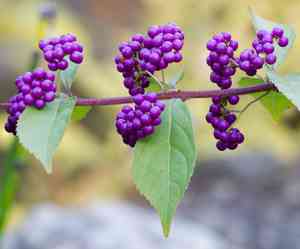
Callicarpa dichotoma yields attractive purple fruits that are very decorative.
2
The fruits of Callicarpa dichotoma serve as a preferred food source for avian species and other fauna.
3
Callicarpa dichotoma is suitable for use as a natural barrier or ground cover because of its thick habit.
What Defines the Purple beautyberry?
Appearance and Growth Pattern
The Purple beautyberry is a deciduous shrub recognized for its vivid purple fruits and arching stems. It typically reaches a height of 3-4 feet and spreads to about 3-5 feet wide, forming a dense, rounded shape. Its leaves are a rich green during the growing season, transitioning to a subtle yellow in autumn.
Resilience and Environmental Preferences
Purple beautyberry is adaptable and robust in USDA zones 5-8. It flourishes in various soil types, including sandy, loamy, and clay, provided they offer good drainage. This plant prefers full sun to partial shade and can withstand moderate dry spells once established.
How to Integrate Purple beautyberry into Your Garden?
Decorative Applications
Purple beautyberry is highly valued in landscaping for its year-round appeal. Its striking purple berries offer a vivid contrast to the green foliage and yellow fall leaves. This makes it an excellent choice for adding color to garden beds, mixed borders, and as an understory plant in wooded gardens.
Natural Barriers and Ground Cover
Due to its dense growth, Purple beautyberry can function as a natural screen or hedge. It helps create privacy hedges and can also be utilized on slopes or embankments to stabilize soil and prevent erosion. Planting Purple beautyberry in groups can provide attractive ground cover that offers shelter and food for wildlife.
What Wildlife Benefits Does Purple beautyberry Offer?
Attracting Avian Species
Purple beautyberry is especially known for drawing in various bird species. Its berries are a popular food source, particularly in late fall and winter when other food is scarce. Birds like robins, cardinals, and mockingbirds are often observed feeding on its berries.
Supporting Pollinators and Beneficial Insects
Beyond its berries, the small, pale-lavender flowers of Purple beautyberry attract pollinators such as bees and butterflies in late summer. These blooms not only enhance the plant's aesthetic appeal but also support the pollinator population in your garden.
What Are the Optimal Care Practices for Purple beautyberry?
Planting and Soil Needs
Plant Purple beautyberry in well-drained soil, ideally in a spot that receives at least six hours of sunlight daily. While it tolerates various soil types, incorporating organic matter into the planting area can boost its growth. Space plants about 3-5 feet apart to allow for their mature spread.
Pruning and Upkeep
Pruning Purple beautyberry is crucial for maintaining its form and encouraging new growth. The best time to prune is in late winter or early spring before leaves emerge. Remove any dead or damaged wood, and thin out crowded branches to improve air circulation and light penetration.
Can Purple beautyberry Be Used in Crafts and Home Decor?
Crafting with Berries
The vibrant berries of Purple beautyberry can be incorporated into various craft projects. They are ideal for making wreaths, garlands, and other seasonal decorations. The berries can be dried for lasting decor or used fresh to add a splash of color to fall and winter arrangements.
Floral Arrangements and Centerpieces
Purple beautyberry's berries and branches can be included in floral arrangements and centerpieces. Their unique color and texture add visual interest, making them a sought-after addition for both fresh and dried floral designs. Use them alone or combine with other flowers and foliage for a stunning display.



