The Giant reed Plant Advantage: Maximizing Home and Office Appeal and Wellness
1
Arundo donax is a very effective biomass source for green energy.
2
This plant acts as a good natural defense against soil degradation.
3
Arundo donax shows promise for use in sustainable building materials.
Why is Giant Reed an Excellent Source of Biomass?
High Biomass Output
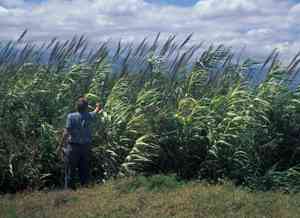
A primary advantage of Giant reed is its capacity for substantial biomass production. This plant can reach heights of up to 30 feet within a single growing season, yielding considerable organic matter convertible into renewable energy. Its rapid growth and significant cellulose content make it an ideal candidate for biomass generation, offering an environmentally friendly substitute for fossil fuels.
Minimal Upkeep Requirements
Giant reed needs little input to flourish, making it an economically viable choice for large-scale biomass cultivation. The plant can grow in diverse soil types, including poor and degraded ones, without extensive fertilization or irrigation. This lowers operational costs and environmental impact associated with its growth, further boosting its appeal as a renewable energy source.
How Does Giant Reed Combat Soil Erosion?
Root System Structure
The extensive root network of Giant reed plays a crucial role in stabilizing soil. Its roots can penetrate deeply into the earth, binding the soil and preventing erosion. This makes the plant especially useful in areas prone to soil degradation, such as riverbanks, hillsides, and agricultural fields. By mitigating soil erosion, Giant reed helps maintain soil health and fertility, vital for sustainable agriculture.
Water Uptake
Giant reed possesses an impressive capacity to absorb and efficiently utilize water. It can thrive in both wet and dry conditions, adapting to varying water availability. This characteristic enables the plant to safeguard soil from erosion caused by water runoff. By acting as a natural barrier, Giant reed lessens the impact of heavy rains on soil, contributing to greater soil stability and resilience.
Can Giant Reed Be Utilized in Eco-Friendly Construction?
Sustainable Building Materials
The fibrous nature of Giant reed makes it suitable for creating environmentally friendly construction materials. Its strong, flexible fibers can be processed into sustainable alternatives to traditional building materials like wood and plastic. For instance, Giant reed fibers can be used to produce biodegradable composites, insulation, and even structural components. These applications not only reduce reliance on non-renewable resources but also contribute to the development of greener building practices.
Durability and Resilience
Giant reed-based materials offer resilience and durability comparable to conventional materials. The plant's fibers are resistant to environmental stressors such as moisture, pests, and UV radiation, making them suitable for various construction applications. Incorporating Giant reed into building designs can enhance the longevity and sustainability of structures, aligning with ongoing efforts to promote environmentally responsible construction.
Can Giant Reed Enhance Phytoremediation Efforts?
Pollutant Absorption
Giant reed has shown promise in phytoremediation, the use of plants to remove environmental pollutants. Its robust root systems can absorb heavy metals and other contaminants from soil and water. This capability makes Giant reed a valuable tool in restoring polluted sites, such as industrial areas and agricultural lands with high chemical residues. By absorbing and sequestering pollutants, Giant reed contributes to cleaner and healthier ecosystems.
Ecosystem Restoration
Beyond pollutant absorption, Giant reed aids in the restoration of degraded ecosystems. Its rapid growth and biomass production can help rebuild soil structure and organic content, facilitating the recovery of plant and animal communities. By improving soil health and fostering bioremediation, Giant reed supports the regeneration of functional and diverse ecosystems.



