
Hall's aster (Symphyotrichum hallii)
Also known as: Hall's Aster
Hall's aster is a perennial plant that forms clumps and produces numerous small, daisy-like purple flowers from late summer through fall. The plant has lance-shaped leaves that grow sparsely along its upright stems. It thrives in prairies and open woodlands, showing adaptability to varied conditions. Its nectar-rich flowers attract many pollinators, which are essential for its reproduction.
In This Article
Attributes of Hall's aster
Lifespan
Perennial
Plant Type
Herb
Plant Height
0.5 to 1 meter
Spread
0.3 to 0.5 meters
Leaf Color
Green
Flower Size
1 to 2 centimeters
Flower Color
Pale blue to violet
Images of Hall's aster
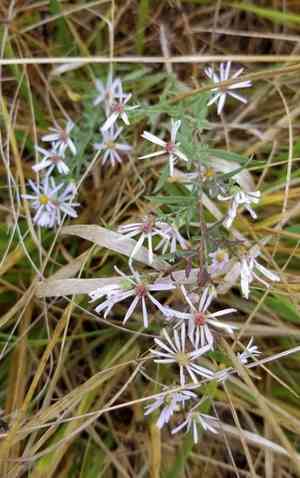
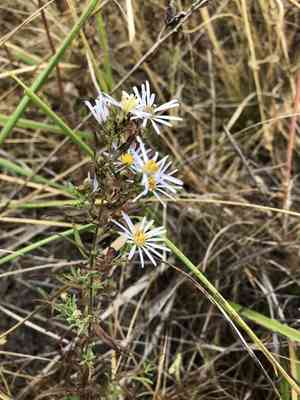
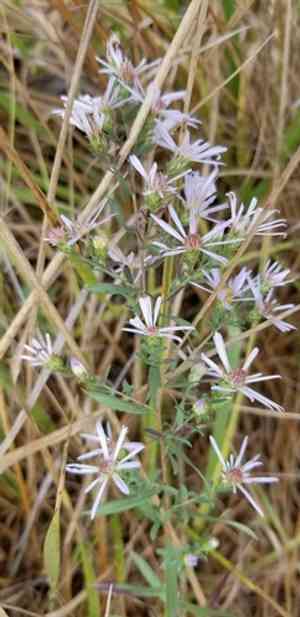
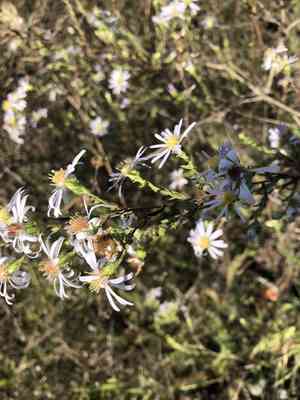
Quickly Identify Hall's aster
1
Hall\'s Aster can be identified by its small, daisy-like flowers with pale blue or violet rays and a yellow to dark center disk. The leaves are typically alternate, narrow, and may be somewhat hairy.
Scientific Classification of Hall's aster
Phylum
Vascular plants
Class
Dicotyledons
Order
Asterales
Family
Daisy
Genus
Asters
Species
Hall's aster
Planting and Growing of Hall's aster
Care Difficulty
Easy
Watering Schedule
Every 2 days
Sunlight Requirements
Full sun
Sunshine Duration
4-8 hours
Ideal Temperature
60-75℉
Soil Type
Potting Mix, Peat Mix
Soil pH
6.5-7.5
Fertilizer Type
Balanced
Pruning Season
Spring, Summer
Pruning Area
Branches, Leaves
Pruning Frequency
2 times a year
Repotting Season
Spring
Pot Type
Plastic, Ceramic
 How to Water Hall's aster?
When watering Symphyotrichum hallii, provide enough water to moisten the soil thoroughly without causing it to become waterlogged. Generally, an amount of around 250 milliliters per session should suffice, aiming for the soil to be moist but not too wet.
What are the symptoms of an underwatered Hall's aster?
›
What should I do if my Hall's aster is not getting enough water?
›
What are the symptoms of an overwatered Hall's aster?
›
How to save an overwatered Hall's aster?
›
 What Are the Sunlight Requirements for Hall's aster?
Symphyotrichum hallii thrives in full sun or partial sunlight conditions. Ideal light improves photosynthesis efficiency, ensuring robust growth and future resilience.
What is the optimal light exposure for Symphyotrichum hallii?
›
How can I ensure Symphyotrichum hallii receives its ideal light?
›
What benefits does ideal lighting have for Symphyotrichum hallii?
›
 What Is the Ideal Temperature Range for Hall's aster?
The ideal temperature range for Symphyotrichum hallii cultivation is between 60 and 75 °F. Maintaining this range will promote optimal growth and blooming, ensuring the plant's health and longevity. These moderate temperatures support efficient photosynthesis and metabolism.
 What Soil is Best for Hall's aster?
Symphyotrichum hallii thrives in well-drained soil to prevent root rot and maintain optimal moisture levels. Well-drained soils allow water to percolate efficiently without saturating the root zone, providing an ideal environment for growth. Soil enriched with organic matter, such as compost, provides essential nutrients necessary for the vigorous growth of Symphyotrichum hallii. This enhances the plant's ability to produce vibrant blooms and maintain overall health. The soil should retain enough moisture to support the plant between watering sessions, without becoming waterlogged. This balance prevents stress on the plant, encouraging robust root development and prolonged flowering periods.
 How to Fertilize Hall's aster?
For Symphyotrichum hallii, a balanced approach is essential. Use a liquid fertilizer dilute to half strength, about 10-15 mL per plant. For slow-release, top-dress with a small handful around the base, ensuring the granules are spread evenly. This balances nutrient delivery without overwhelming the plant.
 How to Prune Hall's aster?
Start by locating branches that are visibly dead or show signs of disease. These are often brown or black, brittle, and devoid of leaves. Cut these branches back to healthy wood to prevent the spread of infection. Focus on trimming back the longer branches to create a more uniform shape. This promotes even growth and enhances the aesthetic appeal of your Symphyotrichum hallii. Keep your cuts at a 45-degree angle just above a leaf node. Regularly deadhead spent flowers to encourage the plant to produce more blooms. Remove flower heads by cutting just above the first set of healthy leaves. This technique not only prolongs the flowering period but also keeps the plant tidy.
More About Pruning Techniques→
 How to Propagate Hall's aster plant?
1
To propagate by seeds, collect mature seeds from the flower heads once they have dried. Clean and store them in a cool, dry place until sowing.
2
During early summer, carefully dig up the plant and use a sharp tool to divide the root clumps. Each division should have roots and shoots attached.
3
Sow collected seeds in a seed tray filled with potting mix. Lightly cover them with soil, water gently, and place the tray in a warm, bright location.
 How to Repot Hall's aster plant?
1
Repot Symphyotrichum hallii when you notice signs like roots poking out of the drainage holes, slowed growth, or the soil drying out too quickly. These indicators suggest it's time for a larger pot to provide room for the expanding roots, usually best done in spring when the plant is beginning its active growth phase.
2
Select a pot that is only slightly larger than the current one, with good drainage holes. A pot too large can lead to overwatering issues. Opting for a properly-sized pot ensures that Symphyotrichum hallii can comfortably expand, while preventing water from stagnating at the roots, reducing the risk of root rot.
3
Use a well-draining, loamy soil to repot Symphyotrichum hallii. This type of soil provides a balance between moisture retention and aeration, essential for preventing compaction and promoting healthy root development. The loamy mix also aids in nutrient availability, supporting vigorous plant growth.
Learn More About Hall's aster Diseases
Anthracnose
Bacterial Leaf Spot
Bacterial Soft Rot
Bacterial Wilt
Black Spot
Chemical Injury
Crown Gall
Cyst Nematode
Damping-off
Downy Mildew
Drought Stress
Fusarium Wilt
Gray Mold
Leaf Curl
Leaf Spot
Mosaic
Nutrient Deficiency
Nutrient Toxicity
Powdery Mildew
Root Rot
Root-knot Nematode
Rusts
Sooty Mold
Spider Mites
Temperature Stress
Thrips Damage
White Mold



