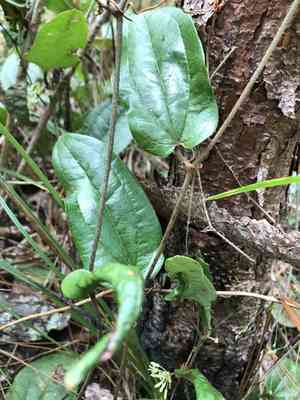
Sarsparilla vine (Smilax pumila)
Also known as: Dwarf Greenbrier
The plant you're looking for is the Partridgeberry (Mitchella repens), native to the southeastern United States. It forms a low-growing mat, making it excellent for ground cover. Unlike some other ground covers that climb, Partridgeberry stays close to the ground. It blooms with small white flowers in the spring, followed by red berries in the winter, which attract birds and small mammals.
In This Article
Attributes of Sarsparilla vine
Lifespan
Perennial
Plant Type
Herb, Vine
Plant Height
30 cm to 46 cm
Spread
2.5 m to 3 m
Leaf Color
Dark green, glossy.
Flower Size
2.5 cm
Flower Color
Yellow Green
Images of Sarsparilla vine
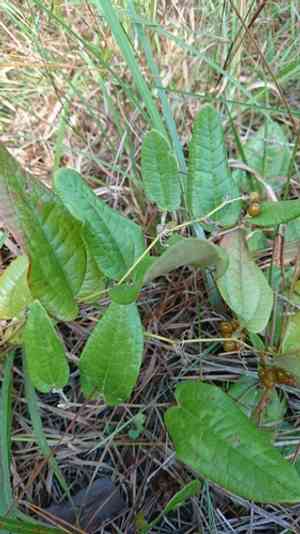


Quickly Identify Sarsparilla vine
1
Smilax pumila can be identified by its low-growing, vinelike appearance with leathery, evergreen leaves. The leaves are often heart-shaped or ovate with a glossy surface. It tends to form dense mats on the ground or climb on low structures.
Scientific Classification of Sarsparilla vine
Phylum
Vascular plants
Class
Monocotyledons
Order
Liliales
Family
Greenbrier
Genus
Prickly-ivy
Species
Sarsparilla vine
Planting and Growing of Sarsparilla vine
Care Difficulty
Easy
Watering Schedule
Every 2 days
Sunlight Requirements
Partial sun
Sunshine Duration
6-10 hours
Ideal Temperature
60-75℉
Soil Type
Potting Mix, Peat Mix
Soil pH
6.5-7.5
Fertilizer Type
Balanced
Pruning Season
Spring, Summer
Pruning Area
Branches, Leaves
Pruning Frequency
2 times a year
Repotting Season
Spring
Pot Type
Plastic, Ceramic
 How to Water Sarsparilla vine?
Smilax pumila thrives when watered deeply, allowing the soil to become moist without being soggy. Aim for about 200 ml per watering session, ensuring that excess water drains away freely. This prevents root rot while maintaining sufficient moisture for growth.
What are the symptoms of an underwatered Sarsparilla vine?
›
What should I do if my Sarsparilla vine is not getting enough water?
›
What are the symptoms of an overwatered Sarsparilla vine?
›
How to save an overwatered Sarsparilla vine?
›
 What Are the Sunlight Requirements for Sarsparilla vine?
Partial sun to full shade is ideal for Smilax pumila. This light range provides the right balance, allowing healthy photosynthesis while avoiding stress from excessive heat or direct sunlight. It also supports robust growth and resistance to pests.
More About Sunlight Requirements Techniques→
What is the ideal sunlight condition?
›
How should Smilax pumila be positioned?
›
What benefits does ideal lighting provide?
›
 What Is the Ideal Temperature Range for Sarsparilla vine?
The ideal temperature range for Smilax pumila is between 60 to 75°F. This range provides optimal conditions for growth and ensures that the plant can photosynthesize efficiently without the risk of temperature-induced stress. Within this range, metabolic and physiological processes function harmoniously, promoting healthy foliage and a robust plant structure.
 What Soil is Best for Sarsparilla vine?
Smilax pumila thrives in well-drained soils that prevent water from stagnating around the roots. Good drainage avoids root rot and ensures the plant receives adequate oxygen for growth. Rich in organic matter, the soil should have a balanced nutrient composition to support the vigorous growth of Smilax pumila. The nutrients foster healthy foliage and overall plant vigor. Although well-drained, the soil should retain enough moisture to sustain the plant during drier periods. This balance ensures that Smilax pumila remains hydrated without oversaturation.
 How to Fertilize Sarsparilla vine?
For Smilax pumila, the recommended fertilizer amount should be modest. It's best to use a diluted liquid fertilizer solution, mixed to a quarter strength. This ensures that the delicate roots are not overwhelmed by excess nutrients, promoting healthy growth.
 How to Prune Sarsparilla vine?
Start by locating and removing any dead or damaged stems. These can be identified by their brown or wilted appearance. Removing them helps direct energy towards healthier parts of the plant. Trim back leading shoots to manage the size and shape of the plant. Focus on maintaining a balanced appearance and remove any wayward branches that disrupt the desired form of your Smilax pumila. To get a bushier plant, prune just above a node or bud. This encourages new growth at the cut point, leading to a fuller and more vibrant Smilax pumila.
More About Pruning Techniques→
 How to Propagate Sarsparilla vine plant?
1
Begin by harvesting mature seeds from the plant. Clean them gently to remove any pulp, and dry them thoroughly to prevent mold during storage.
2
Select a healthy stem with no signs of disease or damage. Cut a 4-6 inch length below a node using pruning shears and remove the lower leaves to prevent rot.
3
Gently dig up the plant, ensuring minimal root disturbance. Use a sharp knife to divide the rhizome into sections, each with at least one growth node.
 How to Repot Sarsparilla vine plant?
1
Smilax pumila should be repotted when you notice that the roots are visibly growing through the drainage holes, or the growth of the plant has significantly slowed down compared to its usual pace. These are clear indications that the plant has outgrown its current pot and it's time for a change to allow the roots more room to breathe and grow.
2
Choose a pot that is one size bigger than the current one, with ample drainage holes to prevent waterlogging. A proper pot size ensures that the plant has enough space to expand without overwhelming its root system, which helps in managing water retention and reducing the risk of root rot.
3
Opt for a well-draining potting mix rich in organic matter. This kind of soil offers the best combination of nutrients and excellent drainage to prevent water from sitting in the soil, which could otherwise lead to root issues. Ensuring proper aeration is critical for the health of Smilax pumila.
Learn More About Sarsparilla vine Diseases
Anthracnose
Bacterial Leaf Spot
Bacterial Wilt
Crown Gall
Cyst Nematode
Damping-off
Downy Mildew
Drought Stress
Fusarium Wilt
Gray Mold
Leaf Spot
Mosaic
Nutrient Deficiency
Nutrient Toxicity
Powdery Mildew
Root Rot
Root-knot Nematode
Rusts
Sooty Mold
Spider Mites
Temperature Stress
Thrips Damage
White Mold



