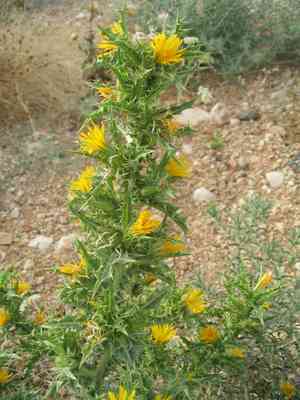
Common goldenthistle (Scolymus hispanicus)
Also known as: Spanish oyster plant
The plant you're referring to is likely **Common Goldenthistle (Scolymus hispanicus)**. This prickly Mediterranean herb features bright yellow flowers and can thrive in poor soil and disturbed areas. Despite its spiky appearance, it has been traditionally consumed in Europe, either raw or cooked in various dishes like salads, soups, and stews. It spreads readily and is considered invasive in some western U.S. states and Australia.
In This Article
Attributes of Common goldenthistle
Lifespan
Biennial, Perennial
Plant Type
Herb
Plant Height
80 cm
Spread
50 cm
Leaf Color
Green
Flower Size
2 cm to 3 cm
Flower Color
Yellow
Images of Common goldenthistle
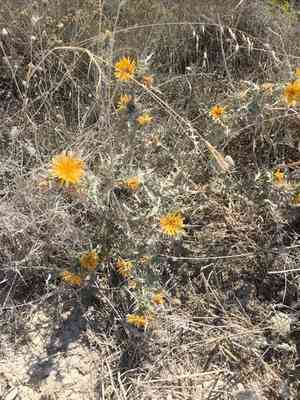
Quickly Identify Common goldenthistle
1
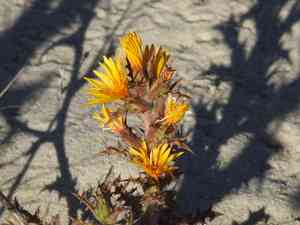
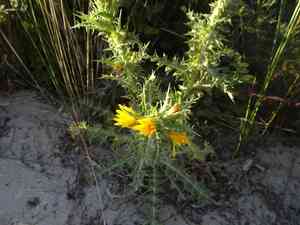
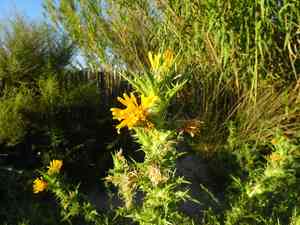
Identify Scolymus hispanicus by its bright yellow, thistle-like flowers, spiny leaves, and a robust stem that can grow up to 1.5 meters tall.
Scientific Classification of Common goldenthistle
Phylum
Vascular plants
Class
Dicotyledons
Order
Asterales
Family
Daisy
Genus
Golden thistles
Species
Common goldenthistle
Planting and Growing of Common goldenthistle
Care Difficulty
Easy
Watering Schedule
Every 4 days
Sunlight Requirements
Full sun
Sunshine Duration
6-12 hours
Ideal Temperature
60-75℉
Soil Type
Potting Mix, Peat Mix
Soil pH
6.5-7.5
Fertilizer Type
Balanced
Pruning Season
Spring, Summer
Pruning Area
Branches, Leaves
Pruning Frequency
2 times a year
Repotting Season
Spring
Pot Type
Plastic, Ceramic
 How to Water Common goldenthistle?
Scolymus hispanicus requires moderate watering, roughly 250 milliliters per session, ensuring that its soil remains lightly moist without becoming waterlogged. The key is to maintain evenly moist soil conditions that emulate its natural environment.
What are the symptoms of an underwatered Common goldenthistle?
›
What should I do if my Common goldenthistle is not getting enough water?
›
What are the symptoms of an overwatered Common goldenthistle?
›
How to save an overwatered Common goldenthistle?
›
 What Are the Sunlight Requirements for Common goldenthistle?
The ideal light range for Scolymus hispanicus is full to partial sun, meaning it should get at least 6 to 8 hours of sunlight daily. Adequate light facilitates nutrient acquisition through photosynthesis, bolstering its growth and flowering.
More About Sunlight Requirements Techniques→
What is the best lighting condition for Scolymus hispanicus?
›
How to ensure Scolymus hispanicus gets the right amount of light?
›
What are the benefits of ideal lighting for Scolymus hispanicus?
›
 What Is the Ideal Temperature Range for Common goldenthistle?
For optimal growth, Scolymus hispanicus thrives best in a temperature range of 60 to 75 degrees Fahrenheit. Within this range, the plant can carry out photosynthesis efficiently, ensuring healthy development. Maintaining the temperature within this range will support robust growth and flowering.
 What Soil is Best for Common goldenthistle?
Scolymus hispanicus thrives in well-drained soils that prevent waterlogging. Well-drained soil ensures the roots get enough oxygen and avoid rot. This helps the plant develop strong and healthy foliage. Rich, fertile soil is essential for Scolymus hispanicus as it provides essential nutrients. A nutrient-rich medium supports vigorous growth and enhances flower and foliage production, leading to a more robust plant. The plant prefers soils that are slightly alkaline, which supports optimal nutrient uptake. Such conditions ensure that Scolymus hispanicus can access the essential micronutrients needed for its development.
 How to Fertilize Common goldenthistle?
For Scolymus hispanicus, it is advisable to use a balanced fertilizer diluted to half the recommended strength. Typically, use about 50 ml of liquid fertilizer for each plant every two weeks or sprinkle a slow-release granular fertilizer sparingly around the base. Avoid excessive nutrient concentration, which could harm the roots.
 How to Prune Common goldenthistle?
Start by inspecting your Scolymus hispanicus for any dead or diseased parts that need removal. Use a pair of sharp, sterilized pruning shears to snip away these areas, cutting back to a healthy node or branch junction. Next, thin out overcrowded sections to promote airflow. Trim straggly stems and shape the plant to encourage a compact, bushy habit. Pay attention to creating an even balance throughout the plant for a visually appealing look.
More About Pruning Techniques→
 How to Propagate Common goldenthistle plant?
1
Begin by filling the seed tray with potting mix and evenly distribute Scolymus hispanicus seeds on the surface, gently pressing them into the soil. Water lightly to ensure moisture without over-watering.
2
Place the seed tray in a warm and bright location, maintaining a temperature of around 20-25°C to promote germination. Ensure consistent moisture by covering the tray with a clear plastic lid or using a humidity dome.
3
Once seedlings have developed several true leaves, carefully transplant them into individual pots. Be gentle to avoid damaging the roots and water immediately after transplanting.
 How to Repot Common goldenthistle plant?
1
Scolymus hispanicus should be repotted when its roots outgrow the current pot or the plant shows reduced growth. This usually occurs after 2-3 years. If you observe the roots poking through the drainage holes or a noticeable decrease in foliage health, it's time to repot. Additionally, the best times are spring and summer, as the plant can adjust to new soil conditions more readily.
2
Selecting the perfect pot for Scolymus hispanicus is crucial. Opt for a pot that is one size larger than the current one, ensuring it has good drainage holes. The material of the pot should ideally be terracotta or ceramic, which allows for air circulation. These types of pots help prevent the soil from becoming waterlogged, providing a healthier environment for root growth and plant stability.
3
For optimal growth, Scolymus hispanicus requires a well-draining loamy soil mix. This soil type retains moisture without becoming waterlogged, critical in preventing root rot. It typically contains a balance of sand, silt, and clay, promoting good aeration and nutrient availability for the plant. Using such a mix ensures robust growth and vibrant foliage.
Learn More About Common goldenthistle Diseases
Anthracnose
Bacterial Leaf Spot
Bacterial Soft Rot
Bacterial Wilt
Black Spot
Chemical Injury
Crown Gall
Cyst Nematode
Damping-off
Downy Mildew
Drought Stress
Fusarium Wilt
Gray Mold
Leaf Spot
Mosaic
Nutrient Deficiency
Nutrient Toxicity
Powdery Mildew
Root Rot
Root-knot Nematode
Rusts
Sooty Mold
Spider Mites
Temperature Stress
Thrips Damage
White Mold



