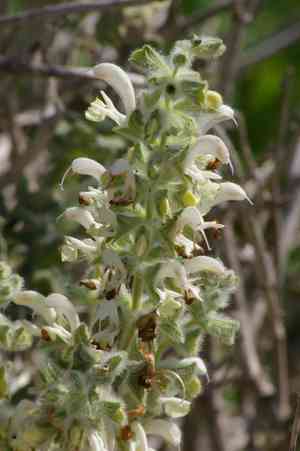
Dominica sage (Salvia dominica)
Also known as: Dominican Sage
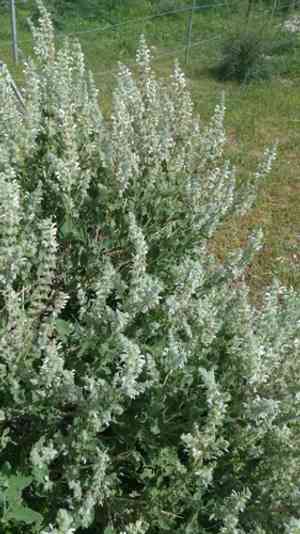
Dominica sage, a perennial herb native to the Eastern Mediterranean, thrives in arid, rocky environments. It has aromatic, lance-shaped leaves and produces clusters of pale yellow, two-lipped flowers with a unique purplish-brown calyx. Known for its drought tolerance and hardy nature, Dominica sage often forms bushy clumps and attracts pollinators like bees.
In This Article
Attributes of Dominica sage
Lifespan
Perennial
Plant Type
Herb
Plant Height
60-90 cm (24-36 inches)
Spread
45-60 cm (18-24 inches)
Leaf Color
Gray-green
Flower Size
2-3 cm (0.8-1.2 inches)
Flower Color
Pale blue to violet
Images of Dominica sage
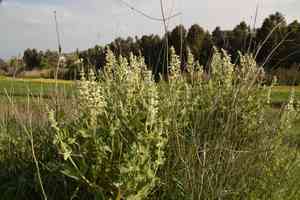
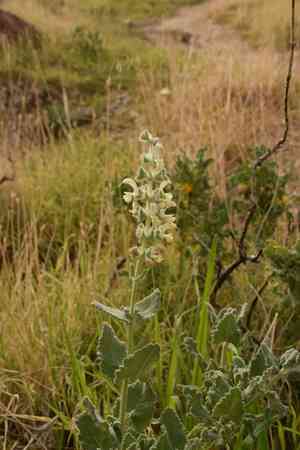
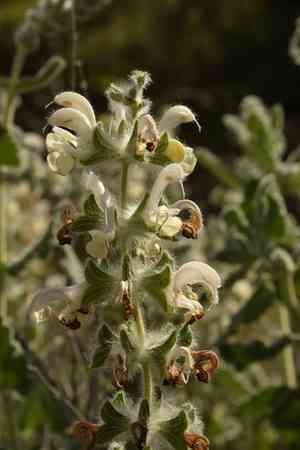
Quickly Identify Dominica sage
1
Salvia dominica can be identified by its gray-green, slightly fuzzy leaves and tall spikes of pale blue to violet flowers. The plant typically has a bushy growth habit and its leaves emit a strong, pleasant aroma when crushed.
Scientific Classification of Dominica sage
Phylum
Vascular plants
Class
Dicotyledons
Order
Lamiales
Family
Mint
Genus
Sages
Species
Dominica sage
Planting and Growing of Dominica sage
Care Difficulty
Easy
Watering Schedule
Every 2 days
Sunlight Requirements
Full sun
Sunshine Duration
6-10 hours
Ideal Temperature
60-75℉
Soil Type
Potting Mix, Peat Mix
Soil pH
6.5-7.5
Fertilizer Type
Balanced
Pruning Season
Spring, Summer
Pruning Area
Branches, Leaves
Pruning Frequency
2 times a year
Repotting Season
Spring
Pot Type
Plastic, Terracotta
 How to Water Dominica sage?
When watering Salvia dominica, aim for about 300 ml per session. The idea is to saturate the soil thoroughly without leaving the plant waterlogged. Make sure excess water can drain, preventing roots from sitting in moisture.
What are the symptoms of an underwatered Dominica sage?
›
What should I do if my Dominica sage is not getting enough water?
›
What are the symptoms of an overwatered Dominica sage?
›
How to save an overwatered Dominica sage?
›
 What Are the Sunlight Requirements for Dominica sage?
Salvia dominica thrives best in full sun, where it can photosynthesize effectively, resulting in lush foliage and abundant flowering. Ideal light enhances its natural resistance to environmental stress.
What type of sunlight is ideal for Salvia dominica?
›
How can one achieve ideal sunlight exposure for Salvia dominica?
›
What are the benefits of ideal sunlight for Salvia dominica?
›
 What Is the Ideal Temperature Range for Dominica sage?
For optimal growth, Salvia dominica thrives in temperatures ranging from 60 to 75°F. These conditions mimic its native environment's warm and temperate climate, allowing the plant to perform essential physiological processes efficiently. With this temperature range, photosynthesis rates are optimal, and the plant experiences healthy root development. Maintaining such temperatures promotes robust plant health and flowering success.
 What Soil is Best for Dominica sage?
Salvia dominica thrives in well-drained soils. This requirement ensures that the plant's roots do not sit in water, which can lead to root rot and other complications. Good drainage helps maintain optimal root health and supports vigorous growth. For optimal growth, Salvia dominica needs soil that is rich in essential nutrients. Enriched soil provides the necessary elements for robust plant development, enhancing both flower production and foliage vitality. The soil should retain sufficient moisture to support the plant's needs without becoming waterlogged. Moderate moisture levels assist in maintaining a stable environment for Salvia dominica, contributing to its overall health and resilience.
 How to Fertilize Dominica sage?
For Salvia dominica, it is important to provide a balanced amount of nutrients without overwhelming the plant. Use a low-concentration liquid fertilizer, about one tablespoon per gallon of water and apply it generously around the base of the plant.
 How to Prune Dominica sage?
Inspect your Salvia dominica for any dead or diseased branches. Use your pruning shears to cut these back to the base or just above a healthy leaf node. This encourages the growth of new branches and improves air circulation inside the plant, reducing the chance of disease. To maintain a bushy and compact shape, trim back about one-third of each stem. This helps promote fuller growth and prevents the plant from becoming leggy. Focus on achieving a symmetrical appearance for aesthetic appeal.
More About Pruning Techniques→
 How to Propagate Dominica sage plant?
1
Fill a seed tray with a well-draining potting mix. Sow the seeds on the surface and lightly cover them with a thin layer of soil. Keep the tray in a warm, well-lit area and maintain moisture until germination occurs.
2
Take 4- to 6-inch cuttings from healthy, non-flowering stems using sharp pruning shears. Remove the leaves from the bottom half of the cuttings to reduce moisture loss and dip the cut ends in rooting hormone if desired.
3
Insert the prepared cuttings into a pot filled with a moist, well-draining potting mix. Ensure that the cuttings are deep enough for stability and keep them in a warm, bright location with indirect light.
 How to Repot Dominica sage plant?
1
Salvia dominica signals its need for repotting when its roots start growing out of the drainage holes, or when growth appears stunted and lackluster. This typically suggests the roots have outgrown their current pot. Look for these signs preferably in the spring or early summer, providing the plant ample time to adapt throughout the growing season.
2
Select a pot that is one size larger than the current one, ensuring sufficient space for root expansion. Prefer materials like terracotta that allow for better aeration and moisture control. A pot with ample drainage holes is crucial to prevent root rot, contributing to a healthier growing environment for your Salvia dominica.
3
Opt for a well-draining sandy loam mix, ideal for Salvia dominica's growing needs. This type of soil provides excellent drainage, preventing waterlogging while retaining essential nutrients. A quality soil mix will promote vigorous growth, mimicking the plant's natural rocky and arid habitat.
Learn More About Dominica sage Diseases
Anthracnose
Bacterial Leaf Spot
Bacterial Wilt
Crown Gall
Damping-off
Downy Mildew
Drought Stress
Fusarium Wilt
Gray Mold
Leaf Curl
Leaf Spot
Mosaic
Nutrient Deficiency
Nutrient Toxicity
Powdery Mildew
Root Rot
Root-knot Nematode
Rusts
Sooty Mold
Spider Mites
Temperature Stress
Thrips Damage
White Mold



