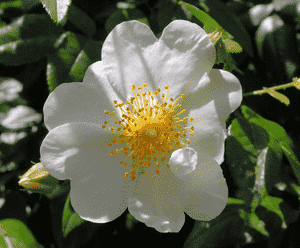
Evergreen rose (Rosa sempervirens)
Also known as: Evergreen Rose, Trailing Rose
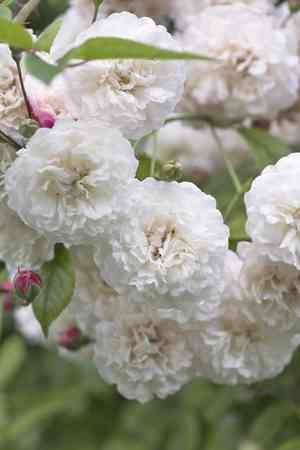
The Evergreen Rose (Rosa sempervirens) is a climbing perennial from the rose family, known for its notably prickly stems. Native to southern France, it flourishes in shrublands and valleys. This species blooms during the spring and early summer seasons. It was notably cultivated in the gardens of King Louis Philippe I.
In This Article
Attributes of Evergreen rose
Lifespan
Perennial
Plant Type
Vine, Shrub
Plant Height
1.5 m to 5 m
Spread
2.5 m
Leaf Color
Green
Flower Size
2.5 cm to 5 cm
Flower Color
White
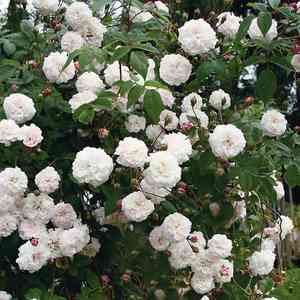
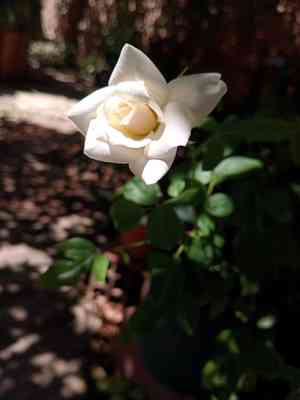
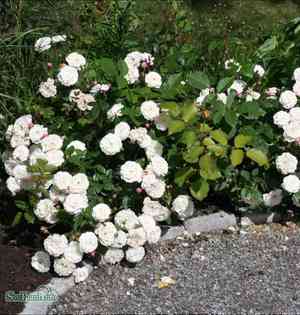
Images of Evergreen rose
Quickly Identify Evergreen rose
1
Look for its glossy, dark green leaves which are evergreen in milder climates, small white to pale pink flowers in clusters, and its trailing or climbing habit.
Scientific Classification of Evergreen rose
Phylum
Vascular plants
Class
Dicotyledons
Order
Rosales
Family
Rose
Genus
Roses
Species
Evergreen rose
Planting and Growing of Evergreen rose
Care Difficulty
Easy
Watering Schedule
Every 3 days
Sunlight Requirements
Full sun
Sunshine Duration
6-10 hours
Ideal Temperature
60-75℉
Soil Type
Potting Mix, Peat Mix
Soil pH
6.5-7.5
Fertilizer Type
Balanced
Pruning Season
Spring, Summer
Pruning Area
Branches, Leaves
Pruning Frequency
2 times a year
Repotting Season
Spring
Pot Type
Plastic, Ceramic
 How to Water Evergreen rose?
Rosa sempervirens requires precise watering to maintain optimal health. The watering amount per session should be approximately 500 ml. It is crucial to water the plant thoroughly, ensuring that the soil is uniformly moist but not waterlogged. This practice helps the roots absorb adequate moisture without creating fungal growth or root rot conditions.
More About Watering Techniques→
What are the symptoms of an underwatered Evergreen rose?
›
What should I do if my Evergreen rose is not getting enough water?
›
What are the symptoms of an overwatered Evergreen rose?
›
How to save an overwatered Evergreen rose?
›
 What Are the Sunlight Requirements for Evergreen rose?
Rosa sempervirens thrives best with full sun to partial sun exposure. Receiving between six to eight hours of sunlight daily encourages healthy growth, prolific blooming, and vibrant foliage coloration.
More About Sunlight Requirements Techniques→
How much sunlight does Rosa sempervirens need?
›
What solutions are there for providing ideal light?
›
What are the benefits of ideal lighting?
›
 What Is the Ideal Temperature Range for Evergreen rose?
For optimal growth, Rosa sempervirens prefers temperatures ranging from 60 to 75 degrees Fahrenheit. This range ensures the plant can thrive without stress, promoting healthy foliage and flowering. Encounters within this range allow for the most efficient biological processes such as photosynthesis and nutrient uptake. Keeping temperatures in this ideal zone is crucial for sustaining vibrant and resilient plants.
 What Soil is Best for Evergreen rose?
Rosa sempervirens thrives in well-draining soils, which prevent waterlogging and root rot. This ensures healthy root development and robust plant growth. Without it, the plant may suffer from stunted growth and poor health. The plant demands a nutrient-rich environment to support its vigorous growth. Enriched loamy soils provide essential minerals that enhance flowering and foliage health, translating to a more vibrant display. For optimal growth, Rosa sempervirens prefers a pH that is neutral to slightly alkaline. This pH level facilitates nutrient uptake, ensuring the plant attains its full blooming potential with lush and healthy bush.
More About Soil→
 How to Fertilize Evergreen rose?
For Rosa sempervirens, the ideal fertilizer amount should be moderate. Use approximately half a cup of balanced 10-10-10 NPK liquid fertilizer per plant on a monthly basis. For slow-release granular fertilizers, distribute about 50-100 grams per plant annually, ensuring the nutrients are not wasted, and the soil remains nutrient-enriched.
More About Fertilizing Techniques→
 How to Prune Evergreen rose?
Start by removing any dead, damaged, or diseased branches to prevent disease spread and improve plant health. Next, thin out crowded areas by cutting away branches that are rubbing against each other or growing inward. Trim back long or out-of-shape branches to maintain a bushy and aesthetically pleasing structure. Always make cuts just above a healthy bud and at an angle to prevent water pooling, which can lead to rot. To stimulate new growth and more blooms, prune back the stem tips to encourage branching. This can be done by cutting back to a set of healthy leaves or a bud. Cutting back to outward-facing buds will promote a wider spread, ideal for creating a lush, full appearance.
More About Pruning Techniques→
 How to Propagate Evergreen rose plant?
1
Choose a light, well-draining soil mix for seed propagation or a combination of peat and perlite for cuttings. This ensures proper drainage and aeration, preventing root rot and other issues associated with overly moist environments.
2
Select healthy, semi-hardwood stems and cut them at an angle using your sharp pruners. Each cutting should be around 6 inches long with at least three leaf nodes. Remove the leaves from the bottom half to avoid unnecessary water loss.
3
For layering, choose a healthy low-growing stem and make a cut about halfway through the stem. Bend it down to the ground, cover the wounded part with soil, and secure it with a small rock or pin. This encourages roots to develop from the wound over time.
 How to Repot Evergreen rose plant?
1
Rosa sempervirens typically needs repotting when you notice roots growing through the drainage holes or soil compacting heavily. Another indication is slowed growth despite ideal conditions, suggesting inadequate potting space and nutrient availability.
2
Choose a pot with drainage holes that's 1-2 inches larger in diameter than the current one. A slightly larger pot encourages healthy root expansion without the risk of waterlogging, ensuring robust growth and vibrant foliage.
3
Opt for a well-draining sandy loam soil. This ensures excellent water retention without oversaturation, providing the roots with ample oxygen. The balance of sand, silt, and clay gives Rosa sempervirens the ideal conditions for robust root growth.



