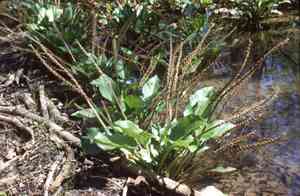
Heart-leaf plantain (Plantago cordata)
Also known as: Seaside Plantain
The seeds are specially adapted for water dispersal. They feature buoyant, fleshy parts that enable them to float, and a sticky coating that helps them attach to various surfaces. This ensures they can travel long distances in water and anchor themselves effectively upon reaching a new location.
In This Article
Attributes of Heart-leaf plantain
Lifespan
Perennial
Plant Type
Herb
Plant Height
10-50 cm
Spread
N/A - Herbaceous plant
Leaf Color
Green
Flower Size
Small, up to 1 cm
Flower Color
Greenish-white or dark brown
Images of Heart-leaf plantain
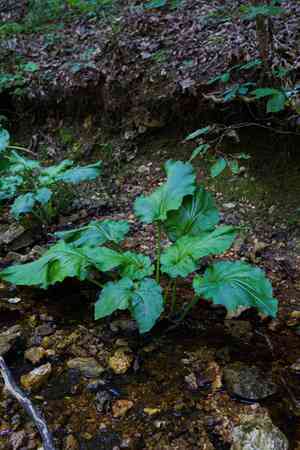
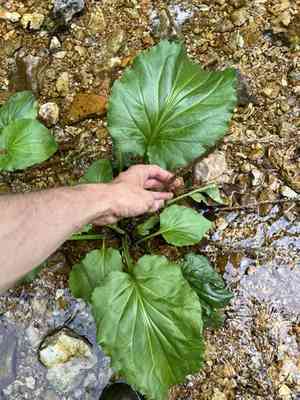
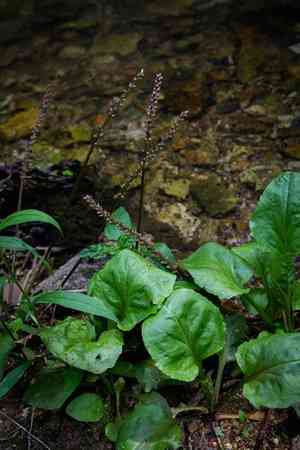
Quickly Identify Heart-leaf plantain
1
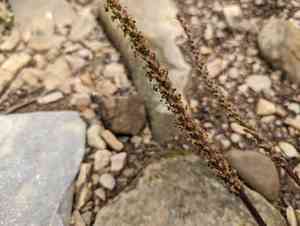
Plantago cordata can be identified by its large, heart-shaped leaves and greenish-white to dark brown flower spikes. The leaves are typically broad and have prominent veins.
Scientific Classification of Heart-leaf plantain
Phylum
Vascular plants
Class
Dicotyledons
Order
Lamiales
Family
Plantain
Genus
Plantains
Species
Heart-leaf plantain
Planting and Growing of Heart-leaf plantain
Care Difficulty
Easy
Watering Schedule
Every 4 days
Sunlight Requirements
Partial sun
Sunshine Duration
4-6 hours
Ideal Temperature
60-75℉
Soil Type
Potting Mix, Peat Mix
Soil pH
6.5-7.5
Fertilizer Type
Balanced
Pruning Season
Spring, Summer
Pruning Area
Branches, Leaves
Pruning Frequency
2 times a year
Repotting Season
Spring
Pot Type
Plastic, Ceramic
 How to Water Heart-leaf plantain?
Plantago cordata prefers consistently moist soil. Ensure the soil is kept moist, but not waterlogged, by applying approximately 250 ml of water per session. Water should reach root depth but not result in pools on the soil surface.
What are the symptoms of an underwatered Heart-leaf plantain?
›
What should I do if my Heart-leaf plantain is not getting enough water?
›
What are the symptoms of an overwatered Heart-leaf plantain?
›
How to save an overwatered Heart-leaf plantain?
›
 What Are the Sunlight Requirements for Heart-leaf plantain?
Partial shade with 3 to 6 hours of light is ideal, providing the Plantago cordata with enough energy for photosynthesis, while preventing sunburn and fostering healthy growth.
What is the ideal light condition for Plantago cordata?
›
How to achieve ideal lighting conditions?
›
What benefits does ideal lighting provide?
›
 What Is the Ideal Temperature Range for Heart-leaf plantain?
Plantago cordata thrives best when grown in temperatures ranging from 60°F to 75°F. This temperature range provides optimal conditions for photosynthesis and nutrient absorption. By maintaining these conditions, the plant can exhibit vigorous growth and healthy foliage, indicative of ideal cultivation.
 What Soil is Best for Heart-leaf plantain?
Plantago cordata thrives in soil that can retain adequate moisture without becoming waterlogged. The presence of loamy or sandy loam soil helps achieve this balance, ensuring the plant's roots remain hydrated and healthy. This plant prefers soil that is rich in organic matter. Nutrient-rich loam provides a supply of essential nutrients, promoting robust growth and vibrant foliage. While moisture retention is crucial, ensuring that the soil drains well prevents root rot. Sandy loam not only supports drainage but also provides a supportive structure for root development.
 How to Fertilize Heart-leaf plantain?
For Plantago cordata, a gentle approach to fertilization is essential. When applying liquid fertilizer, use a balanced formulation such as a 10-10-10 NPK at a dilution of half the recommended strength. This ensures that the plant receives adequate nourishment without the risk of nutrient burn. For slow-release granular fertilizer, opt for a conservative spread around the plant base, aiming for approximately one tablespoon per square foot, to gently support the plant's growth throughout the year.
 How to Prune Heart-leaf plantain?
Begin by examining your Plantago cordata for any dead or discolored leaves. Use clean, sharp pruning shears to snip these leaves at their base. Next, scrutinize the plant for any stems that appear crowded or are crossing each other and trim them to improve the plant's structure. Be careful to make clean cuts at an angle, which can help the plant heal faster and prevent water from pooling on the cut surfaces.
 How to Propagate Heart-leaf plantain plant?
1
Start by soaking seeds overnight to enhance germination rates. This pre-treatment softens the hard seed coat, allowing moisture to penetrate more effectively when sown.
2
Scatter the seeds evenly onto a seed tray filled with sterilized potting mix. Lightly cover them with a thin layer of soil, as Plantago cordata seeds require light to germinate.
3
Place the seed tray in a bright location, maintaining a temperature between 18-24°C (64-75°F). Keep the soil consistently moist but never waterlogged, checking regularly to prevent drying out.
 How to Repot Heart-leaf plantain plant?
1
Recognizing when to repot Plantago cordata is crucial for its health. Look for signs like roots emerging from drainage holes, slow growth despite good care, or a noticeable decrease in soil volume. Spring is ideal as the plant is in its growth phase, making it adaptable to changes.
2
Select a pot that is one size larger than the current one, ensuring there are sufficient drainage holes. This size increase provides enough space for root expansion without overwhelming the plant. Materials like terracotta are excellent as they enable decent aeration and moisture control.
3
Opt for a sandy, well-draining soil mix enriched with organic matter. This blend retains necessary moisture while preventing root rot from excess water. Moreover, the organic content supports the plant’s nutritional needs, promoting robust and steady growth.
Learn More About Heart-leaf plantain Diseases
Anthracnose
Bacterial Leaf Spot
Bacterial Soft Rot
Bacterial Wilt
Chemical Injury
Cyst Nematode
Damping-off
Downy Mildew
Drought Stress
Fusarium Wilt
Gray Mold
Leaf Curl
Leaf Spot
Mosaic
Nutrient Deficiency
Nutrient Toxicity
Powdery Mildew
Root Rot
Root-knot Nematode
Rusts
Sooty Mold
Spider Mites
Temperature Stress
Thrips Damage
White Mold



