Butterworts (Pinguicula) (Pinguicula)
Also known as: Butterwort
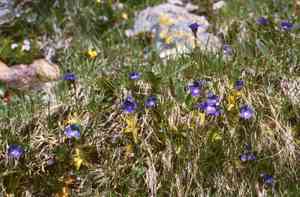
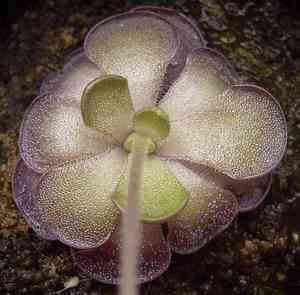
Butterworts are primarily perennial plants that form stemless rosettes. Their thin, white roots mainly anchor the plant and absorb moisture. The leaves are smooth, rigid, and succulent, typically bright green or pinkish. They produce single, long-lasting, zygomorphic flowers with two lower lip petals and a spur from the back, characteristic of the bladderwort family. The calyx has five sepals, and the petals form a two-part lower lip and a three-part upper lip. Flower colors are usually blue, violet, or white, with possible yellow, greenish, or reddish tints. The seed capsules are round to egg-shaped, splitting open when dry to release small, brown seeds. Out of about 80 known species, 13 are native to Europe, 9 to North America, and the largest number are found in Central and South America. Butterworts are distributed throughout the northern hemisphere.
Attributes of Butterworts (Pinguicula)
Images of Butterworts (Pinguicula)
 How to Water Butterworts (Pinguicula)?
  What Are the Sunlight Requirements for Butterworts (Pinguicula)?
  What Is the Ideal Temperature Range for Butterworts (Pinguicula)?
  What Soil is Best for Butterworts (Pinguicula)?
  How to Fertilize Butterworts (Pinguicula)?
  How to Prune Butterworts (Pinguicula)?
  How to Propagate Butterworts (Pinguicula) plant?
 How to Repot Butterworts (Pinguicula) plant?

