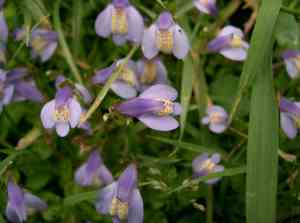
Miquel's mazus (Mazus miquelii)
Also known as: Mazus, Japanese mazus
Mazus miquelii spreads efficiently through the production of numerous slender stolons that root at their nodes, allowing it to form extensive mats. The leaves are small, ovate, and exhibit a slightly toothed edge. The plant produces small, tubular flowers that are typically light purple or lavender with distinctive yellow and white markings. These flowers, which appear in the summer, are bilaterally symmetrical and consist of 5 petals.
In This Article
Attributes of Miquel's mazus
Lifespan
Perennial
Plant Type
Herb
Plant Height
5 cm to 35 cm
Spread
15 cm to 30 cm
Leaf Color
Green
Flower Size
5 cm to 15 cm
Flower Color
White Pink Purple
Images of Miquel's mazus
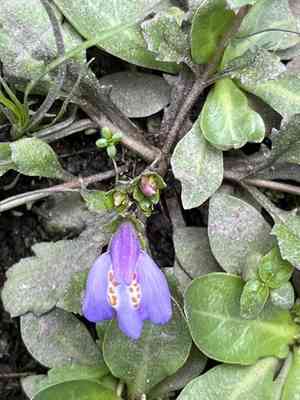



Quickly Identify Miquel's mazus
1
Dense mat growth suitable for rock gardens and stepping stones.
2
Tolerant to pedestrian traffic and occasional mowing.
3
Pale blue tube-shaped flowers with distinct two-lipped structure.
4
Petals fused into a symmetrically tubular form.
5
Mild, sweet fragrance emitted by the flowers.
Scientific Classification of Miquel's mazus
Phylum
Vascular plants
Class
Dicotyledons
Order
Lamiales
Family
Mazus
Genus
Mazus
Species
Miquel's mazus
Planting and Growing of Miquel's mazus
Care Difficulty
Easy
Watering Schedule
Every 8 days
Sunlight Requirements
Partial sun
Sunshine Duration
6-10 hours
Ideal Temperature
60-75℉
Soil Type
Potting Mix, Peat Mix
Soil pH
6.5-7.5
Fertilizer Type
Balanced
Pruning Season
Spring, Summer
Pruning Area
Branches, Leaves
Pruning Frequency
2 times a year
Repotting Season
Spring
Pot Type
Plastic, Ceramic
 How to Water Miquel's mazus?
Mazus miquelii prefers its soil to be consistently moist but not waterlogged. Ideal watering involves providing about 250 milliliters at a time, thoroughly soaking the soil while ensuring excess water drains out. The goal is to keep the soil damp without letting it become soggy to prevent root rot.
What are the symptoms of an underwatered Miquel's mazus?
›
What should I do if my Miquel's mazus is not getting enough water?
›
What are the symptoms of an overwatered Miquel's mazus?
›
How to save an overwatered Miquel's mazus?
›
 What Are the Sunlight Requirements for Miquel's mazus?
Mazus miquelii prefers areas with partial to full shade, meaning it thrives with limited sunlight exposure. Ideal lighting enhances its flowering potential and maintains lush foliage.
More About Sunlight Requirements Techniques→
What is the ideal lighting for Mazus miquelii?
›
How to ensure Mazus miquelii gets its ideal light?
›
What benefits does ideal lighting provide?
›
 What Is the Ideal Temperature Range for Miquel's mazus?
The ideal temperature range for Mazus miquelii is between 60°F and 75°F. This range provides the optimal conditions for growth and development, ensuring the plant can thrive and flourish with adequate warmth but without the stress of excessive heat.
 What Soil is Best for Miquel's mazus?
Mazus miquelii thrives best in nutrient-rich soil. This ensures the plant receives all necessary minerals for robust growth and lush foliage, enhancing its overall health and blooming capacity. The plant prefers soil that retains moisture well. This helps in maintaining consistent hydration, preventing wilting, and ensuring the plant stays verdant and healthy even during dry spells. Well-drained soil prevents waterlogging, which is crucial to avoid root rot. Adequate drainage ensures roots get enough air circulation, promoting strong root development and plant vitality.
 How to Fertilize Miquel's mazus?
For Mazus miquelii, the amount of fertilizer should be moderate to ensure healthy growth. Use 1/4 strength of a balanced liquid fertilizer every month. Over-applying can lead to nutrient burn, so precise measurement is critical.
 How to Prune Miquel's mazus?
Begin pruning by removing any dead, wilted, or damaged leaves and stems. This not only improves appearance but also prevents any decay from spreading to healthy parts of the plant. To maintain a tidy appearance and encourage growth, trim the edges of the plant. This encourages lateral growth and prevents the plant from becoming too leggy, which can lead to uneven ground cover. During blooming periods, regularly deadhead spent flowers. This diverts energy back into new growth and prolongs the flowering period, maintaining a burst of color in your garden.
More About Pruning Techniques→
 How to Propagate Miquel's mazus plant?
1
Fill seed trays with a fine seed starting mix. Sow Mazus miquelii seeds shallowly and cover lightly. Maintain moisture until germination occurs, which can take a few weeks.
2
Choose a healthy parent plant and gently lift it from the ground. Use a sharp spade to divide the root ball into sections, ensuring each has roots and stems for regrowth.
3
Once seedlings have developed a few true leaves, they are ready for transplanting. Harden them off by gradually acclimating them to outdoor conditions before planting in their final location.
 How to Repot Miquel's mazus plant?
1
Mazus miquelii is ready for repotting when you notice its roots starting to circle the pot or poke through the drainage holes. This indicates the plant has outgrown its current living space and requires a more comfortable home. Ideally, repotting during spring or autumn gives it the best chance to acclimate without the stress of extreme temperatures.
2
Selecting the right pot for your Mazus miquelii is crucial. Opt for a pot that is one size larger than its current one, with sufficient drainage holes. A slightly larger pot ensures enough room for root growth without overwhelming the plant, preventing waterlogging which can lead to root rot.
3
Choosing the correct soil is essential for Mazus miquelii's health. A well-draining potting mix blended with components like perlite or sand will keep the roots ventilated and prevent water retention, replicating the plant’s natural habitat conditions and fostering healthy growth.
Learn More About Miquel's mazus Diseases
Anthracnose
Bacterial Leaf Spot
Bacterial Soft Rot
Bacterial Wilt
Chemical Injury
Crown Gall
Cyst Nematode
Damping-off
Downy Mildew
Drought Stress
Fusarium Wilt
Gray Mold
Leaf Curl
Leaf Spot
Mosaic
Nutrient Deficiency
Nutrient Toxicity
Powdery Mildew
Root Rot
Root-knot Nematode
Rusts
Sooty Mold
Spider Mites
Temperature Stress
Thrips Damage
White Mold



