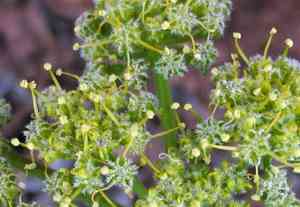
Woollyfruit desertparsley (Lomatium dasycarpum)
Also known as: Woollyfruit Desertparsley, Hairy-fruited Lomatium
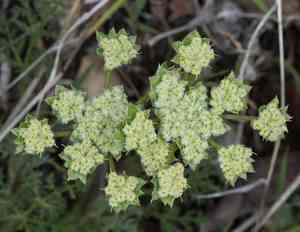
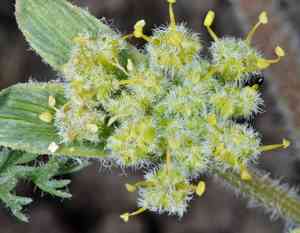
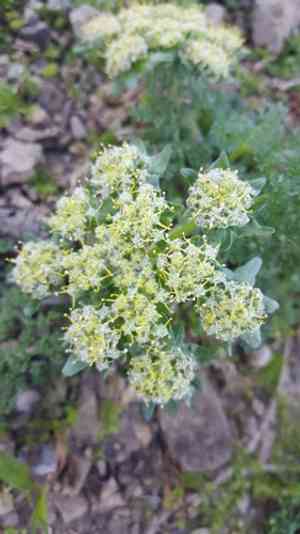
Lomatium dasycarpum, or woolly-fruited lomatium, is indigenous to California and Baja California. This plant typically reaches a height of around 50 cm. Its upright leaves, which originate from the base, can grow up to 24 cm in length and are intricately divided into numerous small, narrow segments. The plant features an umbel of hairy flowers that are either greenish or purplish in color.
In This Article
Attributes of Woollyfruit desertparsley
Lifespan
Perennial
Plant Type
Herb
Plant Height
30 cm to 91 cm
Spread
Not typically measured as it has a clustered growth form
Leaf Color
Green
Flower Size
2-4 mm
Flower Color
Yellow
Images of Woollyfruit desertparsley

Quickly Identify Woollyfruit desertparsley
1
Look for finely divided, fern-like leaves and yellow flowers in umbrella-shaped clusters. The fruit is distinctively woolly or hairy.
Scientific Classification of Woollyfruit desertparsley
Phylum
Vascular plants
Class
Dicotyledons
Order
Apiales
Family
Umbellifers
Genus
Biscuitroots
Species
Woollyfruit desertparsley
Planting and Growing of Woollyfruit desertparsley
Care Difficulty
Easy
Watering Schedule
Every 2 days
Sunlight Requirements
Full sun
Sunshine Duration
6-10 hours
Ideal Temperature
65-75℉
Soil Type
Potting Mix, Peat Mix
Soil pH
6.5-7.5
Fertilizer Type
Balanced
Pruning Season
Spring, Summer
Pruning Area
Branches, Leaves
Pruning Frequency
2 times a year
Repotting Season
Spring
Pot Type
Plastic, Ceramic
 How to Water Woollyfruit desertparsley?
For Lomatium dasycarpum, it's essential to follow a moderate watering routine. The soil should be moist but not soggy, indicating around 250ml per session. Always check if the top 2-3 inches are dry before the next watering session.
What are the symptoms of an underwatered Woollyfruit desertparsley?
›
What should I do if my Woollyfruit desertparsley is not getting enough water?
›
What are the symptoms of an overwatered Woollyfruit desertparsley?
›
How to save an overwatered Woollyfruit desertparsley?
›
 What Are the Sunlight Requirements for Woollyfruit desertparsley?
Lomatium dasycarpum prefers environments with full to partial sun, ideally receiving 6 to 8 hours of light daily. Adequate lighting promotes strong, healthy foliage and vibrant flower production, contributing to the plant's aesthetic appeal and metabolic efficiency.
How much sunlight does Lomatium dasycarpum need daily?
›
How can you ensure it gets adequate sunlight?
›
What benefits does ideal sunlight provide for this plant?
›
 What Is the Ideal Temperature Range for Woollyfruit desertparsley?
The ideal temperature range for growing Lomatium dasycarpum is between 65 and 75 degrees Fahrenheit. Within this range, the plant experiences optimal growth and photosynthesis, ensuring robust development and health. Maintaining this ideal temperature can also help prevent stress and ensure that the plant produces the best possible yield.
 What Soil is Best for Woollyfruit desertparsley?
Lomatium dasycarpum thrives in well-draining soils which prevent waterlogging. This characteristic is crucial for the root health, enabling optimal oxygen supply and avoiding root rot, thus promoting vigorous growth. The plant prefers soils with moderate nutrient levels. This ensures that the plant has adequate nutrients for healthy foliage and flowering without the risk of excessive nutrients that might lead to leaf or root burn. A slightly alkaline to neutral soil pH is ideal for Lomatium dasycarpum. It helps in the efficient uptake of essential nutrients, fostering robust plant development and ensuring vibrant blooms.
 How to Fertilize Woollyfruit desertparsley?
For Lomatium dasycarpum, use a balanced fertilizer with equal parts of nitrogen, phosphorus, and potassium. Apply 1/4 teaspoon per gallon of water for liquid fertilizers and for solid, apply 1 tablespoon per square foot.
 How to Prune Woollyfruit desertparsley?
Begin your pruning session by carefully identifying and removing any dead or diseased foliage, stems, or branches. This helps prevent the spread of diseases throughout the plant. After removing damaged areas, focus on the overall shape of Lomatium dasycarpum. Trim stray branches to maintain a natural but tidy appearance, ensuring better light penetration. To stimulate new growth, carefully prune back some of the older stems. This promotes branching and can lead to a fuller and more vibrant plant. To avoid spreading pests and diseases between plants, dip your tools in a disinfectant solution between cuts during the pruning process.
More About Pruning Techniques→
 How to Propagate Woollyfruit desertparsley plant?
1
Begin by collecting mature seeds from the Lomatium dasycarpum plant once they have ripened. Clean them gently to remove any external debris while ensuring they are dry.
2
Fill your seed tray with a suitable soil mix and lightly press the seeds into the soil. Cover them with a thin layer of soil and mist lightly to provide enough moisture.
3
Place the tray in a warm area with indirect sunlight. Maintain consistent soil moisture using a misting bottle and wait for germination, which can take several weeks.
 How to Repot Woollyfruit desertparsley plant?
1
Repotting Lomatium dasycarpum should be considered when the plant shows signs of being root-bound, such as roots circling the pot's interior, stunted growth, or water quickly draining through. Ideally, repot during early spring or autumn when the plant is less active and can adjust to new conditions more easily.
2
When choosing a pot, select one that is slightly larger than the current pot, about 2-3 inches in diameter wider, to allow room for growth. Ensure the pot has ample drainage holes to prevent water accumulation, which is crucial to prevent root rot in Lomatium dasycarpum.
3
The best soil mix for Lomatium dasycarpum mimics its natural environment. A well-draining sandy loam is ideal. This type of soil provides excellent drainage and aeration, which are necessary to prevent root problems, and supports the plant’s tendency to thrive in rocky and sandy habitats.
Learn More About Woollyfruit desertparsley Diseases
Anthracnose
Bacterial Leaf Spot
Bacterial Soft Rot
Bacterial Wilt
Chemical Injury
Cyst Nematode
Damping-off
Downy Mildew
Drought Stress
Fusarium Wilt
Gray Mold
Leaf Spot
Mosaic
Nutrient Deficiency
Nutrient Toxicity
Powdery Mildew
Root Rot
Root-knot Nematode
Rusts
Sooty Mold
Spider Mites
Temperature Stress
Thrips Damage
White Mold



