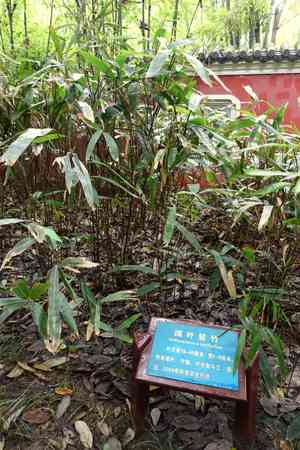
Broad-leaf bamboo (Indocalamus latifolius)
Also known as: Broad-leaved Bamboo, Japanese Broadleaf Bamboo
Broad-leaf bamboo, an evergreen species, thrives in open forests and mountainous regions, as well as certain valleys. In China, its sturdy canes have been traditionally crafted into brushes, chopsticks, and various household items. The expansive leaves of this bamboo are also utilized to make basic clothing.
In This Article
Attributes of Broad-leaf bamboo
Lifespan
Perennial
Plant Type
Shrub
Plant Height
3 m
Spread
8 m
Leaf Color
Dark green
Flower Size
6 cm to 20 cm
Flower Color
Not applicable, as flowering is rare
Quickly Identify Broad-leaf bamboo
1
Indocalamus latifolius can be identified by its broad, leathery leaves which can grow up to 4-9 inches in length and 2-4 inches in width. The bamboo typically has a dense clump-forming growth habit.
Scientific Classification of Broad-leaf bamboo
Phylum
Vascular plants
Class
Monocotyledons
Order
Grasses, sedges and allies
Family
Grass
Genus
Indocalamus
Species
Broad-leaf bamboo
Planting and Growing of Broad-leaf bamboo
Care Difficulty
Easy
Watering Schedule
Every 2 days
Sunlight Requirements
Partial sun
Sunshine Duration
6-10 hours
Ideal Temperature
60-75℉
Soil Type
Potting Mix, Peat Mix
Soil pH
6-7.5
Fertilizer Type
Balanced
Pruning Season
Spring, Summer
Pruning Area
Branches, Leaves
Pruning Frequency
2 times a year
Repotting Season
Spring
Pot Type
Plastic, Ceramic
 How to Water Broad-leaf bamboo?
Indocalamus latifolius thrives best when watered moderately. The key is to maintain soil moisture without allowing it to become soggy. Aim for approximately 500 ml of water per session, ensuring the soil is consistently moist to the touch but not waterlogged.
What are the symptoms of an underwatered Broad-leaf bamboo?
›
What should I do if my Broad-leaf bamboo is not getting enough water?
›
What are the symptoms of an overwatered Broad-leaf bamboo?
›
How to save an overwatered Broad-leaf bamboo?
›
 What Are the Sunlight Requirements for Broad-leaf bamboo?
Indocalamus latifolius flourishes under partial to full shade conditions. Providing proper light ensures healthy growth patterns, vibrant leaf coloration, and prevents stress attributed to overexposure or underexposure to sunlight.
How much light does Indocalamus latifolius need?
›
What should I avoid in its lighting?
›
What are the benefits of ideal lighting?
›
 What Is the Ideal Temperature Range for Broad-leaf bamboo?
Indocalamus latifolius thrives best in temperatures between 60°F and 75°F. This range provides optimal conditions for its physiological processes, ensuring healthy growth and robust foliage. Maintaining this range helps the plant to effectively carry out photosynthesis and other metabolic activities.
 What Soil is Best for Broad-leaf bamboo?
Indocalamus latifolius thrives in well-drained soil because it prevents waterlogging, which roots despise. Proper drainage also helps in aeration and allows the roots to absorb nutrients effectively. This condition mimics the plant's natural habitat, ensuring optimum growth. Enrich the soil with organic matter like compost to enhance its fertility. Organic matter improves soil structure, increases nutrient availability, and encourages beneficial microbial activity, which promotes the overall health and vigor of Indocalamus latifolius. While Indocalamus latifolius needs plenty of water, the soil should not remain soggy. Maintaining moderate moisture levels is key to its health, as this prevents root rot and supports steady growth. Mulching can help retain soil moisture effectively.
 How to Fertilize Broad-leaf bamboo?
Indocalamus latifolius, commonly known as broad-leaved bamboo, requires careful fertilization for optimal growth. During the growing season, use a balanced liquid fertilizer diluted to half its strength, approximately 1 tablespoon per gallon of water. For slow-release fertilizers, select a granular form that releases nutrients slowly over time, applying around 50 grams per square meter.
 How to Prune Broad-leaf bamboo?
Begin pruning with a pair of sharp, clean shears. Focus on cutting back any dead or damaged leaves to promote healthy growth. Trim the stems at a slight angle, just above a node. This practice encourages new, robust shoots. Also, be sure to thin out the dense areas to improve air circulation, which can help minimize the risk of mold or pests.
More About Pruning Techniques→
 How to Propagate Broad-leaf bamboo plant?
1
Select healthy stems and cut sections about 10-15 cm long, making sure to remove lower leaves to prevent rot.
2
Sow seeds in seed trays filled with well-draining soil. Cover lightly with soil, water gently, and keep in a warm, bright location.
3
Dig around the plant carefully to extract the root clump, and divide it into smaller sections, ensuring each has roots attached, then replant.
 How to Repot Broad-leaf bamboo plant?
1
Indocalamus latifolius signals its need for repotting when roots begin to circle the pot. You might also notice slower growth, which hints at a crowded pot. Ideally, repot before the growth season for best results.
2
Select a pot that's at least two inches larger in diameter than the current one. It should have ample drainage holes to prevent waterlogging. A slightly larger pot encourages growth without risking overpotting.
3
Opt for well-draining loamy soil mixed with organic compost. This type of soil retains enough moisture but also ensures roots do not become waterlogged. Loamy soil encourages healthy root growth.



